Advertising
From Pink Slips to Silent Sidelining: Inside adland’s layoff and anxiety crisis
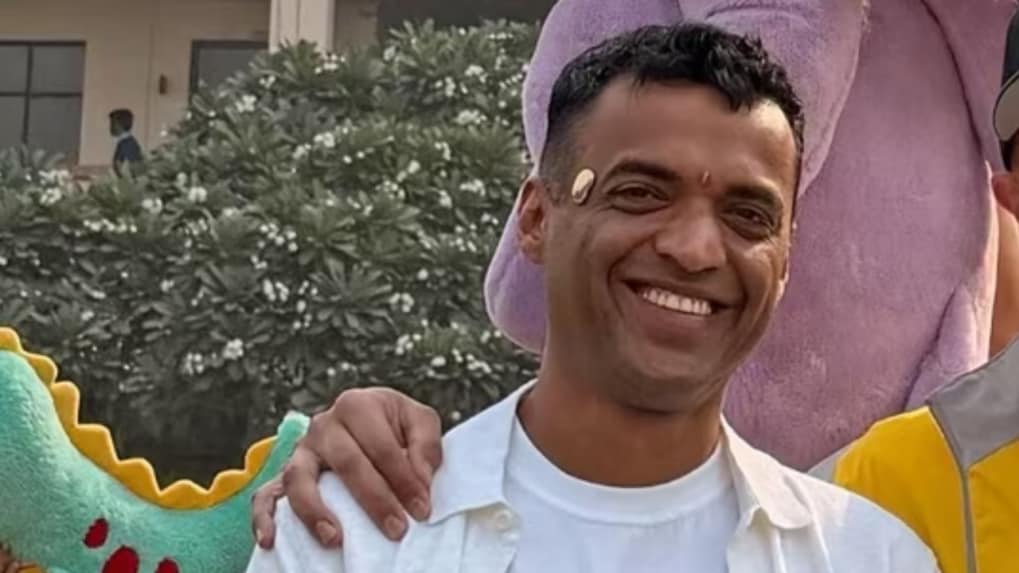
When Deepinder Goyal, the chief executive of Eternal and a co-founder of Zomato, appeared recently on Raj Shamani’s popular YouTube podcast, the conversation ranged across familiar terrain: competition, leadership and the pressures of building a consumer internet giant in India. But for many viewers, the most arresting detail was not what Goyal said, but what he wore.
Affixed discreetly to his temple was a small, metallic device. Its presence, unexplained during the episode, set off a wave of speculation online. On Reddit and other social platforms, users offered a mix of curiosity and satire. Some suggested it was chewing gum or an external hard drive. Others joked that it was a pimple patch, a “charging pad” or even “his brain.”
The object, it turns out, is neither gag nor gimmick. Known as “Temple,” it is an experimental sensor designed to continuously measure cerebral blood flow in real time. The device, typically gold or silver in colour, is worn near the temple and tracks blood circulation to the brain — a metric researchers often associate with neurological health and ageing.
The project has little to do with food delivery or quick commerce. Instead, it reflects a more personal preoccupation of Goyal’s: a theory he calls the “Gravity Ageing Hypothesis.” Through a private research effort housed under Eternal, his parent company, Goyal has committed $25 million of his own capital to explore the idea. The work is still in an experimental phase, and the device is not a commercial product, nor is it affiliated with Zomato’s core businesses.
Goyal first publicly outlined the hypothesis in November 2025, in a series of posts on X, formerly Twitter. Framing his remarks carefully, he wrote that he was speaking not as the CEO of Eternal, but as a fellow human, drawn by curiosity to a line of inquiry he felt compelled to share. He described the work as open-source and grounded in existing scientific literature, inviting scrutiny rather than endorsement.
His central claim is a provocative one: gravity, he argues, may shorten human lifespan. Over time, the constant downward pull of gravity reduces blood flow to the brain, which sits above the heart in an upright body. Decades of marginally reduced circulation, the hypothesis suggests, may accelerate brain ageing. As the brain ages, the rest of the body follows. Regions such as the hypothalamus and brainstem regulate critical functions — breathing, heart rate, hormonal balance and immunity — and impaired blood flow could destabilise these systems.
According to Goyal, the idea has been tested over two years through discussions with doctors and scientists across geographies. He has said that, so far, the research has not encountered a definitive scientific refutation, though it has yet to produce conclusive proof.
Not everyone is convinced. Critics on social media have dismissed the theory as speculative at best, illogical at worst. For now, “Temple” remains a curiosity at the intersection of personal wealth, scientific ambition and public scrutiny — a reminder that the modern tech founder’s interests can extend far beyond the businesses that made them famous, and into questions that challenge how humans understand their own bodies and lifespans.
From purpose-driven work and narrative-rich brand films to AI-enabled ideas and creator-led collaborations, the awards reflect the full spectrum of modern creativity.
Read MoreLooking ahead to the close of 2025 and into 2026, Sorrell sees technology platforms as the clear winners. He described them as “nation states in their own right”, with market capitalisations that exceed the GDPs of many countries.