Advertising
From Pink Slips to Silent Sidelining: Inside adland’s layoff and anxiety crisis
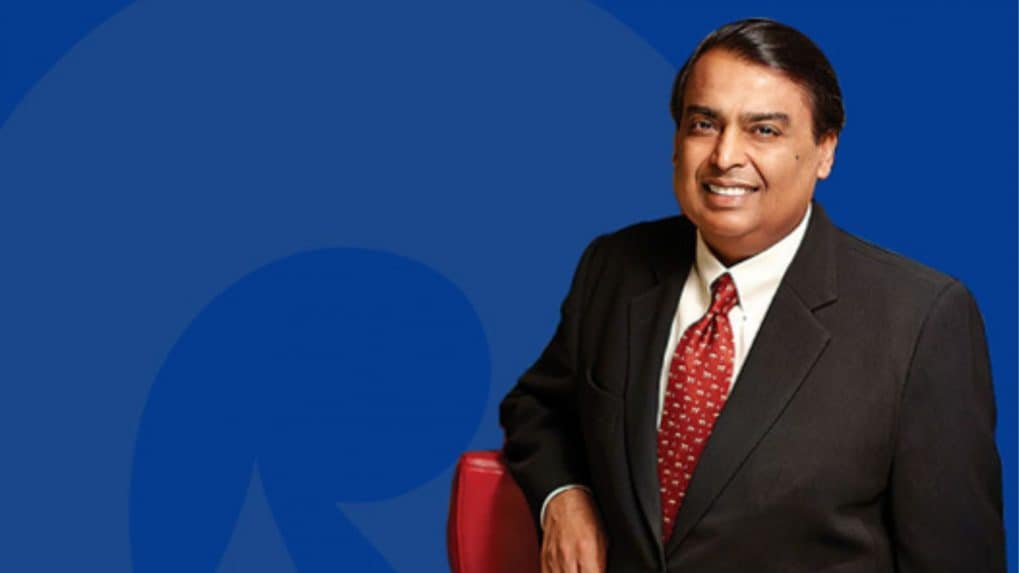
Reliance Industries Chairman Mukesh Ambani on Tuesday unveiled a draft of the company’s artificial intelligence manifesto, calling AI the “most consequential technological development in human history” and saying the world has only begun to see its potential.
“AI has the power which, if wisely used, can solve many of the most complex problems facing humankind,” Ambani said, as he outlined Reliance’s ambition to transform itself into an “AI-native deep-tech company with advanced manufacturing capabilities.”
At the core of the draft manifesto is Reliance’s stated resolve to make “affordable AI for every Indian” and use the technology to transform “every aspect of the economy and life in India.”
The draft document, which Ambani has invited employees to critique and enrich with ideas, is split into two parts. The first focuses on reshaping how Reliance works internally using AI and agentic systems, while the second looks at how the conglomerate’s businesses and philanthropic initiatives can help drive India’s broader AI adoption.
Rewiring Reliance with AI
In Part I, Reliance outlines plans to redesign work across the organisation around four pillars: outcomes, workflows, platforms and governance. Work will be structured around clearly defined outcomes such as customer experience, safety, speed, quality, cost, compliance and growth, with progress tracked in real time.
The company plans to embed AI across end-to-end workflows, from procurement and supply chains to hiring and manufacturing — to eliminate what it calls “digital breaks,” improve visibility and enable continuous improvement.
A common 12-layer digital functional core blueprint will guide platform design across businesses, with data as the foundational layer and AI as the acceleration layer. Reliance has also proposed five weekly “flywheels” to drive execution: real-time data, real-time operations, real-time governance, learning and knowledge, and AI-driven automation with human oversight.
The manifesto further proposes organising work through small, cross-functional teams, or “pods,” each with a single objective and a clearly accountable leader. These pods will move from experimentation to scaling and then stable operations, allowing faster learning while maintaining reliability.
Driving India’s AI push
Part II of the manifesto looks beyond Reliance’s internal transformation to its role in enabling India’s AI journey. Ambani has invited suggestions on how the group’s businesses — including Jio’s more than 500 million subscribers and Reliance Retail’s nationwide footprint, as well as its energy, life sciences, financial services, media and entertainment arms --can be leveraged to expand AI access and impact.
He flagged opportunities in areas such as green energy, advanced materials, healthcare, AI-led financial inclusion, indigenous media platforms, robotics, AI hardware and technology self-reliance.
Ambani also highlighted the role of Reliance Foundation, asking how AI could further strengthen its work in healthcare, education, rural development, disaster mitigation, culture and conservation, while reflecting the group’s “We Care” philosophy through what he described as “caring AI systems.”
Employees have been invited to submit their suggestions between January 10 and January 26, after which the manifesto will be finalised.
From purpose-driven work and narrative-rich brand films to AI-enabled ideas and creator-led collaborations, the awards reflect the full spectrum of modern creativity.
Read MoreLooking ahead to the close of 2025 and into 2026, Sorrell sees technology platforms as the clear winners. He described them as “nation states in their own right”, with market capitalisations that exceed the GDPs of many countries.