Advertising
From Pink Slips to Silent Sidelining: Inside adland’s layoff and anxiety crisis
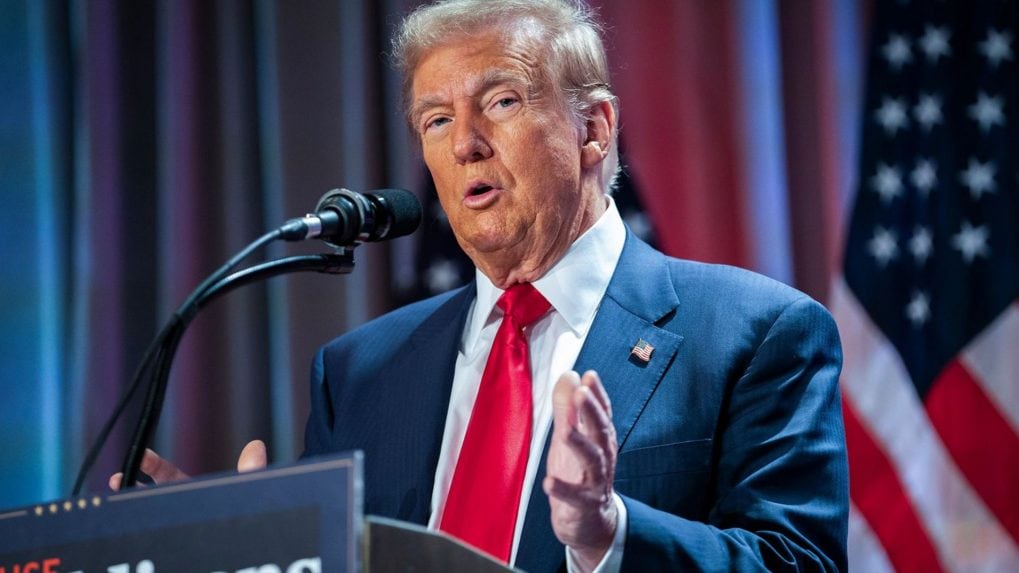
Greenland has emerged as an unexpected flashpoint in global politics after US President Donald Trump renewed calls for Washington to acquire the Arctic island, citing national security concerns. The proposal has been firmly rejected by Greenland’s leadership and by Denmark, which controls the territory’s foreign and defence policy, triggering diplomatic tensions between the US and several European allies.
The dispute has drawn attention to Greenland’s strategic importance, its political status, and the broader implications for Nato and Arctic security.
Where is Greenland and why is it strategically important?
Greenland is the world’s largest island, located in the Arctic between North America and Europe. Despite its massive size, around six times larger than Germany, it is home to only about 56,000 people, most of whom are Indigenous Inuit. Nearly 80% of the island is covered by ice, with most residents living along the south-western coast near the capital, Nuuk.
Its strategic value lies primarily in its location. Greenland sits along key Arctic routes used for monitoring missile activity and maritime traffic between Russia, North America and Europe. The US already operates the Pituffik Space Base (formerly Thule Air Base), which plays a central role in missile detection and early warning systems.
During the Cold War, the US explored plans to deploy nuclear weapons on the island, but these were abandoned due to technical challenges and objections from Denmark.
Why does Trump want control of Greenland?
President Trump has repeatedly argued that Greenland is critical to US national security, pointing to what he describes as growing threats from Russia and China in the Arctic region. While Greenland is also believed to hold significant reserves of rare earth minerals, uranium, iron, and potentially oil and gas, Trump has publicly denied that resources are the main motivation.
In a post on his Truth Social platform, Trump claimed Nato had long warned Denmark about Russian activity near Greenland and accused Copenhagen of failing to act. He has suggested that US control would resolve those security concerns.
According to reporting by the BBC, Trump has not ruled out the use of economic or military pressure to achieve his objective, though US officials have also indicated that purchasing the island would be the preferred route.
What has the US government said?
Trump’s rhetoric intensified after a controversial US military operation in Venezuela, after which he again raised the idea of taking over Greenland. His administration confirmed that multiple options were being discussed, including the potential use of the US military.
Senior figures have echoed this stance. White House adviser Stephen Miller said he did not expect any country to challenge the US over Greenland’s future, while Secretary of State Marco Rubio told lawmakers that the administration favoured acquisition through negotiation rather than force.
In January, Trump also threatened to impose trade tariffs on several European countries, including Denmark, the UK, Germany and France, if they opposed US plans to buy Greenland. The tariffs would apply to goods imported into the US from those countries.
Trump had previously floated the idea of purchasing Greenland in 2019, during his first term, but revived the proposal after returning to office in January 2025.
Also read: Davos 2026: Martin Sorrell says Trump ‘likes turmoil’, flags rising uncertainty for businesses
How have Denmark and Nato allies responded?
Denmark has reacted sharply to the US president’s comments, calling them unacceptable and destabilising. Prime Minister Mette Frederiksen said Europe would not be “blackmailed,” while warning that Trump’s approach risked damaging transatlantic relations.
Other European leaders have also pushed back. UK Prime Minister Sir Keir Starmer described the proposal as “completely wrong,” while French President Emmanuel Macron said it crossed a red line.
European governments have consistently stated that Greenland’s future can only be decided by Greenlanders themselves, in cooperation with Denmark. Several Nato countries have announced plans to conduct military exercises in the region, citing the need to ensure Arctic security.
Why does Denmark control Greenland?
Greenland has been under Danish control for roughly 300 years, despite being geographically part of North America. It was governed as a colony until the mid-20th century and remained economically underdeveloped for much of that time.
During World War Two, after Nazi Germany occupied Denmark, the US moved into Greenland to establish military installations. American forces remained after the war, and a 1951 defence agreement gave the US broad rights to operate military bases on the island.
Greenland formally became part of the Kingdom of Denmark in 1953. A 1979 referendum granted the territory home rule, allowing it to manage most domestic affairs, while Denmark retained control over defence and foreign policy.
What do Greenlanders think?
Greenland’s leadership has strongly rejected any suggestion of US annexation. Prime Minister Jens Frederik Nielsen has described Trump’s proposal as unrealistic and warned against external pressure.
Polling cited by the BBC indicates that while many Greenlanders support eventual independence from Denmark, an overwhelming majority oppose becoming part of the United States.
Public protests have taken place in both Greenland and Denmark as Trump’s language escalated, with demonstrators calling for respect for sovereignty and international law.
What happens next?
While no formal negotiations are under way, the dispute has exposed deeper tensions around Arctic security, Nato unity, and great-power competition in the region. For now, Denmark and Greenland remain aligned in rejecting US ownership, but the issue is likely to remain a source of diplomatic strain as global interest in the Arctic continues to grow.
From purpose-driven work and narrative-rich brand films to AI-enabled ideas and creator-led collaborations, the awards reflect the full spectrum of modern creativity.
Read MoreLooking ahead to the close of 2025 and into 2026, Sorrell sees technology platforms as the clear winners. He described them as “nation states in their own right”, with market capitalisations that exceed the GDPs of many countries.