Advertising
From Pink Slips to Silent Sidelining: Inside adland’s layoff and anxiety crisis
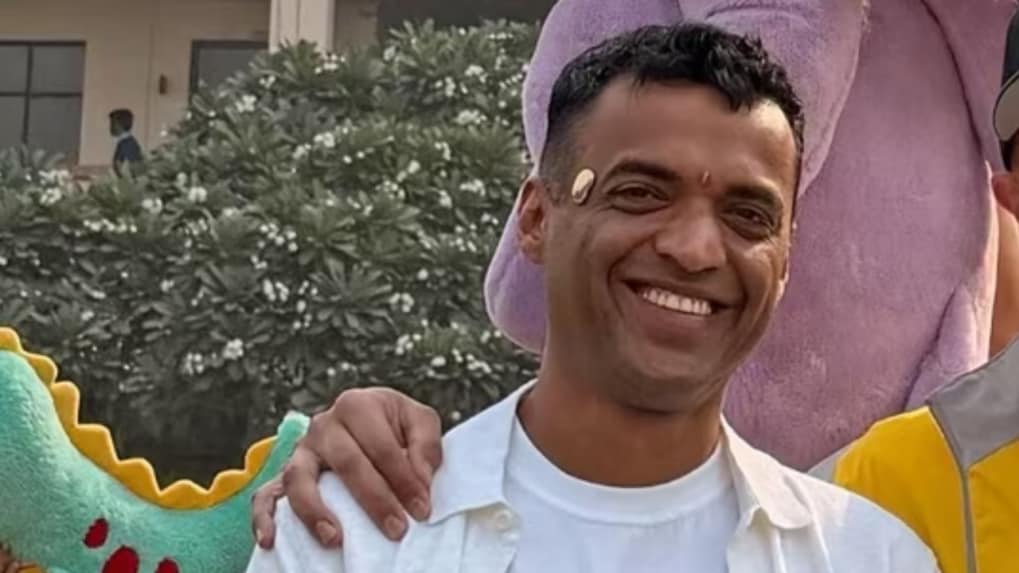
Zomato founder and CEO Deepinder Goyal’s appearance on a recent podcast wearing his experimental ‘Temple’ device has reignited debate around the scientific credibility of the gadget, with an AIIMS Delhi doctor dismissing it as lacking any established medical basis.
The device, a small sensor placed near the temple, has been described by Goyal as part of his personal research into brain blood flow and ageing. The renewed discussion followed images circulating online showing Goyal wearing the device during a podcast recording, prompting questions from social media users about its purpose and validity.
Responding to the discussion on X, Dr Suvrankar Datta, an AI researcher and radiologist with clinical training from AIIMS Delhi, said the device currently has no scientific standing as a reliable health tool. He cautioned users against spending money on technologies that have not been validated through rigorous research, adding that such products are often marketed without sufficient evidence.
As a physician-scientist and one of the earliest researchers in India in Arterial Stiffness and Pulse Wave Velocity (2017) which predicts cardiovascular mortality, I can assure you that this device currently has 0 scientific standing as a useful device and do not waste your hard… https://t.co/pm0pxGRycd
— Dr. Datta M.D. (AIIMS Delhi) (@DrDatta_AIIMS) January 4, 2026
Dr Datta noted that while measuring vascular health is a well-established area of medical science, the methods being suggested through the Temple device do not align with existing validated standards. He emphasised that carotid-femoral pulse wave velocity (cfPWV) remains the only clinically proven marker for predicting cardiovascular mortality, and shortcuts using other arteries are scientifically unreliable.
In November 2025, Goyal had outlined what he called the “Gravity Aging Hypothesis,” proposing that gravity-induced reductions in brain blood flow over time may contribute to ageing. Around the same period, images surfaced of him wearing the Temple device, which he later confirmed was designed to measure cerebral blood flow. Goyal said he had been testing the device on himself for about a year and indicated in December 2025 that it could eventually be made available to the public.
Also, mai hawa mein baat nahi karta, guys!
— Dr. Datta M.D. (AIIMS Delhi) (@DrDatta_AIIMS) January 4, 2026
We have tried variety of stuff in 2018, including trying to use AI for interpretation.
On the basis of our research we applied for Indian Innovation Growth Programme, and went to the Finals.
Only cfPWV is a marker which can truly… pic.twitter.com/cacM1A94P1
Addressing questions from X users about the broader hypothesis, Dr Datta said there is currently no scientific evidence to support the idea that gravity-driven changes in brain blood flow cause ageing. He stressed that such theories require long-term clinical validation before being presented as credible health concepts.
From purpose-driven work and narrative-rich brand films to AI-enabled ideas and creator-led collaborations, the awards reflect the full spectrum of modern creativity.
Read MoreLooking ahead to the close of 2025 and into 2026, Sorrell sees technology platforms as the clear winners. He described them as “nation states in their own right”, with market capitalisations that exceed the GDPs of many countries.