How it Works
WPP, Havas, Omnicom: Are advertising’s biggest holdcos recasting agencies as AI Operating Systems?
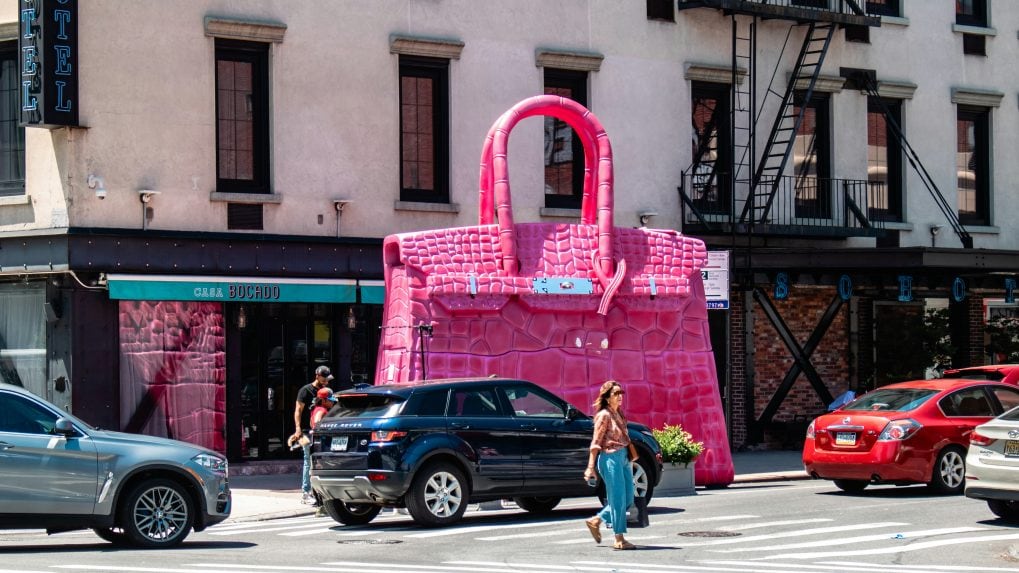
For much of modern fashion history, luxury has operated on an unspoken but widely accepted contract. Price signalled prestige. Scarcity created desire. Ownership marked success. Few products embodied this hierarchy as clearly as the Hermès Birkin, a handbag whose value lay as much in its inaccessibility as in its craftsmanship.
But that contract is now being re-examined.
As Gen Z comes of age in a world shaped by economic volatility, hyper-transparency, and digital comparison, the assumptions that once upheld traditional luxury no longer go unquestioned. The question they are asking is not whether the Birkin is luxurious, that much is obvious. The question is whether it still makes sense.
The Economics Behind the Icon
At retail, a Birkin typically starts at around $10,000–$12,000 (₹8–10 lakh), with exotic leather versions climbing well beyond $50,000. In the resale market, where demand consistently outstrips supply, prices often inflate by 1.5 to 3 times their original value.
Yet the most significant cost attached to a Birkin is neither listed nor advertised.
Prospective buyers are widely reported to spend tens of thousands of dollars on other Hermès products, scarves, shoes, belts, jewellery, before being considered eligible to purchase the bag itself. While the brand does not formally acknowledge this system, it is openly discussed among consumers, sales associates, and luxury industry observers.
This turns the Birkin into something more than a product. It becomes a test of access. And increasingly, Gen Z is questioning whether a luxury item that requires financial endurance and behavioural conformity still represents aspiration, or simply gatekeeping.
Enter the ‘Wirkin’
Against this backdrop, the rise of the Wirkin is less surprising than it appears.
The term, popularised on social media, refers to Birkin-inspired handbags that replicate the silhouette and visual appeal of the original at a fraction of the cost. Often priced between ₹6,000 and ₹10,000, these bags are not positioned as counterfeits or protest objects. They are framed as practical alternatives.
What makes the Wirkin phenomenon distinctive is not price sensitivity, but intent. Gen Z consumers are not hiding their choices; they are explaining them. On Instagram and TikTok, creators dissect luxury bags with forensic attention, comparing materials, stitching, durability, and cost-per-use. The tone is analytical, not adversarial.
Luxury, for the first time, is being audited in public.
The Dupe Economy Is About Rationality, Not Rebellion
Multiple global consumer studies indicate that a majority of Gen Z shoppers have purchased dupes or alternatives, even when they admire the original brand. This behaviour is often misinterpreted as a lack of aspiration. In reality, it reflects a shift in how aspiration itself is defined.
Raised amid rising living costs and constant exposure to pricing data, Gen Z is acutely value-conscious. Exclusivity without transparency feels inefficient rather than elite. Long waitlists are not perceived as prestige; they are seen as friction. Spending large sums simply to qualify for access feels performative, not powerful.
In this context, choosing a Wirkin is not a compromise. It is a calculated decision, one that prioritises function, aesthetics, and financial autonomy over symbolic approval.
Social Media as Luxury’s Accountability Space
Instagram has become the most consequential arena in this transformation.
A majority of Gen Z users follow brands on the platform, but their engagement is fundamentally different from that of previous generations. They do not consume brand narratives passively. They analyse comment sections, trust peer creators over polished campaigns, and value lived experience over aspirational imagery.
A single Reel that breaks down the true cost of owning a Birkin, including the unspoken pre-spend, can recalibrate perception faster than any traditional fashion editorial. Luxury is no longer defined exclusively by brands; it is negotiated collectively by digital communities.
From Status Consumption to Strategic Spending
This shift does not signal an aversion to luxury itself. In fact, Gen Z is actively fuelling the growth of resale and vintage luxury markets, which are expanding significantly faster than primary retail. Secondhand purchases are often viewed as more sustainable, more individual, and more aligned with personal identity.
What Gen Z resists is spending driven solely by symbolism.
They are willing to invest, but selectively. In experiences. In quality. In items that feel earned rather than bestowed. What they reject is the notion that aspiration must come with submission.
What the Wirkin Really Represents
The Birkin will remain an enduring symbol of fashion history. Its craftsmanship and cultural legacy are undeniable. But for Gen Z, it no longer occupies the uncontested position it once did.
The rise of the Wirkin is not about imitation; it is about agency. It reflects a generation that is redefining status as discernment rather than display, and intelligence rather than excess.
The #Wirkin movement signals a broader reckoning for luxury brands. Consumers are no longer looking up at labels. They are looking through them, questioning systems, pricing structures, and the values being sold alongside products.
Luxury has not lost its audience. Its audience has evolved.
And in this new landscape, the ultimate flex is not owning what is hardest to get, it is having the confidence to walk away from what no longer feels worth it. So, which side are you on? Wirkin or Birkin?
From purpose-driven work and narrative-rich brand films to AI-enabled ideas and creator-led collaborations, the awards reflect the full spectrum of modern creativity.
Read MoreThe Storyboard18 Awards for Creativity have unveiled a Grand Jury comprising some of India’s most influential leaders across advertising, business, policy and culture, positioning it among the country’s most prestigious creative award platforms.