Advertising
From Pink Slips to Silent Sidelining: Inside adland’s layoff and anxiety crisis
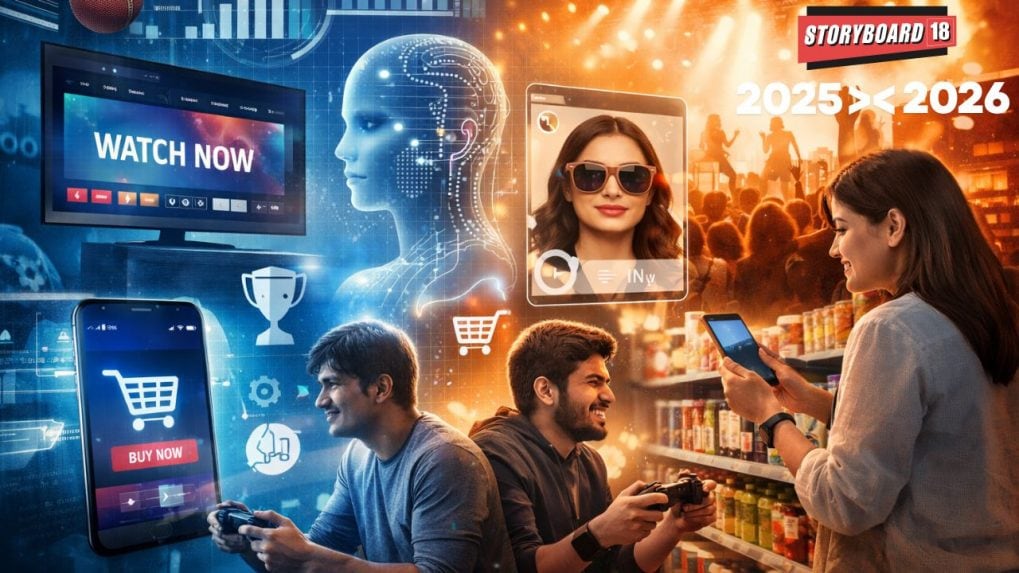
India’s advertising market is entering a decisive phase of transformation. Headed toward a ₹1.15 lakh crore valuation by 2026, the industry is being firmly anchored by digital media’s dominance, even as television, print and outdoor adapt through new, blended engagement formats. According to WPP Media, advertising revenues are projected to touch $22.74 billion, with growth expected to rise to 9.7% next year.
The landscape next year won’t be a mere extension of 2025; it will be defined by forces that challenge conventional media planning, creative production, audience measurement, and consumer engagement.
Here’s an in-depth look at the major advertising trends India will witness in 2026, shaped by technology, consumer behaviour, regulation, and media economics.
1. Applied Intelligence Becomes the Operating Backbone
Brands and agencies are moving beyond buzzwords to ‘applied intelligence’, where AI ceases to be a tool and becomes an invisible operating layer shaping strategy, creative design and decisioning. Rana Barua, Group CEO of Havas India, South East Asia and North Asia says that 2026 will be defined by intelligence as the operating layer- underpinning how brands think, act and design experiences.
This shift goes beyond simple automation to systemic integration across planning, execution and optimisation.
Harsha Razdan of dentsu South Asia reinforces that AI is already reshaping consumer journeys- influencing viewers, shoppers and decisions at every touchpoint.
AI won’t just speed up workflows; it will transform them, from creative ideation and localisation to predictive optimisation across media buys.
Across global forecasts, AI-first marketing, where foundational models and automation engines are deeply integrated into campaign workflows, is not a futuristic prediction but a practical imperative for 2026.
What this means for India
- Creative teams will increasingly collaborate with AI assistants that generate first drafts and real-time iterations.
- Campaign optimisation will be driven by predictive analytics rather than retrospective reporting.
- Brands that build in-house data and AI capabilities will outpace competitors who rely on traditional siloed processes.
2. Retail Media: From Rapid Growth to Regulatory Focus
The retail media boom, where brands buy ads within commerce ecosystems, has been one of the most powerful trends globally. In India, platforms like Amazon Ads, Flipkart Ads and Reliance Retail Media are already commanding significant attention from advertisers keen to reach audiences at the point of intent.
But 2026 will be a turning point. According to Navin Khemka of WPP Media South Asia, retail media may face heightened regulatory scrutiny, especially within the burgeoning quick commerce segment where data, pricing and transparency issues are under the spotlight. This scrutiny could slow or reset how retail platforms structure advertising products — even as brands continue to allocate increasing budgets to them.
Why this matters
- Regulatory clarity will be essential for brands to confidently invest in retail media networks (RMNs).
- First-party data strategies will become mandatory as privacy expectations rise.
- Retail ecosystems may need to co-invest in measurement and transparency to retain advertiser trust.
3. Cricket Media Rights Reset and Sports Marketing Dynamics
One of the singular drivers of advertising economics in India has been cricket. Bidding dynamics for media rights are expected to undergo a reset in 2026, potentially altering the sports marketing landscape — influencing sponsorships, broadcast planning and inventory pricing.
Khemka forecasts that this reset will significantly influence how brands engage with sports audiences, especially around live events. These changes could prompt media owners and advertisers to experiment with hybrid models, including virtual advertising overlays, digital scorecards and performance-linked sponsorships that go beyond traditional TV slots.
Coupled with global trends in immersive stadium experiences, including augmented reality (AR) engagement layers, sports content will remain a pivotal frontier for innovation and monetisation.
4. Connected TV (CTV): Momentum, but a New Equilibrium
Connected TV advertising has been one of the fastest growing channels worldwide, with global spending projections pushing CTV budgets higher every year. In India, the rise of OTT platforms and smart TV penetration has similarly fuelled demand for large-screen video inventory.
Yet, Khemka anticipates a stabilisation or slowdown in CTV’s growth rate- not a collapse, as marketers reallocate budgets, measure performance more critically, and find value in diversifying across screens.
This doesn’t undercut CTV’s promise, rather, it signals maturation: advertisers will expect rigorous ROI evidence, stronger attribution and clearer audience insights before pouring incremental dollars into streaming inventories.
5. Consumer Behaviour: Digital Detox and Choice Evolution
2026 may also mark a behavioural turning point. Consumers, particularly in urban India, are pushing back against constant digital engagement, embracing digital detox behaviours that prioritise offline experiences, conscious time spent online and lower sensory overload.
This trend will shape media planning:
- Brands must balance push-based digital outreach with pull-based offline engagements such as experiential marketing and live activations.
- Strategic frequency caps, selective retargeting and value-led content will become essential.
- Emotional and purpose-driven communications will resonate more deeply than sheer impression volume.
6. The Gaming Revolution & Live Events as Discovery Engines
India’s gaming audience, over 160 million pure-play gamers and rising, presents a formidable platform for engagement. According to dentsu’s research, gaming and esports are becoming mainstream social spaces where Gen Z and Gen Alpha spend time, interact and discover brands.
The advertising opportunities here are uniquely powerful:
- In-game contextual ads and brand integrations.
- Live virtual events — from tournaments to creator-led sessions.
- Rewards ecosystems that bridge gaming and commerce.
Meanwhile, live events are evolving into high-intent community platforms where culture, creators and commerce converge, blurring lines between entertainment, engagement and transaction.
7. Immersive Consumer Experiences: AR, MR and Beyond
Simple immersive behaviours, like AR-based try-ons and mixed-reality demos, are set to become visible and viable across categories such as beauty, automotive and retail. These technologies allow consumers to sample products virtually before buying, creating deeper interactive touchpoints.
Combined with evolving privacy frameworks, brands will need to build privacy-safe immersive experiences that deliver personalisation without compromising consumer trust.
8. Privacy, First-Party Data, and the Cookieless Future
Privacy changes, both regulatory and consumer-led, are reconfiguring how advertisers plan their campaigns. As Indian regulations evolve (including emerging frameworks for personal data protection), advertisers are shifting focus toward first-party data, consented profiles and clean room collaborations to maintain targeting precision.
This means:
- CRM systems and CDPs are no longer optional.
- Measurement strategies will account for privacy-safe identifiers.
- Brands will invest in trusted direct relationships with audiences.
9. Localisation, Language Diversity and Regional Growth
India’s advertising boom is not monolithic. It spans a diverse tapestry of languages, cultures and consumption patterns. Localisation, not just linguistic translation, is emerging as a core competitive advantage.
Regional creators and micro-influencers will be critical amplifiers of brand messages, particularly in non-metropolitan markets.
10. Beyond Digital: The Resilience of Traditional Media
Contrary to earlier forecasts of digital dominance pushing traditional channels into rapid decline, 2026 may reveal a more resilient traditional media ecosystem — particularly in formats that integrate with digital measurement, experiential extensions and hybrid activations.
Print, radio, and outdoor will not vanish; they will evolve, often serving as trusted anchors in broader omnichannel strategies, say industry watchers.
Looking Ahead: A Strategic Playbook for Brands
In 2026, the winners will be those who:
- Embed applied intelligence across strategy and execution rather than treat AI as a standalone tool.
- Balance performance efficiency with meaningful consumer engagement across screens, offline spaces, and digital fast lanes.
- Build robust first-party data and privacy-centric measurement systems.
- Leverage gaming, live events, and immersive experiences as growth frontiers.
- Localise content and presence to tap diverse regional demand curves.
2026 promises to be a year of nuanced acceleration- not merely of technology, but of consumer insight, regulatory interplay, and media economics. For advertisers in India, the mandate is clear: adapt, innovate and humanise at scale.
From purpose-driven work and narrative-rich brand films to AI-enabled ideas and creator-led collaborations, the awards reflect the full spectrum of modern creativity.
Read MoreLooking ahead to the close of 2025 and into 2026, Sorrell sees technology platforms as the clear winners. He described them as “nation states in their own right”, with market capitalisations that exceed the GDPs of many countries.