
2026: The Year Of...: When applied intelligence takes over brand building, says Rana Barua of Havas India
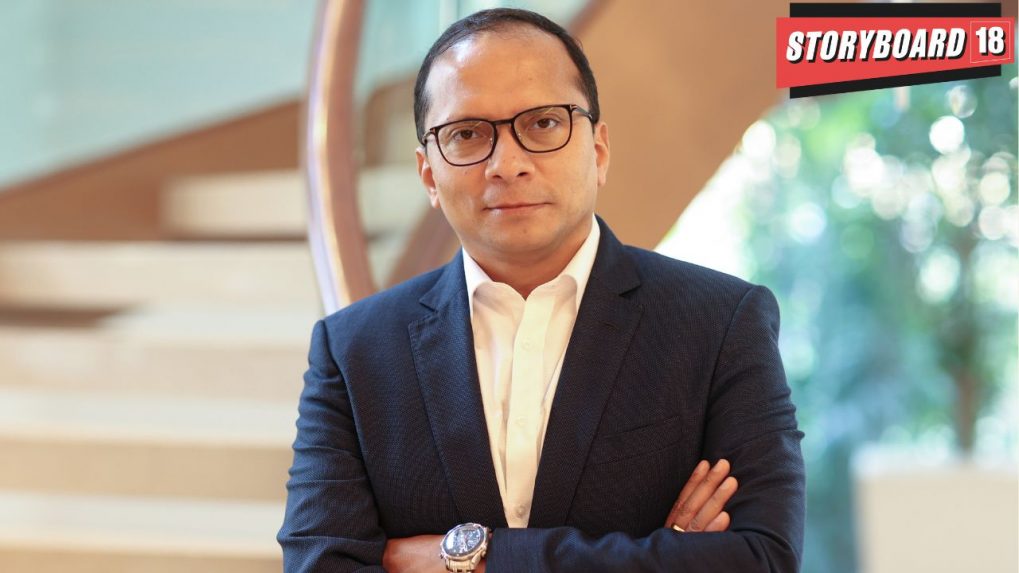
Rana Barua, Group CEO India, South East Asia & North Asia (Japan & South Korea), says intelligence-led creativity, full-funnel convergence and cultural precision will define how brands scale across India and Asia as volatility becomes the norm.

ADVERTISEMENT
2025 was not a year of comfort for the communications industry, but Rana Barua frames it as a year of control amid chaos. As global markets grappled with uneven growth, cautious clients and rapid technological shifts, the Group CEO of Havas India, South East Asia and North Asia says the network turned uncertainty into competitive advantage,delivering organic growth, expanding mandates and retaining client trust across regions.
For Barua, consistency in volatility, not just topline performance, marked the network’s real win.
From India’s 1,000-plus client portfolio to Southeast Asia’s acceleration in digital commerce and creator ecosystems, and Japan and South Korea’s advances in data, design and production, Barua argues that scale mattered only because it was accompanied by sophistication.
End of the Old Guard? Publicis outperforms, WPP declines, Havas rises
Landmark moments, such as a Cannes Lions win for Ink of Democracy, the launch of consultancy arm Gate One in India, and a strategic partnership with Banijay Asia, underscored a sharpened focus on purposeful creativity and culture-led growth.
Looking ahead, Barua is unequivocal about what comes next.
“2026 will be the year of applied intelligence,” he says, pointing to a future where intelligence is no longer a tool but an invisible operating layer guiding how brands think, build and perform. As brand and performance blur into a single ecosystem and consumers demand speed, relevance and accountability, Barua believes agencies that fuse creativity with data, technology and human judgement will define the next phase of growth in Asia’s most dynamic markets.
Edited excerpts:
What were the key achievements or highlights for you and your teams in 2025?
If I were to summarise 2025, I would describe it as the year in which Havas India and the extended Asia region successfully tided over uncertainty and turned it into a competitive advantage. Throughout a period marked by global economic unevenness, fluctuating consumer confidence, and accelerated technological disruption, our network continued its growth momentum and delivered yet again a solid year.
We focused on strengthening our position through consistent organic growth across India, Southeast Asia, Japan, and South Korea, even as several markets recalibrated.
What truly set this year apart was our ability to achieve three objectives simultaneously: expanding our scale, deepening our sophistication, and maintaining complete client stability.
We recorded minimal client losses, and significant growth was generated from many existing relationships. This sustained trust is a direct result of Havas’ integration, maturity, and cultural consistency.
In India, our portfolio now exceeds 1,000 clients across 25 agencies.
However, the real story lies in the quality of this scale. Our top 15 clients expanded their mandates with us, spanning media, creative, content, health, and commerce. Southeast Asia experienced rapid acceleration, particularly in digital commerce and creator-led ecosystems. In Japan and South Korea, we continued to strengthen our technology, design, data science, and production capabilities, setting new benchmarks for precision and innovation.
A landmark achievement was our Cannes Lions win for Ink of Democracy, validating our belief that purposeful creativity holds commercial weight when executed with cultural precision. We also launched Gate One in India, marking our entry into the transformation and consultancy space with greater authority. Our partnership with Banijay Asia further strengthened our entertainment IP footprint, positioning us strongly in a region where content and culture increasingly drive brand differentiation.
Beyond awards, growth charts, and milestones, the true achievement of 2025 was our consistency in the face of volatility. Markets remained unpredictable, clients grew cautious, and technology evolved faster than regulations could keep pace. Despite these challenges, our teams delivered with discipline, intelligence, and a shared belief system. This resilience defines the Havas of today.
What defining trends stood out for you in 2025?
Three major forces reshaped the industry in 2025: the rise of intelligence-driven creativity, the convergence of brand and performance ecosystems, and the evolution of the empowered, evidence-led consumer.
Firstly, creativity became deeply intelligence-led. Campaigns were no longer based solely on instinct but were informed by pattern recognition, predictive analytics, cultural context mapping, and rapid simulation models. At Havas, the most significant transformation was the rapid adoption of our proprietary platform, Converged AI. This platform emerged as the central operating layer for marketers, now influencing a major part of all planning and creative workflows globally.
Converged AI unifies data, analytics, content, measurement, activation, and creative intelligence into a single suite. It integrates seamlessly with existing ecosystems, ensures zero operational disruption, and empowers marketers to build predictive scenarios, stress-test ideas, create privacy-compliant audiences, and develop personalised content at scale. For many clients, Converged AI marked the difference between reactive decision-making and proactive brand leadership.
Secondly, the boundary between brand and performance disappeared. Marketers began to expect brand-building efforts that demonstrated measurable business impact. Commerce, creator ecosystems, retail media, performance analytics, and precision storytelling merged into a continuous loop.
Most briefs in 2025 required a full-funnel approach, where awareness, consideration, conversion, and advocacy were orchestrated in a single design.
Thirdly, consumers evolved into more values-led, digitally fluent, and expectation-heavy individuals. The middle class in Southeast Asia expanded by nearly 20 million people, while India surpassed 800 million internet users, now leading the world in monthly digital video consumption. Japan increased its investment in robotics and automation by over 15%, and South Korea continued to influence global behaviour through its cultural exports. These developments reshaped brand demands: authenticity, speed, relevance, and accountability became the minimum requirements.
2025 was not just a year of change; it was the year when change became the default operating condition.
How did the rise of AI and generative AI impact your industry this year?
Artificial intelligence did not simply disrupt the communications industry in 2025, it rewired it. Its impact was evident across five key dimensions:
Creative expansion rather than replacement: Generative artificial intelligence amplified human imagination, enabling teams to quickly explore variations, build storyboards, craft prototypes, and test hypotheses. This allowed creative talent to concentrate on refinement, narrative precision, and emotional depth.
Radical improvements in production efficiency: Automated resizing, tagging, asset creation, reporting, and optimisation reduced production timelines by nearly sixty per cent across our network. Clients benefited from faster go-to-market cycles and greater consistency across platforms and markets.
Significant gains in performance outcomes: Predictive audiences, dynamic creative optimisation, and algorithmic bidding enhanced campaign efficiency. Havas’ benchmarking recorded up to a 35% improvement in conversions across AI-optimised formats.
Transformation of talent and organisational structure: Artificial intelligence introduced new roles such as AI strategists, prompt architects, data linguists, and automation leads. Teams reorganised around intelligence-led workflows, integrating creativity, data, technology, and behavioural science more seamlessly.
Ad group Havas lifts full-year outlook, APAC rebounds with 8.2% organic growth
Universal experimentation: Artificial intelligence democratised innovation. Real-time simulation, creative stress testing, and predictive modelling enabled brands to validate ideas before investing, reducing wastage and boosting decision-making confidence.
In summary, artificial intelligence elevated creativity, accelerated efficiency, and improved accuracy. Most importantly, it enhanced human judgement rather than replacing it.
What disruptive trends will take the spotlight in 2026?
2026 will be characterised by the rise of applied intelligence, not merely artificial intelligence as a capability, but intelligence as an invisible operating layer shaping how brands think, design, and act.