Digital
Why OpenAI is hiring 100 ex-bankers: Inside the ChatGPT-maker's secret project to automate Wall Street's grunt work
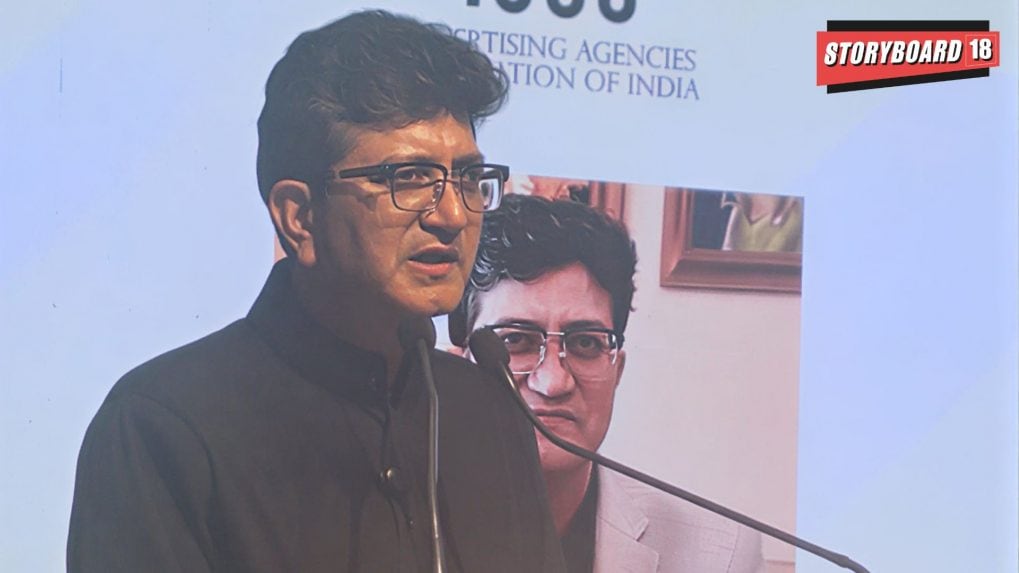
The evening of December 19 marked a significant moment for the Indian advertising industry as Prasoon Joshi was conferred the AAAI Lifetime Achievement Award by the Advertising Agencies Association of India (AAAI). The event brought together members of the advertising fraternity, along with filmmakers. Joshi, recently appointed Chairman of Omnicom Advertising India, has played a key role in shaping Indian advertising over the last three decades. The youngest advertising professional to receive the Padma Shri, he has also made notable contributions to Indian cinema, particularly in lyric writing and screenwriting.
Finding advertising
Speaking about his background, Joshi said his upbringing influenced his career choices.
“My father was a civil servant, an education officer. My mother was an artist. My father wanted order for me. My mother wanted effervescence. I found advertising,” he said, adding that advertising offered him a balance between structure and creativity.
Poetry, relevance, and early doubts
Joshi, who joined Trikaya-Grey as a trainee, said that while he had already been published as a poet, he struggled with the relevance of poetry in a commercial world.
“I had books of poetry with me, but I realised that only friends or relatives would read them. Nobody really goes out to buy poetry books,” he said.
He added that this realisation led him to question the sustainability of poetry as a profession. “There was a real question—what would one do with that?” he said, noting that advertising offered a way to take poetic sensibility to a much wider audience.
Ogilvy, bilingualism, and mentorship
Joshi spoke at length about vulnerability as a core aspect of creative work.
“We are all drifters in this profession who find our way by searching. Creative people are fundamentally vulnerable. When someone tells you a story, they are exposing something personal,” he said.
According to him, vulnerability remains central to advertising. “Vulnerability is what connects with consumers,” he added.
Joshi described his time at Ogilvy as formative and spoke about what bilingualism truly meant in his context. According to him, being bilingual was not simply about knowing two languages, but about having a deep, cultural fluency—particularly in Hindi—which shaped thought, emotion, and storytelling.
He said bilingual creatives often faced the risk of being typecast early in their careers, but Ogilvy offered him the freedom to explore without such limitations.
He credited late ad legend Suresh Mullick for recognising the importance of nuance and music in his work, and for encouraging him to use those strengths in advertising. He also acknowledged late ad veteran Piyush Pandey for teaching him the “economics of writing”—how to convey ideas with brevity, given limited time and shrinking attention spans. Joshi said he continues to practise that discipline.
He also mentioned the influence of late British advertising executive Neil French, whose belief in long-form writing offered a counterpoint to prevailing industry trends.
Advertising, poetry, and leadership
Explaining the difference between advertising and poetry, Joshi said, “In advertising, I am aware of the destination. In poetry, the destination is explored.”
Speaking about his move to McCann Worldgroup, he reflected on leadership and creative pressure. “The right amount of tension creates music,” he said, adding that this principle guided his approach at McCann.
Brands and collaborations
Joshi acknowledged the brands he has worked with, including Marico’s Parachute and Saffola, Nestlé, Coca-Cola, Dabur, Britannia, Perfetti Van Melle, among others.
Referring to Perfetti Van Melle, he said brands struggling to cut through clutter often needed greater creative attention, citing Happydent, Alpenliebe, and Chlormint as examples.
He also spoke about collaborations with filmmakers such as Ram Madhvani, Prahlad Kakkar, and Prasoon Pandey, crediting them for elevating advertising storytelling through craft and direction.
The Nokia campaign and Prasoon Pandey’s role
Recounting a moment highlighted earlier by Partha Sinha, Senior Advisor at McKinsey & Company, Joshi spoke about writing a radio spot for Nokia during his time at Ogilvy. The script focused on a successful man who had lost touch with his mother—a narrative that later evolved into a film.
Joshi wrote the line “Zindagi ki raftaar mein, rishton ko peeche naa chode”, which was paired with Nokia’s global tagline “Connecting People.” The campaign is widely regarded as a turning point for mobile phone advertising in India.
Speaking about the film’s execution, Joshi credited Prasoon Pandey for bringing the idea to life on screen. He said Pandey’s direction elevated the emotional core of the story and helped translate a simple radio idea into a powerful visual narrative, ensuring the campaign resonated deeply with Indian audiences.
Brand crises and lessons
Joshi also spoke about navigating brand crises, including Coca-Cola’s pesticide controversy and Maggi’s 2015 crisis, stressing the importance of transparency and honesty.
“Real partnerships are formed during times of stress,” he said.
Technology, AI, and the future
Looking ahead, Joshi spoke about collaboration between humans and technology, describing AI as an ally rather than a replacement for creative thinking.
Explaining the difference between a photograph and a synthograph, he said a photograph requires reality to exist before it can be captured, while a synthograph allows reality to be created from imagination. He added that many ideas fail because they are not presented well, and AI could help prevent that by enabling better visualisation of ideas.
He also questioned the industry’s increasing focus on hyper-personalisation, asking whether consumers truly want to be known in such depth, and where creatives should draw the line.
The evening concluded with Joshi reciting ‘Mumkin Hai’, the theme song he wrote for Satyamev Jayate Season 3.
Reflecting on his work, he said that if he were to be remembered, he would prefer it to be through one of his creations—“a song that has reached the audience.”
From purpose-driven work and narrative-rich brand films to AI-enabled ideas and creator-led collaborations, the awards reflect the full spectrum of modern creativity.
Read MoreIn a wide-ranging interview with Storyboard18, Sorrell delivers his frankest assessment yet of how the deal will redefine creativity, media, and talent across markets.