
Prasoon Joshi and the business of feeling: How one creative leader shaped Indian advertising
As Prasoon Joshi receives the AAAI Lifetime Achievement Award, his career offers a rare view in how storytelling became Indian advertising’s most durable competitive advantage.

ADVERTISEMENT
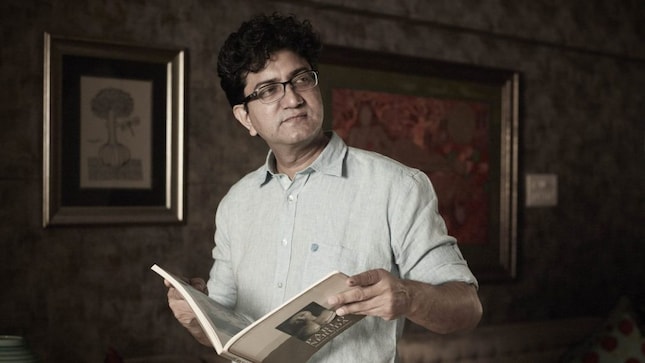
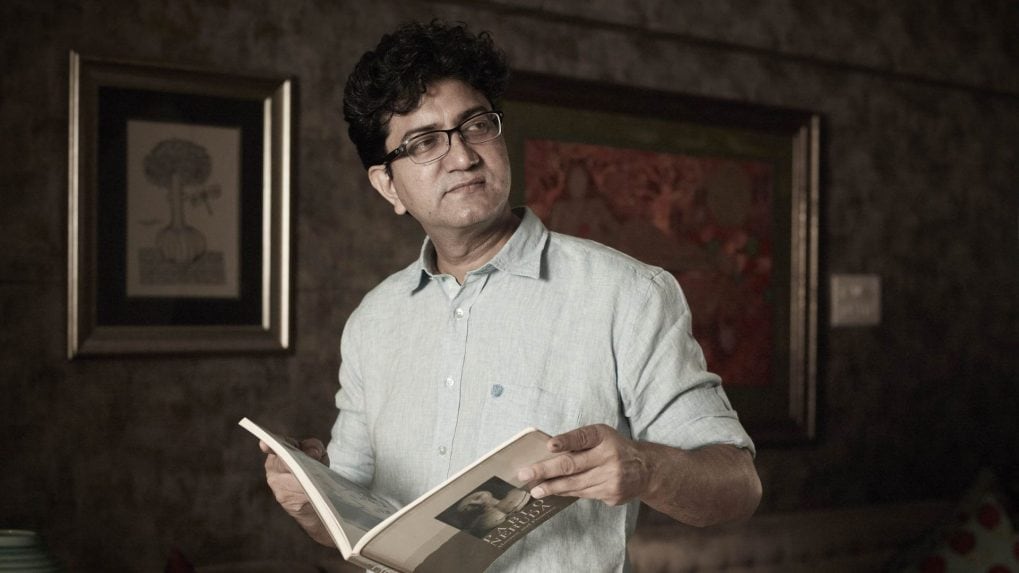
In Indian advertising, Prasoon Joshi has long occupied a rare corner office: the one where commerce and culture keep sharing the same desk. Tonight, he will be honoured with the Advertising Agencies Association of India (AAAI) Lifetime Achievement Award, the industry’s highest recognition for sustained creative leadership and influence, capping a career that has reshaped both Indian and global advertising as well as Indian cinema.
Joshi is, formally, Chairman, Omnicom Advertising India, after Omnicom's takeover of ad holdco IPG and its agencies including McCann, which Joshi had led for several years. It's a remit that places him inside the machinery of global brand-building, not just its Indian expression.
Yet Joshi’s reputation has never been limited to the business card. Over the past two decades, he has also become one of Hindi cinema’s most recognised lyricists and screenwriters, collecting major film honours even as he helped shape the sound and syntax of modern Indian advertising.
That dual career matters because it maps neatly onto what Indian advertising has been trying to do for years: grow up from craft to authorship, from selling products to shaping feeling and culture, and do it in a way that can travel.
“When you take people on a journey you truly believe in, they come with you”: Joshi on creativity and collaboration
Joshi - the adman
For many Indians, Joshi’s mass recognition begins with campaigns for brands like Coca-Cola, Maggi, Happydent and, more recently, Air India. These campaigns helped global brands speak in a local idiom and, in the process, made the brand’s promise feel like everyday language.
Read more: When Happydent Palace beamed its way to Cannes Lions glory
Also watch: Prasoon Joshi on how a chewing gum brand rekindled the love for imaginative advertising
Also read: Unheard tales of Maggi’s redemption: How poetry and nostalgia revived an iconic brand
The point was not merely celebrity castings or even repetition. It was translation — cultural, linguistic and emotional — of a multinational into something that could be claimed as familiar.
This is the kind of work that has made Joshi unusually legible to two audiences at once: clients and consumers. In an industry often divided between the boardroom and the creative floor, his stature has come from an ability to argue for “why it will work” without having to dilute “why it matters.”
That approach - leaning on narrative, poetry, idiom, craft and emotional relatability — is also how his agency has framed his long influence within the network, as his remit widened beyond India and into the world.
“We are a collective civilisation… the world is one family": Joshi on India’s collective ethos
Global recognition, without becoming “globalized”
Joshi’s rise has run alongside India’s own evolving place inside the global creative economy. In 2013, he would lead Cannes Lions’ Titanium & Integrated jury — a high-status assignment that positioned him not just as an Indian creative leader but as a global arbiter of what “integrated” creativity should look like.
It is worth lingering on what that signals. Advertising’s global awards circuit has historically rewarded a particular accent of modernity — sleek, ironic, minimalist. India, meanwhile, has often been described (sometimes lazily) as maximalist: loud, crowded, sentimental. Joshi’s career is one reason that contrast has become less useful. His best-known work sits in the Indian mainstream — broad, accessible, often anchored in words, music or everyday speech — while still being legible to international juries that prize originality and craft.
Even his later recognitions have been narrated in that register. In 2025, the International Advertising Association inducted him into its Hall of Fame, describing him as part of a small global league recognised for reshaping marketing communications.
And the Advertising Agencies Association of India chose him for its 2025 Lifetime Achievement Award — an industry signal that his influence is no longer tied to a campaign cycle but to a body of work.
“The feeling of completing a task, the sense of belonging, the satisfaction is what will be in jeopardy [with AI]”: Joshi on creative satisfaction in an AI age
The long game: culture as a strategic advantage
If there is a consistent through-line to Joshi’s advertising persona, it is that he treats culture not as seasoning but as strategy. His work and public conversations repeatedly frames him as someone interested in the mechanics of attention — how stories travel, why audiences remember, what “authenticity” sounds like when it isn’t a slogan.
That is also why his influence is often discussed as “industry-wide” rather than agency-specific. Indian advertising has matured into a competitive, globalised business; yet it remains a market where linguistic plurality, class differences and regional identity can make one national campaign feel like five different messages. The creatives who thrive here tend to be those who can simplify without flattening.
Joshi’s reputation, in that sense, is not just about writing good lines. It is about proving — to multinational clients, to global colleagues and to younger Indian creatives, that the local is not a constraint. It can be the differentiator.
“What we consider our weakness is actually our strength”: Joshi on cultural identity and strength
Cinema: the same instincts, in a different runtime
Joshi’s film career offers a parallel case study in scale. His songs and scripts have moved through some of Hindi cinema’s most widely seen titles of the 2000s and 2010s, but the awards point to something more specific: his writing has often been recognised when it carries emotional clarity without melodrama.
He won the National Film Award for Best Lyrics for “Maa” from Taare Zameen Par, and later for “Bolo Na” from Chittagong.
If advertising trains writers to compress, cinema asks them to expand, to sustain an emotion, not just spark it. Joshi’s ability to work in both has made him a useful reference point for an industry that increasingly borrows from entertainment: brands that want to be streamed, not just seen; campaigns designed like franchises; social-first storytelling that behaves more like episodic content than a one-off spot.
“Tough times are a test of relationships; the not-so-great ones do not survive": Joshi on agency-client dynamics and creative partnerships
Influence in a changing industry
Indian advertising today is negotiating a difficult transition: from mass media to fragmented attention, from TV-first to platform-first, from “campaigns” to ecosystems. In that context, a creative leader’s power looks different than it did in the era of a few national channels and one big annual media plan.
Joshi’s visibility across decades suggests a particular kind of adaptability: staying recognisable without becoming repetitive, staying mainstream without becoming generic. It also explains why industry bodies keep pulling him into roles that are adjacent to governance as well as creativity. In 2017, the Indian government appointed him chairperson of the Central Board of Film Certification.
This mix - global remit, Indian mass resonance, institutional authority and artistic credibility - is not common anywhere. In India, it has made him a kind of bridge figure: between English-speaking corporate India and Hindi popular culture; between boardrooms and writers’ rooms; between the global network playbook and the local truth that actually sells.
Joshi has built a career reminding the industry, and its clients, that in a country of many languages and even more distractions, the line still matters.
Read: Storyboard18 Visionaries: An epic evening of celebrating marketing masterminds