How it Works
WPP, Havas, Omnicom: Are advertising’s biggest holdcos recasting agencies as AI Operating Systems?
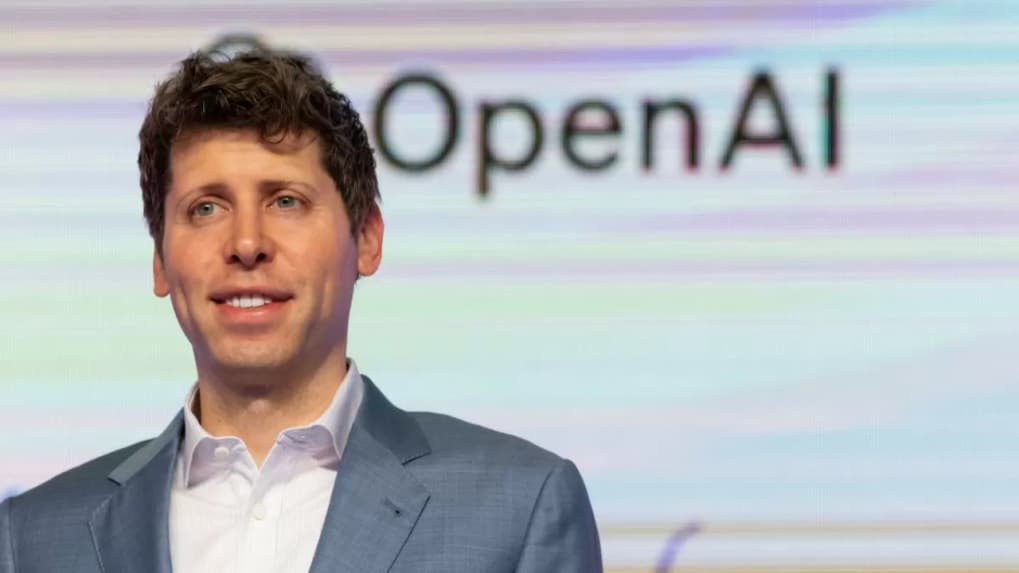
Ten years after announcing an improbable effort to build artificial general intelligence, OpenAI’s chief executive, Sam Altman, says the company has advanced further and faster than its founders imagined—while acknowledging the weight of responsibility that has grown with its influence.
OpenAI, publicly unveiled a decade ago and formally launched in January 2016, began as a small group of researchers unsure whether their unconventional vision would take hold. Altman describes its earliest days as defined by uncertainty, limited resources and a sense of mission that felt significant enough to pursue even with long odds.
Over the years, the company worked through a series of breakthroughs and setbacks that helped shape its research agenda. Early internal culture, he wrote, was built around discovery—experimenting with deep learning, gaining experience deploying it in the real world and developing techniques to make systems safer and more robust. By 2017, OpenAI had produced a string of foundational results, including advances in reinforcement learning, early demonstrations of semantic understanding in language models, and work on aligning AI behavior with human preferences.
The organization’s trajectory shifted sharply with the release of ChatGPT three years ago, followed by GPT-4. Those products transformed OpenAI from a niche research lab into a global technology force and pushed conversations about AGI—once considered fringe—into the mainstream. The rapid adoption created new operational pressures. Altman notes that OpenAI went “from nothing to a massive company” in an unusually short stretch, requiring fast decision-making and new organizational capabilities.
Among its most consequential choices, he says, was the strategy of “iterative deployment,” in which early versions of powerful models were released so the public and policymakers could form intuitions about the technology as it evolved. The approach was contentious at first but has since become a norm across the industry.
Altman argues that OpenAI’s systems can now outperform most people in demanding intellectual tasks, a shift he sees as a precursor to even more significant gains in the coming years. He credits users and business customers for adopting technology that was, in many cases, still early in its development, enabling real-world integration at an unprecedented scale.
Looking ahead, Altman’s outlook is unabashedly optimistic. He believes the company is on a clear path toward its mission of ensuring that AGI benefits humanity, and he predicts that superintelligence is “almost certain” to be achieved within the next decade. He expects future life to feel both familiar and strange: daily routines may remain steady, while people in 2035 may be capable of tasks that are difficult to imagine today.
OpenAI, he writes, still has substantial work ahead. But after a decade of experimentation, rapid scaling and intensifying global attention, Altman says the company’s direction is firm—and that the benefits already visible today are only the beginning.
From purpose-driven work and narrative-rich brand films to AI-enabled ideas and creator-led collaborations, the awards reflect the full spectrum of modern creativity.
Read MorePraveen Someshwar, Managing Director and CEO of Diageo India, joins the Grand Jury of the Storyboard18 Awards for Creativity, highlighting the awards’ focus on work that blends cultural relevance with strategic and commercial impact.