Advertising
From Pink Slips to Silent Sidelining: Inside adland’s layoff and anxiety crisis
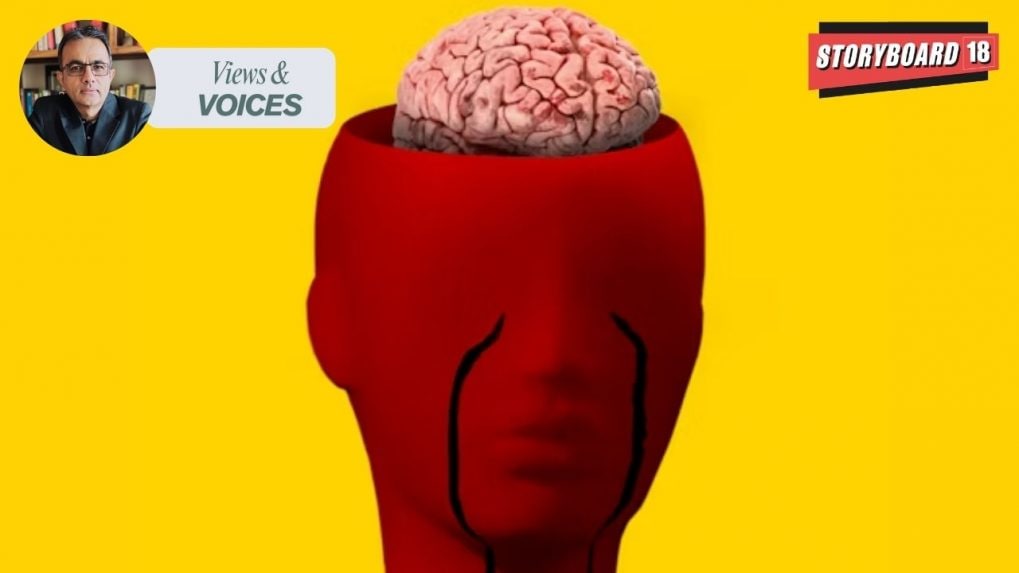
2025 didn’t just move fast—it moved differently. AI became infrastructure. Influence became commerce. Content scaled beyond human limits. Speed became the only operating mode. We got more efficient, more productive, and somehow more confused about what actually drives choice.
As we step into 2026, the question in front of us isn’t which new capability to adopt. It’s what to optimize for in a world where attention is abundant, decisions are automated, and cognitive bandwidth has become the scarcest resource.
The defining condition of the consumer today is no longer distraction—it is exhaustion.
For years, marketing framed its challenge as an attention problem. The assumption was that if we could interrupt better, entertain harder, or personalise deeper, we would win. But that diagnosis no longer holds. Consumers are not short of stimuli; they are short of mental bandwidth.
This is not an attention crisis. It is a cognitive one.
And that shift quietly—but fundamentally—rewrites the rules of marketing.
When decisions move to systems, meaning moves to brands
We are living through a structural change in how decisions are made. What once relied on intuition moved to data-driven intelligence and has now entered a phase of full integration. Algorithms don’t just assist decisions anymore; they increasingly mediate them.
From what we watch, to what we buy, to what we consider, systems shape choice before we are even aware of it. Not because people don’t care—but because caring has become cognitively expensive.
In this environment, the consumer role is shifting. We are no longer primary decision-makers; we are decision editors—approving, rejecting, or nudging what systems place in front of us. For marketers, this moment doesn’t call for alarm – it calls for direction.
The question is no longer how loudly a brand can speak, but how seamlessly it integrates—into platforms, into habits, into default behaviours. The opportunity lies not in fighting algorithms, but in becoming the brand that both people and systems trust enough to surface repeatedly.
The real enemy isn’t competition. It’s cognitive load
Marketing still talks about “cutting through clutter.” But clutter implies distance. Today’s consumer isn’t standing outside the noise—they are submerged in it.
The real enemy is not another brand. It is exhaustion.
When people are overwhelmed, they don’t behave the way classical marketing models expect. They don’t evaluate deeply. They don’t compare endlessly. They simplify. They default.
This is why the battleground has shifted—from capturing attention to reducing effort. From persuasion to relief. Ease—emotional, cognitive, behavioural—is becoming the most valuable currency a brand can offer. Not ease as a feature, but ease as a feeling: choosing you requires less thinking, less risk, less stress.
When the funnel collapses, defaults win
Under cognitive overload, the traditional funnel collapses. People skip consideration and comparison and jump straight to what feels familiar, stable, easy, or system-endorsed. In that moment, brand equity stops being about what you say and starts being about how you feel. This is where emotional safety emerges as a quiet but powerful force.
In a volatile, overstimulated world, brands that feel predictable and dependable can become psychological anchors. They don’t demand energy—they conserve it.
Choice shifts from aspiration to reassurance.
Creativity must evolve: From clever to caring
This shift demands a rethinking of creativity itself. For decades, cleverness was rewarded. Surprise was currency. But in an overloaded mind, cleverness can confuse. Surprise can feel like effort. Clarity converts. But caring will build loyalty.
The most effective work in 2026 will not try to impress people with intelligence; it will respect their mental state. It will simplify without patronising. It will guide rather than push.
Persuasion will give way to pattern-building. Because in overload, people don’t evaluate messages—they recognise signals. Brands that build consistent behavioural cues, distinctive mental patterns, and familiar shortcuts become easier to choose, again and again.
From campaigns to rituals
This is why the idea of the “campaign” feels increasingly inadequate. Campaigns demand attention. Rituals reduce thinking. Rituals turn choice into habit. They bypass exhaustion and operate in the unconscious. Whether it’s a daily interaction, a repeated behaviour, or a predictable moment of value, rituals embed brands into life rather than interrupt it.
Habit, not hype, will be the most durable form of attention in an exhausted world.
Will brands be the last unfair advantage?
I believe they will.
In a world where efficiency is commoditised and content is infinite, meaning becomes scarce. Algorithms can optimise outcomes, but they cannot create reassurance. They cannot substitute emotional memory. They cannot manufacture trust without human intent behind it.
Brands that endure will be those that humanise the machine—by standing for something, by reducing friction, by making life feel easier rather than louder.
For us marketers stepping into 2026, the direction is clear:
Don’t add noise. Design calm.
Don’t chase attention. Earn default.
Because in the age of the overloaded mind, the greatest privilege a brand can earn is to be chosen without thinking.
Jitender Dabas is the Chief Executive Officer, Cheil-X & Cheil SWA Group. Views expressed are personal.
From purpose-driven work and narrative-rich brand films to AI-enabled ideas and creator-led collaborations, the awards reflect the full spectrum of modern creativity.
Read MoreLooking ahead to the close of 2025 and into 2026, Sorrell sees technology platforms as the clear winners. He described them as “nation states in their own right”, with market capitalisations that exceed the GDPs of many countries.