Advertising
From Pink Slips to Silent Sidelining: Inside adland’s layoff and anxiety crisis
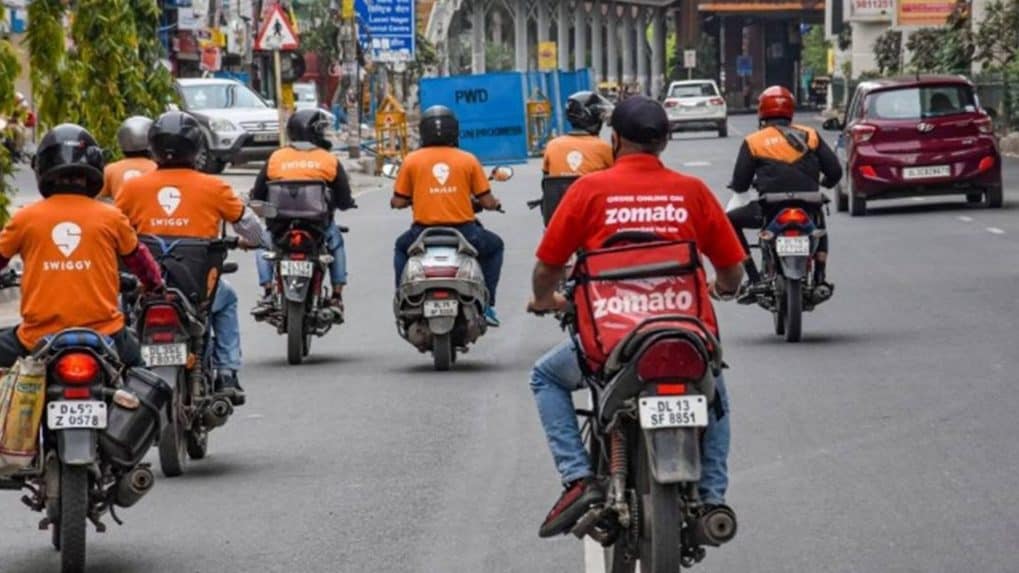
On New Year's Eve, as millions of Indians placed last-minute orders for food and groceries, a different scene was unfolding on the streets. Delivery riders gathered outside the dark stores and logistics hubs, as well as companies' headquarters, protesting against their employers.
Just weeks after the Indian government rolled out 4 labour codes meant to extend the social security protections to gig workers, a section of delivery partners for Eternal Limited (owner of Zomato and blinkit), Swiggy, Amazon, and Flipkart have staged coordinated protests across the country, demanding what they said the new laws were yet to deliver: fair pay, dignity, and workplace safety and security.
At the centre of the unrest has been the 10-minute delivery promise, a marketing slogan that has come to symbolize the breakneck pace of the booming quick commerce sector in the country. Workers called for the pledge to be scrapped, saying it intensifies pressure and risk, even if platforms insist riders are not explicitly told to hurry.
"The timer may not be visible, but the pressure is always there," said one of the workers at a protest.
The newly overhauled code on social security has formally recognized gig and platform workers. The code mandates aggregators to contribute to a social security fund. The law envisions benefits such as accident insurance, health cover and a grievance redress mechanism.
However, Balaji Parthasarathy, a professor at the International Institute of Information Technology in Bangalore pointed to the gap between the government's policy and practice. He alleged that those promises of protection remain out of reach.
For instance, the strikers of the delivery platforms have also demanded access to health insurance, pensions, and accident cover. They also slammed the automated systems that assign to deliveries and penalize delays, saying opaque algorithms cut earnings and threaten livelihoods without explanation or appeal.
The protests disrupted operations during one of the busiest periods of the year. Industry executives privately acknowledged delivery delays of more than 50% in some regions in recent days.
Among the executives, Zomato founder Deepinder Goyal has emerged as the most vocal defender of the gig model. While rivals remained largely silent despite the growing intensity of the protest, Goyal immediately announced tweaks to daily earnings and incentives in an attempt to restore normalcy.
He said, "I understand why people think 10-minute delivery must be dangerous...but it's hard to imagine the complexity of the system design that enables quick delivery without asking the rider to drive fast".
Goyal has also drawn public support from prominent business leaders, including Paytm founder Vijay Shekhar Sharma and executive vice chairman of Info Edge Sanjeev Bhikchandani. The executives said they have engaged with government officials and ministers, offering inputs on framing regulations aimed at balancing platform growth with gig worker welfare. "Eternal has been supportive, and our inputs have been received by well intentioned governments that want growth and gig worker welfare both," Bhikchandani wrote.
Labour advocates say that framing misses the point. "Speed is not just a countdown on a screen," said Shaikh Salauddin, founder-president of the Telangana Gig and Platform Workers Union. "It is built into incentives, ratings and penalties".
He said that riders feel pressure through batch orders and the threat of deactivation in case of late deliveries. "Ask them off camera, without fear, you will hear about the unstable income," said Salauddin in a response to Goyal's comment.
The labour union president has warned that it is only the beginning, and if companies fail to resolve their grievances, they will escalate the protest. "This was just a teaser," said Salauddin.
How much do delivery partners earn?
Earnings for India's delivery workers vary widely, shaped as much by time, location and incentives as by the number of orders completed.
According to data by TeamLease Services, a full-time delivery partner in a metropolitan area typically earns a gross monthly income between Rs 20,000 and Rs 30,000, and sometimes more during periods of high demand.
On a per-order basis, food delivery workers usually earn Rs 50-70 for standard orders, with payouts rising to Rs 100-Rs 120 during peak hours or under incentive schemes. Quick commerce delivery partners generally earn less per order, in the range of Rs 40-Rs 50.
Notably, the take-home income shrinks due to deductions in fuel, mobile data, and vehicle maintenance costs.
The base pay for an order covering deliveries within a fixed radius of up to five kilometres stands between Rs 20 and Rs 50. The workers said that daily income depends less on individual order payouts and more on time spent logged in, meeting incentive thresholds, and working peak demand.
Many delivery partners argued that base pay per order has fallen sharply recently, even as platforms rely more heavily on incentives to sustain earnings. Several workers said base payouts that once stood at Rs 40–45 per order have fallen to Rs 15–20, increasing income volatility.
'A tentative setback?'
India's delivery partners' unrest mirrors a global reckoning over the gig economy. In the past, Uber, Deliveroo, Glovo, and Just Eat platforms have witnessed similar uprisings in Europe and the US, while MNCs, such as Walmart, Foxconn, Nike, among others, face backlash over labour practices often that critics say prioritize efficiency over welfare.
However, some analysts argue that the impact on the Indian platforms may be limited. With a large surplus of blue-collar labour and consumers increasingly dependent on doorstep convenience, strikes may not significantly dent demand.
"The middle and upper-middle class are largely insensitive to labour conditions, added Parthasarathy, a professor at the International Institute of Information Technology in Bangalore. "People want convenience, and they will continue to use these services. That creates a kind of status quo".
While some analysts have seen a long-term risk of the ongoing unrest. Lloyd Mathias, a business strategist and angel investor, said platforms had contained immediate disruption with incentives but warned that reputational damage could accumulate.
"If customers start experiencing inconsistent service, even resilient operations won't protect brand equity," he said. "The real test is whether companies address the root concerns of workers".
India had about 7.7 million gig workers in 2020-21, according to government estimates, a number projected to more than triple by the end of the decade. Staffing firm Team Lease estimated that the current workforce is around 1 crore.
For companies racing to deliver ever faster and cheaper, the challenge is balancing growth with human cost.
“Consumers interact with gig workers almost every day,” said Paramjeet Singh, associate professor of practice at BITS Law School. “They hear their stories. These protests are unlikely to disappear, especially as workers organize better".
India's preference for convenience and low prices may cushion companies from immediate backlash, he said. But history offers cautionary tales. "Ignoring labour grievances can be costly," Singh added, citing the 2011 strike at Maruti Suzuki's Manesar plant, which halted production for months and damaged the company's reputation.
For now, India's riders continue their protest, while some zip through traffic and race against the invisible clocks.
From purpose-driven work and narrative-rich brand films to AI-enabled ideas and creator-led collaborations, the awards reflect the full spectrum of modern creativity.
Read MoreLooking ahead to the close of 2025 and into 2026, Sorrell sees technology platforms as the clear winners. He described them as “nation states in their own right”, with market capitalisations that exceed the GDPs of many countries.