How it Works
WPP, Havas, Omnicom: Are advertising’s biggest holdcos recasting agencies as AI Operating Systems?
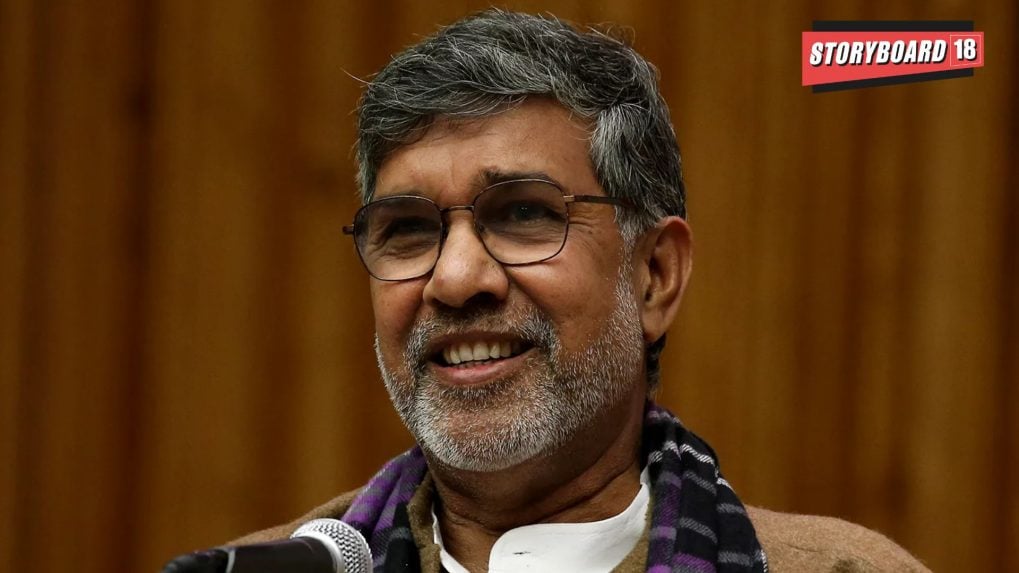
Nobel Peace Laureate Kailash Satyarthi has released his new book titled ‘Karuna’, in which he talks about developing a ‘compassion quotient.’ In an interview, he said, “Karuna is my 14th or 15th book I think."
Storyboard18's Reeta Ramamurthy Gupta caught up with him to understand what motivates this incredible crusader, a living legend of our times.
Sir, you’re saying compassion can be taught
Yes. We have to bring back love for the simple things. This begins from home; parents have to become conscious that friendship has to be the basis of parenting. When they impose ‘competition and aggression’ about marks and marks alone, the children feel cornered and pressured. Many inborn talents in them never even find a voice. Parents must replace ‘expectations’ with mutual listening and learning.
Because when a child doesn’t have a friend at home, they begin to seek solace in mindless scrolling or to prove themselves in some other dimension; for eg. video games. These lead to psychological issues in later life; because many video games feature violent action. How can there be compassion where mindless violence exists?
Bookstrapping: Inside the Mukerji family’s love affair with books
So how do we make this happen?
Since the last two years, I have been working on a compassion quotient. The good news is that unlike IQ and EQ, the compassion quotient (CQ) can be increased.Compassion is unlimited and it is up to us to dig it out from within. Along with parents, the ecosystem also includes the teachers and the community at large. Social discipline is important to develop compassion. To develop the framework for the quotient, we have brainstormed with many social scientists and psychologists. Ashoka university was a part of this and Mckinsey offered probono support. We have some clarity now. We also have to roll out some research and plan to involve universities across the world.
Will this require policy support too?
Just before the pandemic, I was working on the idea of a new UN convention to hold Data Service Provider companies accountable on online child sexual abuse material. I discussed it with several Heads of State such as Angela Merkel and Erna Solberg, because despite child sexual abuse material being banned and criminalized, it continued to be available along with other materials that spread violence and divisiveness. These materials are money spinners, so the idealistic question is ‘how to remove the financial lucrativeness from the system?’ The practical question is how to develop social discipline. Instilling a sense of moral responsibility and accountability is the key. Books are great teachers too.
In a world that’s reading less, there have never been more writers. What is the role of reading books in developing this compassion?
It is very vital. Touch has essence. When you don’t touch something, your concept of it is very vague. When you touch book, you connect with it. I do agree that reading habits are declining and so are our attention spans. Despite this, many self help books have become bestsellers. A few readers may be reaching out from a sense of invisible insecurity. They want the answer to the question, ‘how to compete and be successful?’ I am not a traditional author. I have a message and I want to pass on the torch to someone who can carry it. My message is, ‘What if we recalibrate success?’ Must success come at the cost of pushing other people back?
Any final thoughts for our readers In India, gali gali mein sadhuon ki baadh lagi hai !(there is a flood of self-proclaimed seers at every turn) Everyone is a self-help teacher these days. But preaching about morality, truth and kindness is not enough. We have to embody compassion. To achieve effective resonance with the message, we have to stop distracting ourselves and own each other’s compassion. My book 'Karuna' is for the millions of people who look for good literature; I encourage them to join the compassion movement.
From purpose-driven work and narrative-rich brand films to AI-enabled ideas and creator-led collaborations, the awards reflect the full spectrum of modern creativity.
Read MoreThe Storyboard18 Awards for Creativity have unveiled a Grand Jury comprising some of India’s most influential leaders across advertising, business, policy and culture, positioning it among the country’s most prestigious creative award platforms.