How it Works
WPP, Havas, Omnicom: Are advertising’s biggest holdcos recasting agencies as AI Operating Systems?
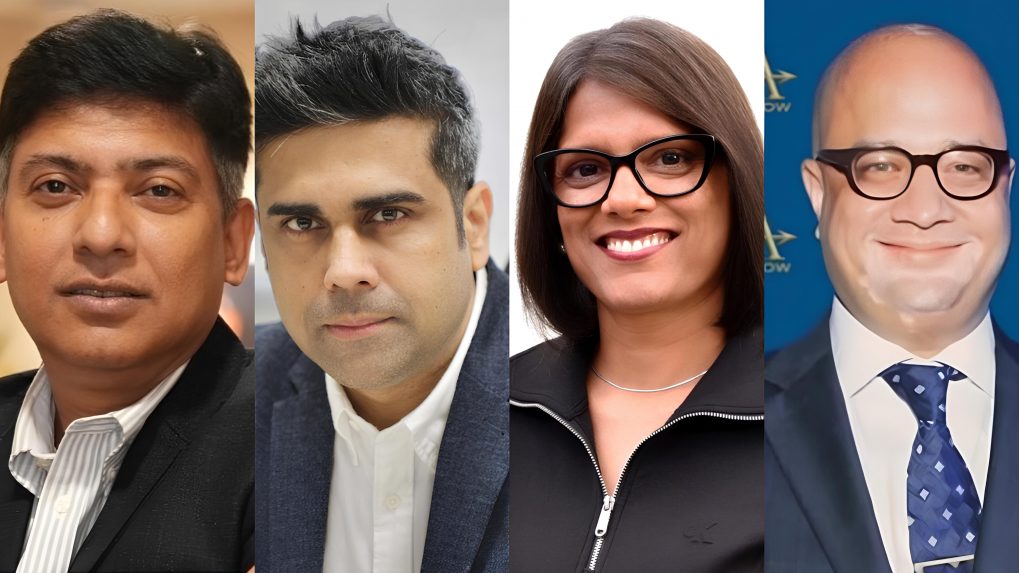
The churn, industry observers say, is structural rather than cyclical. “Fashion retail is a consumer-driven, high-growth sector, and leadership churn is almost built into the system,” says Ashish Dhir, Senior Director (Consumer and Retail) at 1Lattice. He points to the sector’s extreme fragmentation as a core reason. “Unlike industries such as paint or oil, fashion has hundreds of brands. Even the largest player in India holds barely two percent market share. That naturally creates more leadership roles and more movement.”
Dhir notes that fashion retail’s growth has increasingly drawn leaders from FMCG, e-commerce and D2C backgrounds, but the transition is rarely seamless. “Fashion is inventory-led, not distribution-led,” he says. “Products are seasonal, demand forecasting is uncertain, and inventory has to be liquidated quickly. Leaders coming from FMCG or digital-first businesses often underestimate how critical store operations, merchandising and end-of-season management are.”
At the same time, nearly 30 percent of fashion sales now happen online, adding another layer of complexity. “Omnichannel execution, digital fluency and the ability to work with tech teams are no longer optional,” Dhir says. “Legacy organisations that lack these capabilities often see churn at the senior level.”
Fashion’s inventory-led model adds further complexity. Unlike FMCG, products are seasonal, demand forecasting is uncertain and unsold stock must be liquidated quickly. “Leaders coming in from non-retail backgrounds often underestimate how critical store operations, merchandising and inventory management are in fashion,” Dhir notes.
This leadership volatility is unfolding alongside strong market fundamentals. Media reports estimate that India’s apparel market, valued at about Rs 9.30 lakh crore in FY25, is projected to reach nearly Rs 16 lakh crore—around USD 190 billion—by FY30. Rising disposable incomes, urbanisation and deeper digital penetration are accelerating the shift towards organised retail and value fashion, with organised players growing at a 10–13 percent CAGR.
Budget 2026–27 has reinforced this momentum through GST rationalisation, logistics improvements and policy support for textile manufacturing, improving affordability and supply-chain efficiency.
Recent leadership changes reflect sector-wide churn
The past two years alone have seen a wave of senior leadership transitions. In early 2026, Raymond Lifestyle appointed Satyaki Ghosh as chief executive officer. Ghosh joined from the Aditya Birla Group, where he most recently led the Cellulosic Fashion Yarn business at Grasim Industries, bringing manufacturing-scale and sustainability experience into fashion retail.
Titan Company also witnessed significant changes at the top. Ajoy Chawla took over as managing director in 2026, following Suparna Mitra’s decision to step down as CEO of Titan’s Watches and Wearables division. Mitra is set to join TeamLease Services as managing director and CEO in February 2026, succeeding Ashok Reddy.
At Myntra, Ritesh Mishra was appointed Senior Vice President – Category and Revenue, moving from Lifestyle India, where he had served as deputy CEO. The move underscored the increasing cross-migration of senior talent within the fashion retail ecosystem.
In 2025, Arvind Fashions named Amisha Jain as managing director and CEO, succeeding Shailesh Chaturvedi. Jain’s move from Levi Strauss & Co—where she had been managing director for South Asia, the Middle East, Africa and Eastern Europe—triggered another transition, with Hiren Gor stepping in to succeed her at Levi’s. The same year, Page Industries elevated Karthik Yathindra to CEO, while Adidas India appointed Vijay Chauhan as general manager.
Rakesh Jallipally moved from Flipkart to take on the CEO role at Pepe Jeans India. Vineet Gautam stepped down as CEO of Bestseller India after leading retail strategy for brands such as Jack & Jones, Only and Vero Moda; Sumit Dhingra succeeded him as country director and CEO.
Manish Kapoor, formerly MD and CEO of Pepe Jeans London, joined Marks & Spencer Reliance India as managing director, while Nihir Parikh stepped down as CEO of Nykaa Fashion and NykaaMan. Sabyasachi named Manish Chopra as CEO in 2025.
Raymond Lifestyle also saw Sunil Kataria exit his MD role to join Godrej Agrovet as CEO and managing director. Around the same period, Vishak Kumar was named CEO at Aditya Birla Lifestyle Brands. Tata Group’s retail arm Trent appointed Venu Nair—then managing director of Marks & Spencer Reliance India—as chief commercial officer in 2024; since then, Nair has moved to Myntra, where he now leads strategic partnerships and omnichannel initiatives as senior vice president. VIP Clothing elevated Kapil Pathare to deputy managing director.
A pattern that predates the current cycle
The leadership churn is not new. In 2018, Aditya Birla Fashion and Retail appointed Sangeeta Pendurkar as CEO, bringing her in from Kellogg Company, where she had been managing director for India and South Asia. She succeeded Shital Mehta, who moved to Lifestyle International as CEO of Max Fashion and currently leads the company as managing director.
The same year, Shoppers Stop appointed Rajiv Suri as CEO, a role he held until 2020. In 2018, Future Group also appointed N Mohan as director of its footwear business, reinforcing how leadership movement has long been embedded in the sector.
Why leadership roles are becoming harder to hold
According to Siddharth Verma, Head of Executive Search at Xpheno, the sector’s economics have fundamentally shifted. “Retail earlier followed a predictable cost-plus-profit structure,” he says. “Today, the question is how profit is distributed between online and offline channels. For brick-and-mortar retail, high-margin profits have often been wiped away by online competition.”
While experience-led premium retail remains viable for brands like Levi’s or Zara, Verma argues that value fashion has become a low-margin, volume-driven business dominated by digital platforms. “This has redefined leadership requirements. The modern fashion leader must be equally adept at omnichannel execution and experience-led reinvention,” he says, adding that digital literacy is no longer optional.
Fashion also faces an unforgiving “moment of truth”. “A customer will either accept or reject a product within minutes of trying it on,” Verma explains. Because fashion is a high-involvement purchase tied closely to identity, the margin for error in fit, style and size availability is extremely thin. Leaders must manage both logistical precision across vast SKUs and the emotional, fast-paced nature of consumer choice.
Verma adds that the rise of agile D2C brands has intensified margin pressure. “Traditional players with legacy supply chains and physical retail costs are now competing with digital-native brands that scale online first and enter offline retail only after demand is established,” he says. This has shortened profitability runways and increased pressure on leadership performance, often resulting in quicker exits.
Talent wars and why executives still choose fashion
Ashish Sanganeria, senior partner at Transearch, believes fashion retail remains attractive despite these pressures. “It’s a highly engaging and dynamic category,” he says, noting that leaders often gain greater autonomy and visibility than in large e-commerce or FMCG organisations. “A VP at a large platform moving to CEO at a fashion brand gains far more control over strategy and execution.”
However, Sanganeria cautions that fashion’s complexity is underestimated. Consumer preferences can change every few hundred kilometres, products are seasonal and inventory missteps can be costly. The rise of fast fashion, D2C brands and private labels has intensified competition across price points, while social media has accelerated buying cycles and heightened expectations for constant innovation.
He adds that leadership today requires a digital-first mindset. “Marketing has shifted from print and mall-based visibility to influencer-led and social-first strategies,” he says, pointing to brands that have scaled rapidly without traditional advertising. AI and technology are also playing a larger role in demand forecasting, inventory management and customer experience, from virtual try-ons to data-driven merchandising.
Despite thinner margins and relentless pressure, industry experts agree that fashion retail’s scale, visibility and growth potential will continue to attract senior talent. As Dhir puts it, “With more than 100 players, evolving consumer behaviour and expanding digital opportunities, demand for strong leadership is not going away.” For India’s fashion retail sector, leadership churn may be less a warning sign—and more the cost of staying relevant in a fast-changing market.
From purpose-driven work and narrative-rich brand films to AI-enabled ideas and creator-led collaborations, the awards reflect the full spectrum of modern creativity.
Read MoreThe Storyboard18 Awards for Creativity have unveiled a Grand Jury comprising some of India’s most influential leaders across advertising, business, policy and culture, positioning it among the country’s most prestigious creative award platforms.