
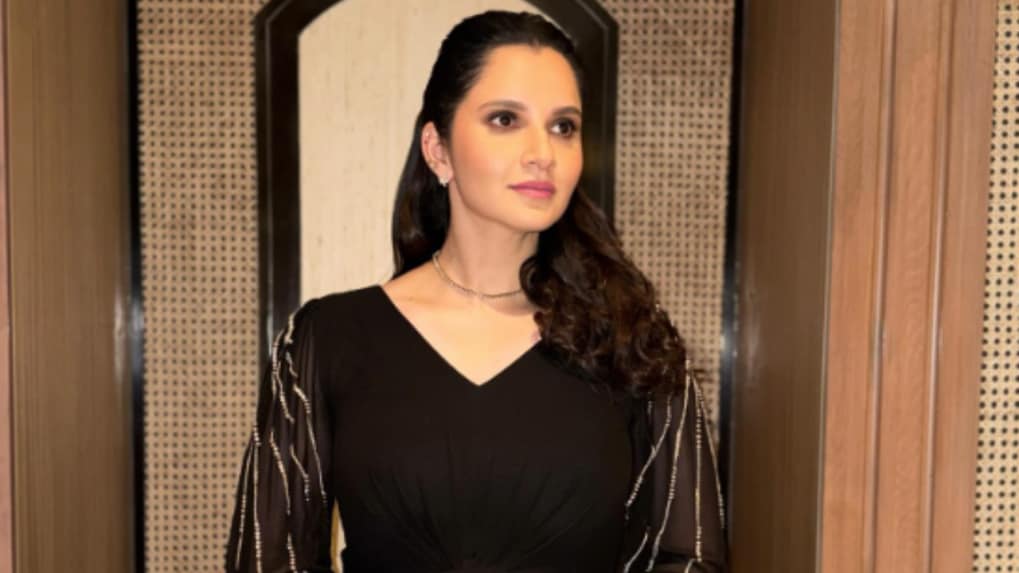
Sania Mirza recalls depression after career-threatening injury forced Olympic withdrawal
She further informed the podcast that the emotional struggle lasted for several months, during which she found it difficult to extend empathy towards herself.

ADVERTISEMENT
Former Indian tennis player Sania Mirza once reflected on her struggle with depression following a career-altering injury, speaking candidly about the mental toll of elite sport during a podcast hosted by The Live Love Laugh Foundation.
During a conversation with Anisha Padukone and psychiatrist Dr Shyam Bhat, Mirza spoke about suffering a severe wrist injury in 2008 that forced her to withdraw from the Olympics, at a time when she believed her tennis career might be over. She informed the hosts that the injury left her unable to perform basic tasks, including combing her hair, and triggered an overwhelming fear that she would never return to competitive tennis.
Mirza said the physical setback quickly translated into emotional distress, as she began to feel for the first time that she was letting her parents down. She stated that she did not recognise the condition as depression at the time but described isolating herself for nearly six weeks, spending most of her time confined to her room, avoiding social interaction and limiting contact even with her parents. She described that period as deeply distressing.
She further informed the podcast that the emotional struggle lasted for several months, during which she found it difficult to extend empathy towards herself. Despite this, she said tennis remained her emotional refuge, explaining that stepping onto the court provided relief from stress and restored a sense of happiness, even amid uncertainty about her future in the sport.
Dr Bhat, reflecting on Mirza’s experience during the discussion, stated that depression among high-achieving individuals often presents differently. He said he frequently observes that emotional challenges in successful people are channelled into their work, sport or creative pursuits, where distress becomes intertwined with performance rather than expressed openly.
Mirza’s reflections form part of broader conversations around mental health in high-pressure careers, highlighting how professional success can coexist with profound emotional vulnerability.