
Food influencer flags ingredient gaps between Knorr India and UK soups, sparks quality debate
A viral post by food safety influencer Revant Himatsingka has renewed scrutiny of ingredient composition in packaged soups sold in India versus overseas markets.

ADVERTISEMENT
A social media post by food safety advocate Revant Himatsingka, popularly known as Food Pharmer, has reignited debate around ingredient quality in packaged foods sold in India, after he highlighted stark differences between Knorr soup formulations available in India and the United Kingdom.
In a LinkedIn post that has since gained wide traction, Himatsingka questioned the nutritional value of popular Knorr instant soups sold in India, claiming that refined flour (maida) is listed as the primary ingredient in several variants. He argued that soups are generally perceived as being water-, vegetable-, or broth-based, making the ingredient composition surprising for many consumers.
Also read: Gujarat relaxes liquor rules at GIFT City, drops permit requirement for visitors
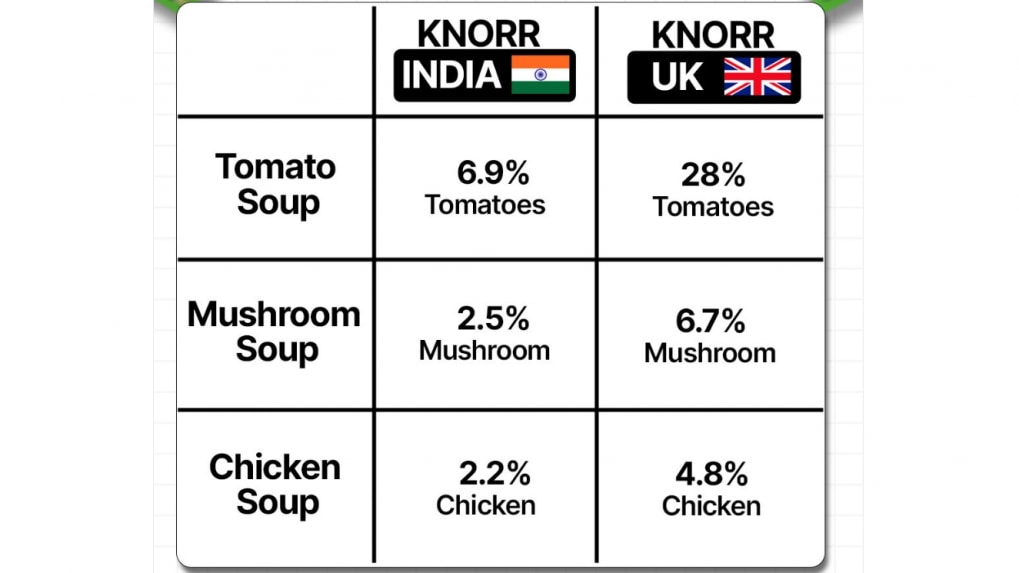
Citing label information, Himatsingka pointed out that Knorr’s mushroom soup sold in India contains about 2.5% mushroom content, while the chicken soup reportedly contains around 2.2% chicken. He also noted that sugar appears as the first listed ingredient in Knorr’s tomato “Chatpata” soup variant.
What further fueled the debate was a comparison graphic shared alongside the post, showing that equivalent Knorr soup products sold in the UK contain significantly higher proportions of key ingredients. For instance, tomato soup sold in the UK reportedly contains 28% tomatoes, compared to 6.9% in India, while mushroom and chicken soups also showed higher ingredient percentages overseas.
Himatsingka also shared a personal anecdote, stating that his parents had encouraged Knorr soups during winters while growing up, believing them to be a healthier alternative to tea or coffee. He questioned whether Indian consumers are being offered lower-quality formulations under the same global brand.
Also read: OYO parent PRISM gets shareholder nod for Rs 6,650-crore IPO
The post has sparked broader conversations around food labelling norms, consumer awareness, and regulatory standards for packaged foods in India. While multinational food companies often tailor recipes to local tastes and pricing considerations, critics argue that ingredient transparency and nutritional parity remain key concerns.
Himatsingka urged consumers to be more vigilant about labels and suggested opting for homemade soups over instant alternatives. As of now, Knorr’s parent company has not publicly responded to the claims, but the discussion highlights growing consumer scrutiny of processed food quality in India amid rising health awareness.