
Hyundai’s India storm: Piyush Goyal’s rebuke, Kashmir backlash, labour unrest and weak sales
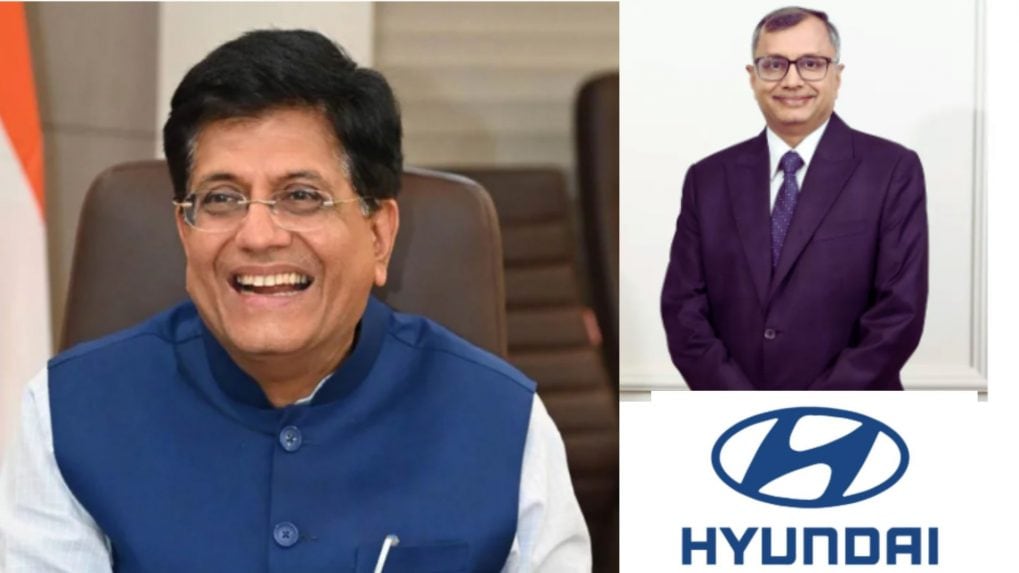
Hyundai Motor India’s MD and CEO Tarun Garg finds himself navigating one of the most complex phases of the company’s India journey, as political sensitivities, regulatory scrutiny and market pressures converge.

ADVERTISEMENT
When Commerce and Industry Minister Piyush Goyal publicly flagged concerns over Hyundai Motor India’s trade practices, it marked more than a routine policy disagreement — it signalled a tougher stance. For Hyundai Motor India Ltd. (HMIL) and its newly appointed MD and CEO Tarun Garg, the company now navigates political sensitivities, policy scrutiny and emerging market pressures. Goyal’s criticism, spanning issues from trade deficits and localisation to corporate accountability, has placed Hyundai firmly under the government’s lens.
The flashpoint erupted in February 2022 when a Hyundai Pakistan dealer’s social media account shared posts marking “Kashmir Solidarity Day,” a sensitive political observance in Pakistan supporting separatist movements in the disputed Kashmir region. The posts, which spoke of “sacrifices of Kashmiri brothers,” quickly triggered a major backlash on Indian social media, with hashtags like #BoycottHyundai trending as hundreds of users called on customers to cancel orders or switch brands.
Although the posts were made by an independently owned distributor in Pakistan and were subsequently deleted, India’s authorities did not take the matter lightly. The Government of India summoned the South Korean ambassador and conveyed strong displeasure, emphasising that there can be “no compromise on issues relating to territorial integrity.” Hyundai’s global headquarters issued statements calling the posts “unauthorised” and expressing regret for offending Indians, but the government pushed for a “more forceful and unequivocal apology,” as Commerce Minister Piyush Goyal stated in Parliament.
The controversy highlighted the tightrope global corporations must walk in geopolitically sensitive markets like India. For Hyundai, which has been a key player in the Indian auto sector — at times the second-largest carmaker by volume — the episode was a reputational challenge, underscoring how actions of affiliates, even outside India, can have domestic repercussions.
Goyal’s criticisms of Hyundai, however, have shifted to economic and trade concerns. At the Asia Economic Dialogue, the minister accused Hyundai of contributing to India’s trade deficit by “misusing the Free Trade Agreement (FTA)” between India and South Korea. According to Goyal, relaxed import terms under the FTA have allowed these companies to bring in components and products freely, leading to a significantly higher deficit — “costing India billions of dollars,” he said.
Goyal’s comments reflect a broader tension over India’s trade policy and industrial strategy. Critics of the current FTA framework argue that without reciprocal market access or stronger localisation, domestic industries may face unfair competitive pressures, a concern gaining traction ahead of potential FTA renegotiations.
Roadblocks for Tarun Garg, newly appointed MD and CEO
Hyundai Motor India’s MD and CEO Tarun Garg finds himself navigating one of the most complex phases of the company’s India journey, as political sensitivities, regulatory scrutiny and market pressures converge. While Garg has largely focused on strengthening Hyundai’s product pipeline, localisation strategy and EV roadmap, controversies beyond the balance sheet have added an extra layer of challenge.
The Kashmir-related social media backlash — despite originating outside India — placed the company’s leadership under an uncomfortable spotlight, forcing swift damage control and delicate engagement with the government. For Garg, the episode underscored how reputational risks in today’s hyperconnected environment can quickly escalate into business and diplomatic issues, even when operational control is indirect.
At the same time, Garg is also contending with tougher policy signals from New Delhi, particularly Commerce and Industry Minister Piyush Goyal’s pointed criticism of Hyundai over trade imbalances and alleged misuse of free trade agreements. These remarks strike at the heart of Hyundai’s cost structure and long-term India strategy, especially as the government pushes for deeper localisation under the ‘Make in India’ framework.
Coupled with intensifying competition and softer sales momentum in key segments, the pressure on Garg is twofold: to reassure policymakers of Hyundai’s commitment to India’s manufacturing ambitions, while simultaneously defending market share in an increasingly crowded and politically conscious auto market. The coming months could prove decisive in shaping both Hyundai’s India narrative and Garg’s leadership legacy.
Adding to the challenges, recent sales data suggest that Hyundai’s performance in the Indian market is softening. According to industry reports, Hyundai India’s total sales fell by around 6% year-on-year in June 2025 amid weak demand and softer dealer dispatches.
Market watchers note that Hyundai’s once-dominant models such as the Creta and Venue have seen relatively muted performance compared to past years, with some noting that no Hyundai model made it into the top 10 passenger car sales chart in India in late 2025 — a rare occurrence given the brand’s historical strength.