
Ad spending on women’s sports rises 139%, but coverage stalls at 15%
Sponsorship spending in the WPL 2026 has expanded rapidly, growing more than threefold in the past three years, from Rs 40 crore (Approximately) in 2023 to RS 130 crore in 2026

ADVERTISEMENT
For much of India's sporting history, commercial attention toward women athletes has arrived in waves, cresting after major victories and then receding just as quickly. That pattern is gradually changing, though unevenly, as women's sport edges toward a more durable place in the country's advertising economy.
The Women's Premier League, now in its fourth season, reflects that shift clearly, with a rise in daily viewership, and the current edition of the league is drawing sponsors, including ChatGPT, L'Oréal, and DeBeers. According to the valuation advisory firm Kroll, 15 companies across the banking, technology, and automobile sectors have partnered as official sponsors for WPL 2026.
Sponsorship spending in the league has expanded rapidly, growing more than threefold in the past three years, from Rs 40 crore (Approximately) in 2023 to RS 130 crore in 2026, according to Kroll estimates. The growth reflects not only rising audiences but also a recalibration by brands that once viewed women's cricket as a limited, event-driven opportunity.
While cricket remains the primary gateway, it is no longer the only one. SG Pipers, a sportswear brand, has confirmed five sponsorship deals across principal, co-sponsor, and associate tiers for Indian women hockey, signalling broader commercial confidence in women's sports beyond cricket.
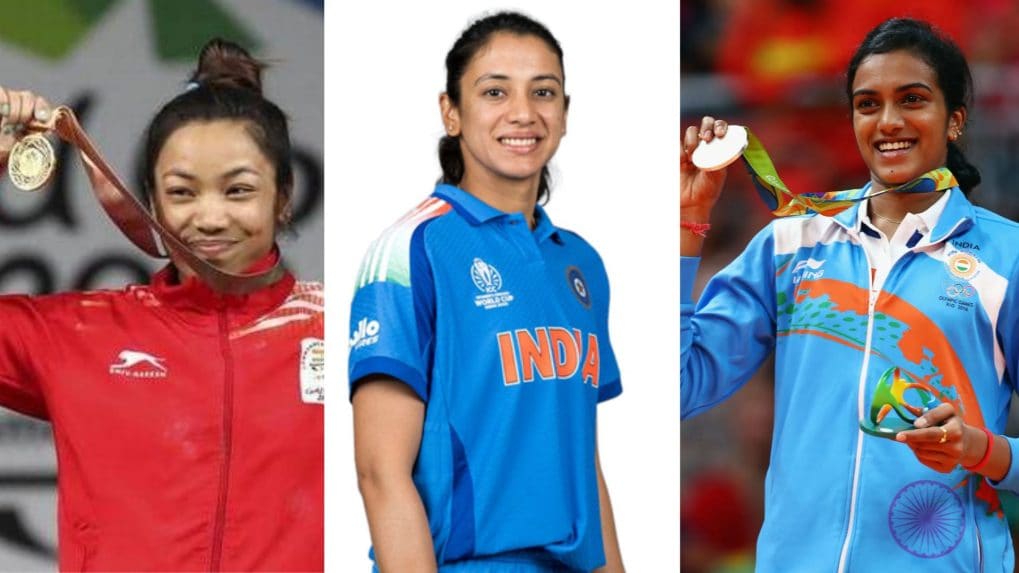
The confidence has been shaped by a series of historic performances over the past decade. India's victory at the ICC Women's ODI World Cup in 2025, PV Sindhu's silver medal at the Rio Olympics, Lovlina Borgohain's bronze at the Tokyo Olympics, among others, established women athletes as consistent national figures rather than episodic heroes.
Most of these athletes have translated that visibility into commercial scale. Smriti Mandhana, ranked 2nd in the ICC top batter ranking, has emerged as a leading indicator of the market's evolution. According to Kroll, her brand rank improved from 54 in 2023 to 42 in 2024, while her brand value rose sharply from $10.9 million to $17.6 million in the same period. The number of endorsements she holds also rose swiftly. At present, Mandhana works with brands such as Nike, Hyundai, SBI, Herbalife, and Rexona.
Indian cricket team captain Harmanpreet Kaur's growth, while more modest, reflects a similar trajectory. Her brand value rose 47.1% in 2024 to $5.4 million, and her endorsement portfolio expanded to include companies such as ITC Foods, Puma, CEAT, and Tata Safari.
A couple of women cricketers, led by Mandhana, now hold brand values comparable to mid-tier male players such as Suryakumar Yadav and Shubman Gill. Endorsement fees for top women players, estimated at Rs 1-Rs 2 crore, increasingly mirror those of rising male cricketers.
However, the commercial ecosystem remains uneven, as male athletes typically retain sponsor backing through a period of inconsistent performance. By contrast, women athletes are more exposed to volatility.
Yadav's brand value stood at $28.2 million in 2024, with nearly 20 endorsements and steady year-on-year growth. Gill, despite a decline in brand value and endorsements in 2024, continues to attract sponsors.
Outside cricket, the pattern is even more pronounced. Ace Indian badminton player PV Sindhu's brand rank declined from 24 in 2022 to 39 in 2024, while her brand value fell from $26.5 million to $21.9 million. Weightlifter Saikhom Mirabai Chanu also saw a drop in brand value and endorsements over the same period.
According to Entertainment Data Oracle, women's sports television advertising spend increased 139% in 2024 to $244.4 million , with higher-than-average engagement rates. Yet women's sports still account for only ablut 15% of overall sports , media coverage, a structural limitation that continues to constrain long-term brand investment, said Neha Chopra, who leads strategic planning at the advertising firm Enormous.
"Brands disengage from women athletes faster when performance dips, not out of bias but because the commercial system around women's sports is still fragile," said Chopra.
She said that men benefit from patience capital, while women are evaluated more strictly on short-term performance.
Some brands are beginning to adopt longer-term approaches. For instance, Royal Challenge Packaged Drinking Water has built campaigns that place women athletes and fans at the centre of its storytelling, featuring Mandhana alongside Virat Kohli and foregrounding women's fandom rather than only on-field results.
Whether such efforts signal a lasting shift remains an open question. The next phase of women's sports in India will depend less on breakthrough moments and more on whether advertisers are willing to sustain investment through quieter seasons.