
Remote work for stranded H-1B staff may expose US firms to India tax risks
Visa delays leave companies weighing workforce continuity against permanent establishment risks.

ADVERTISEMENT
US companies allowing H-1B visa holders stranded in India to work remotely could face significant tax and compliance risks if the arrangements continue for an extended period, tax experts have warned. The concerns come after Amazon said it would permit some of its affected employees to continue working from India while awaiting visa clearances.
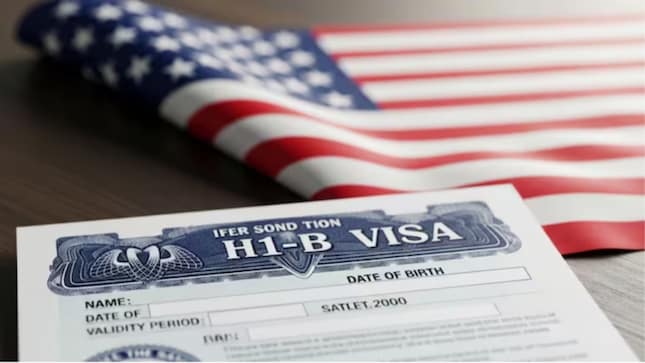
Thousands of H-1B workers have been unable to return to the United States after travelling to India for visa stamping appointments that were subsequently postponed. The delays follow a new social media vetting requirement introduced by the US State Department for all H-1B and H-4 visa applicants globally. Indian applicants have been among the most impacted, after US consular offices in India sharply reduced the number of daily interview slots from December 15, 2025.
As a result, interview appointments initially scheduled for January and February 2026 have been deferred, with some applicants now receiving revised dates extending into 2027 due to the growing backlog.
Also read: Karnataka to levy welfare fee on ecommerce platforms to fund gig workers’ social security
According to tax experts quoted by Bloomberg, allowing employees to work remotely from India for an extended period could lead to the creation of a “permanent establishment” (PE) under Indian tax laws. Parizad Sirwalla, partner and national head of tax at Global Mobility Services at KPMG India, told Bloomberg that such a development could expose US employers to corporate tax liabilities in India.
If a permanent establishment is deemed to exist, companies may be required to pay taxes on income attributable to Indian operations and comply with local reporting and regulatory requirements. Sirwalla noted that employers need to carefully evaluate the nature of activities performed by employees while they are physically present in India, as this can increase PE risk.
Companies face limited alternatives. If employers choose to terminate stranded H-1B workers and hire replacements, they may incur costs of up to $100,000 per new H-1B visa applicant if the candidate is outside the US. On the other hand, extended remote work arrangements raise the risk of tax exposure and regulatory scrutiny.
India and the United States have had a bilateral income tax treaty in place since 1989 to prevent double taxation. Under the treaty, a US company is taxed in India only if it is considered to have a permanent establishment in the country. However, experts caution that the definition of a PE is not clearly delineated, leaving room for interpretation when employees work remotely from India for prolonged periods.
Also read: India–EU free trade pact promises tariff gains, faces carbon and compliance tests
With no clarity on how long visa processing delays may continue, tax advisers are urging US employers to closely monitor remote work arrangements for stranded H-1B workers and assess their potential tax and compliance exposure.