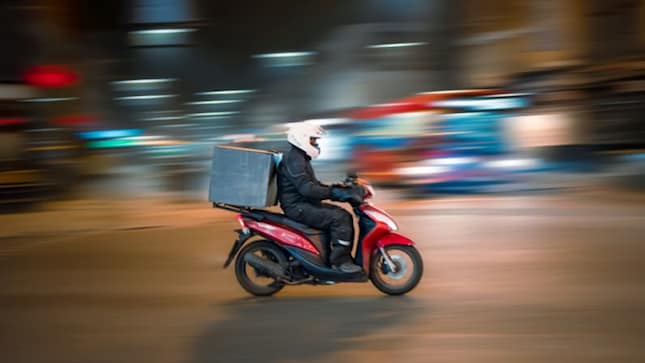

India’s 10-minute delivery model faces pressure amid rider strikes and safety concerns
India’s gig economy is projected to grow to 23.5 million workers by 2030, nearly three times its size a decade earlier.

ADVERTISEMENT
India’s fast-growing quick-commerce industry is facing renewed scrutiny after a nationwide flash strike raised questions over the sustainability of the country’s 10-minute delivery model.
More than 200,000 delivery riders refused to transport food, groceries and other orders across India on New Year’s Eve, demanding better pay, safety and dignity, while also calling for an end to ultra-fast delivery timelines, as reported by Bloomberg. While some of the grievances can be addressed by platform companies, the union leading the protest has pushed for a more fundamental shift away from 10-minute delivery promises.
India’s appetite for rapid delivery intensified during pandemic lockdowns, initially focused on essential goods. Unlike the United States, where quick-commerce firms such as Fridge No More, Buyk, Jokr and Getir either shut down or scaled back once consumer habits normalised, India’s market expanded further by shortening delivery windows and widening product categories to include items ranging from pillows to prescription medicines.
Platforms such as Blinkit, Swiggy Instamart and Zepto have invested heavily in dark stores, which are small, strategically located warehouses designed to fulfil online orders rapidly. Traditional retailers, led by Reliance Industries chairman Mukesh Ambani, along with global e-commerce players including Amazon.com Inc. and Walmart Inc.-owned Flipkart, entered the segment later but are now ramping up investments. Real estate consultancy Savills Plc has projected that the number of dark stores in India will triple to 7,500 by 2030 from around 2,500, as demand for instant delivery spreads beyond major cities.
The strike has intensified debate around the human cost of the 10-minute delivery model. While platforms maintain that riders are not formally timed, delays can result in lower ratings, reprimands from supervisors and financial penalties, which critics say encourage risky behaviour on narrow, congested and poorly maintained roads. India already records a road fatality roughly every three minutes, and in cities such as New Delhi, delivery workers also face prolonged exposure to hazardous air pollution.
Investor concerns had been mounting even before the strike, driven by discussions around expanding social security coverage for gig workers under India’s new labour codes. Since mid-October, shares of Swiggy Ltd. and Eternal Ltd., which owns food delivery platform Zomato and quick-commerce service Blinkit, have declined by about 20 per cent, despite the benchmark Nifty 50 Index remaining largely flat.
The flash strike has added another layer of uncertainty. Bloomberg reported that if regulations force consumers to accept longer delivery times or improve labour protections, the economics of the 10-minute model could unravel before it reaches profitability. Platform operators have sought to counter this narrative. In a series of posts on X, Eternal chief executive officer Deepinder Goyal stated that a small number of individuals attempted to obstruct non-striking riders and informed that operations remained unaffected, with order volumes touching a record 7.5 million on 31 December.
Goyal also sought to address safety and wage concerns, stating that the 10-minute delivery promise does not encourage reckless driving, as Blinkit riders typically travel an average distance of two kilometres at a speed of 16 kilometres per hour. He added that the company pays insurance premiums for riders and that the average worker earns about 102 rupees per hour while logged in. Based on a 10-hour workday across 26 days a month, this translates to around 21,000 rupees in monthly earnings after accounting for fuel and vehicle maintenance, with tips remaining minimal.
India’s gig economy is projected to grow to 23.5 million workers by 2030, nearly three times its size a decade earlier. Bloomberg noted that similar pressures exist in China, where intense competition has pushed delivery workers to extreme limits despite stronger job creation. Analysts have pointed out that without effective government intervention, expanding consumer choice risks deepening insecurity for workers, placing the burden of speed and convenience squarely on those delivering it.