
When AI Becomes the Ad: How McDonald’s Christmas ad exposed advertising’s creative confidence crisis
The McDonald’s Netherlands AI Christmas campaign did not just collapse creatively; it triggered a revealing scramble for damage control.

ADVERTISEMENT
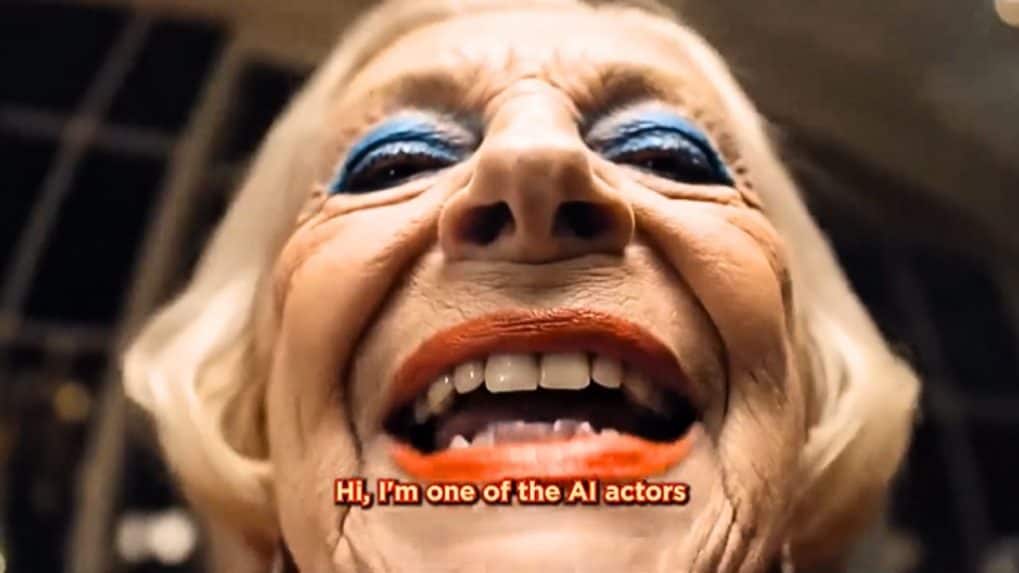
The McDonald’s Netherlands Christmas campaign will be remembered less for what it tried to say and more for how quickly it unravelled. What began as an attempt to address holiday stress through an AI-generated film spiralled into a reputational debacle, spawning ridicule, parody, and sharp industry criticism.
While much of the initial outrage fixated on artificial intelligence, the aftermath tells a more instructive story-one about creative misjudgement, institutional defensiveness, and how brands and agencies react when experimentation backfires in public.
Industry voices are largely aligned on one point: AI itself was not the problem.
The problem was an idea that failed to resonate emotionally, amplified by a technology ill-suited to carry such nuance.
As Sanjay Deshmukh, CEO of Garage Worldwide, has argued, even a traditionally shot commercial would likely have faced similar backlash. Christmas is culturally understood as a season of warmth and optimism. Reframing it as bleak and cynical was always going to be risky.
The audience rejection had little to do with software and everything to do with sentiment.
But what followed the backlash is where the episode becomes truly revealing.
Brand and agency reaction to the backlash
Once the campaign went viral for all the wrong reasons, McDonald’s rapidly pulled the film from circulation. TBWA and The Sweetshop, the agency and production company behind the ad, began scrubbing traces of the commercial from the internet. Even a public statement issued by The Sweetshop’s CEO, which struck a notably defensive tone, later disappeared.
That statement, now unavailable, attempted to emphasise the human effort behind the AI execution rather than acknowledge the creative failure.
“For seven weeks, we hardly slept, with up to 10 of our in-house AI and post specialists at The Gardening Club working in lockstep with the directors,” it read.
The subtext was clear: this was not careless automation, but labor-intensive innovation.
Yet the response only reinforced the criticism that the industry was more invested in proving technological sophistication than reflecting on whether the idea deserved to exist at all.
Even more striking was McDonald’s own reaction. Asked why the ad had been taken down, the brand reportedly issued a carefully worded statement that avoided engaging with the controversy head-on. “The commercial was produced for McDonald’s Netherlands, but we have decided to remove our AI-generated Christmas advert,” it said. The explanation framed the intent as empathetic—highlighting stressful holiday moments—before conceding that many consumers view the season as “the most wonderful time of the year.”
The statement ended on familiar brand-safe language about “Good Times and Good Food,” offering closure without introspection. What it did not do was explain how such a misalignment passed through layers of approvals—or what would change as a result.
Notably, McDonald’s was emphatic that coverage should reference “McDonald’s Netherlands,” repeatedly insisting that the controversy be geographically contained. With no further comment from either the Dutch subsidiary or global headquarters, the strategy appeared to be one of brand insulation. By localising the failure, the parent company could protect the global brand from wider fallout.
This has fuelled speculation within the industry. One theory suggests that McDonald’s headquarters, which holds direct capital in McDonald’s Netherlands, may have encouraged the Dutch market to test AI-led advertising as a controlled experiment. If true, placing responsibility on the local entity would be a convenient way to contain reputational damage when the experiment failed. There is no direct evidence of this, but the insistence on isolating blame has only deepened scepticism.
For cultural strategist Shubhranshu Singh, such outcomes are the product of bureaucratic approval systems that prioritise process over perception.
Work passes every formal checkpoint as long as it ticks required boxes. AI dazzles stakeholders, dulling the instinct to ask basic human questions about meaning and implication. Advertising, Singh reminds us, is as much about what is implied as what is shown.
Automation can assist execution, but judgement cannot be automated.
Ryan Parker of Infectious Advertising takes this further, arguing that empathy, not innovation, should have been the primary filter. Christmas is emotionally charged; it magnifies vulnerability. Any attempt to address holiday stress requires deep human sensitivity. In this case, whatever empathetic intent existed was lost amid the artificiality and tonal confusion of the AI-generated film. The result was not reassurance, but alienation.
The technology may be impressive, but holidays are about heart, and heart cannot be simulated.
Vinit Patil, Creative Director, SW Network, echoes a similar sentiment. Festive moments demand restraint, not bravado, he says.
"Christmas is sacred territory, both emotionally and culturally. You cannot enter it without humility.
AI only amplifies what you feed it. If the idea is weak, the amplification only makes it louder. Creativity has never failed because of tools. It fails when humans stop taking responsibility for the feelings they put into the world."
For Petal Gangurde of XYXX Apparels, the campaign reflects a broader, more troubling pattern.
“Ad agencies are under pressure to prove they are cutting-edge, and they’re making the mistake of making their tech stack the hero of their pitch,” she says. “They’re forgetting that AI is a tool. The core idea, based on consumer insight, is what actually inspires action and moves the needle.”
This obsession with showcasing capability over connection, Gangurde warns, is not new — and it has already contributed to the decline of several once-dominant agencies.
On the creative itself, she agrees that AI merely amplified a deeper failure.
“The idea had hands and legs, but the core insight was not in sync with the global spirit of festivity and good cheer,” she says. “The first rule of good advertising is understanding the consumer, and this one missed that completely.”
Commercial pressures also played a decisive role.
Rahul Vengalil, CEO and co-founder of tgthr, points to a dangerous convergence: the fear-driven rush to “do something in AI” and the growing use of AI as a cost-cutting tool.
Clients increasingly view AI as a cheaper substitute for traditional production, even if quality suffers.
When boundary-pushing ideas meet compressed budgets and weakened quality control, failure becomes almost inevitable.
Vengalil warns that AI is being mythologised as a replacement for creative thinking rather than a facilitator of it. Treated like Photoshop—speeding up workflows, it can be powerful. Treated like a shortcut to insight, it becomes a liability. The McDonald’s campaign, he argues, has become notorious not because it used AI, but because it revealed how quickly belief in AI’s “miracles” can override creative caution.
This anxiety-driven rush to adopt AI is something Janani Kandaswamy, Marketer and former marketing head of Versuni & ITC, sees repeatedly across boardrooms.
“There is a lot of FOMO amongst marketers, with undue pressure to adopt martech, especially AI everywhere, even where it adds little or no value. In reality, marketing effectiveness comes from insight, creativity, and context — not from using tools just because they exist,” she says.
According to Kandaswamy, brands and agencies are increasingly defaulting to tool-first thinking, replacing a problem-first approach.
“‘Which AI tool should we use?’ is the question plaguing brands and agencies instead of, ‘What problem are we solving?’ Martech should be an enabler, not the solution.”
Used correctly, she notes, AI has a clear and limited role: automating dashboards, speeding up analysis, and handling repetitive tasks — freeing marketers to focus on strategy, creativity, insighting, and stakeholder management.
Marketers agree the lesson is structural, not technical.
Saket Choudhary of Hisense India stresses that innovation works best when it quietly enhances a strong idea. In emotionally significant moments like Christmas, senior creative and cultural reviews are not optional, they are essential. AI should support storytelling, not compete with it for attention.
Nakul Goel of Flosenso frames the episode as a warning signal. Brands, he says, are confusing technical progress with creative progress. When campaigns collapse despite multiple approvals, it indicates that human judgement is being diluted. Research suggesting that most marketers have faced AI-related issues, but few have external safeguards, underscores how exposed brands really are.
For Goel, AI-led creativity demands clearer boundaries, especially during moments where sentiment is everything. These are not times for optimisation or experimentation at scale. They require multidisciplinary oversight, emotional testing, and, crucially, the courage to stop work that does not feel right, even if it showcases cutting-edge technology.
The McDonald’s Netherlands saga ultimately exposes an uncomfortable truth.
Advertising does not lose public trust because it experiments with new tools. It loses trust when it prioritises novelty over nuance, process over people, and defensiveness over reflection. In this case, AI did not fail advertising. Advertising failed itself, then tried to quietly delete the evidence.