
How India’s ad monetisation model was rewritten in 2025
Retail media is expected to cross ₹30,000 crore and account for around 15 percent of ad spend by 2026, a change that is already forcing brands to rethink how they allocate budgets

ADVERTISEMENT
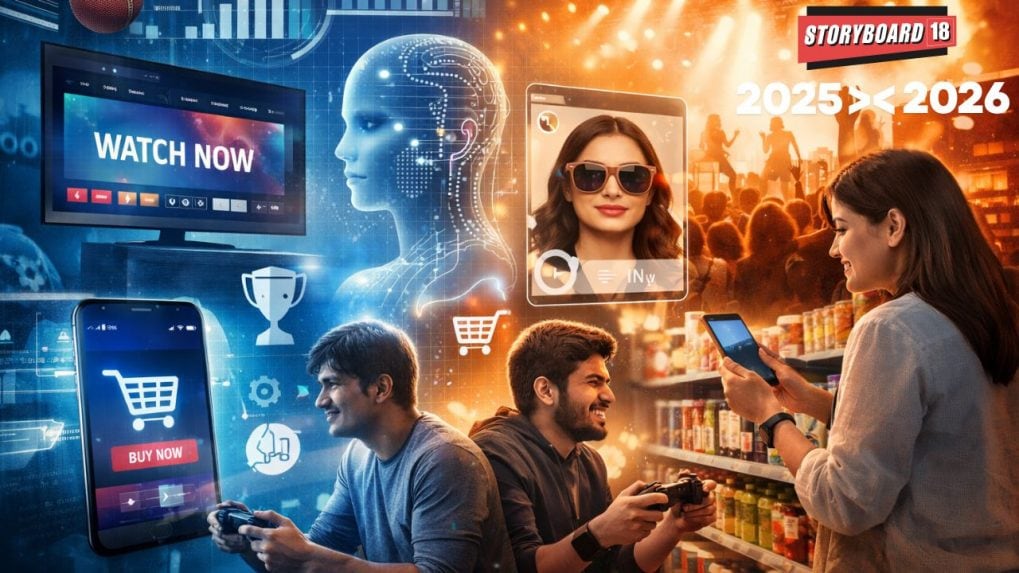
If there was one thing that became clear in India’s advertising business in 2025, it was that the way money is made from media no longer looks the way it used to. According to industry experts, monetisation has shifted decisively toward digital, retail media and connected TV, even as television and print steadied themselves and reworked pricing and inventory in response to new realities.
What really changed, however, was not just where the money went, but what advertisers now expect in return.
Across the board, monetisation in 2025 became more data-driven, more tightly linked to commerce, and far more dependent on artificial intelligence. Instead of buying exposure and hoping for results, brands increasingly demanded proof of business impact.
From impressions to outcomes
AI quietly moved into every layer of the monetisation stack this year. Industry experts said it now plays a role in everything from dynamic creative generation and predictive bidding to building look-alike audiences and powering the new generation of AI-led search and summary ads. Together, these systems have changed how impressions are priced, how campaigns are optimised, and how value is assigned.
At the same time, privacy changes and signal loss forced brands and platforms to lean heavily on first-party data, clean rooms and publisher-commerce partnerships to maintain targeting and measurement. According to industry experts, advertisers no longer view reach as a sufficient metric on its own. Buying is now increasingly tied to sales, app installs and lead generation.
This has put pressure on publishers and platforms to demonstrate ROI through better attribution, incrementality testing and closed-loop reporting. Simply delivering eyeballs is no longer enough.
CTV becomes a serious business
2025 was also the year connected TV stopped being an experiment and became a core part of media plans.
India now counts 313 million digital-only viewers and 129 million CTV viewers, and that scale has pushed programmatic CTV and shoppable video into the mainstream of serious media buying, according to industry experts.
Recent measurement data shows that 116 million viewers now consume content across both linear TV and CTV, a 17 percent jump in just two quarters. Nearly half of new CTV viewers are coming from rural India, underlining that the shift is no longer limited to big cities.
Earlier forecasts that addressable TV homes would cross 45 million by the end of 2024 appear to have played out in full in 2025. Two-thirds of viewers now say ads on OTT platforms feel more appealing and relevant than traditional TV advertising, while 41 percent are willing to watch ads on streaming services to reduce subscription costs. For advertisers, that combination of scale, targeting and acceptance has turned CTV into one of the strongest monetisation engines in the market.
Retail media moves to the centre
The biggest structural shift, however, came from retail media.
Industry experts said marketplaces are no longer treated as the last stop before conversion. They now sit at the heart of the customer journey, influencing discovery, consideration and purchase. For many advertisers, marketplaces have become central to both customer acquisition and revenue growth.
This trend is only accelerating. Retail media is expected to cross ₹30,000 crore and account for around 15 percent of ad spend by 2026, a change that is already forcing brands to rethink how they allocate budgets.
The rise of quick commerce and delivery apps has further transformed monetisation. With the time between ad exposure and transaction shrinking to minutes, advertisers can now see almost immediate sales impact from their media investments. According to industry experts, this ability to directly link media to revenue is driving a steady shift of budgets toward commerce-led channels.
Globally, commerce-driven advertising is expected to hit $178 billion in 2025, overtaking total television ad revenue for the first time. While India remains heavily TV-driven, experts say commerce media’s growth curve is now impossible to ignore.
New attention pools: gaming and live communities
Beyond CTV and retail media, 2025 also marked the moment when advertisers began treating gaming and live community spaces as serious monetisation platforms. Industry experts said monetisation is now following attention, and attention has decisively moved into interactive, social environments.
India’s gaming audience, now over 160 million pure-play gamers and rising, has emerged as one of the most powerful engagement platforms in the market. According to industry experts, gaming and esports have evolved into mainstream social spaces where Gen Z and Gen Alpha spend time, interact, and increasingly discover brands.
The advertising opportunities in these environments are structurally different from traditional media. Monetisation is driven by in-game contextual advertising, brand integrations within gameplay, live virtual events ranging from tournaments to creator-led sessions, and reward ecosystems that directly connect gaming behaviour to commerce. Instead of interrupting the experience, brands now embed themselves inside it.
At the same time, live events themselves are evolving. Industry experts noted that they are no longer just entertainment touchpoints but high-intent community platforms where culture, creators and commerce converge. The boundaries between engagement and transaction are blurring, creating new revenue pathways that sit at the intersection of fandom, influence and direct commerce.
AI becomes the industry’s operating system
Over the past year, AI adoption across creative, planning and operations has accelerated dramatically. Production timelines that once took weeks now take hours. Brands are creating high volumes of content in multiple formats, customised for different markets and channels, with far greater efficiency.
Industry experts said this has delivered tangible business benefits, improving metrics such as cost per acquisition, purchase intent and incremental revenue. Media planning itself is evolving, as AI-generated audiences allow marketers to test ideas faster and manage complexity at scale.
But 2025 also marked a shift in control. Many advertisers reduced their reliance on pre-defined audience cohorts and handed more budget authority to big technology platforms, allowing their AI systems to optimise creative and targeting. While this delivered performance gains, experts believe large advertisers will begin pushing back in 2026, seeking to reclaim greater control over how their money is deployed.
By the end of 2025, advertising in India had quietly entered a new phase. Monetisation is no longer about selling space and time. It is about selling measurable business outcomes, real-time commerce impact and accountable growth.