
Media owners flag ambiguity in BMC's OOH policy; fear investment slowdown
Despite the detailed guidelines, the policy does not conclusively address a long-standing pain point: differing interpretations among authorities such as Railways, BMC, PWD, MMRDA, MSRDC and MBPT.

ADVERTISEMENT
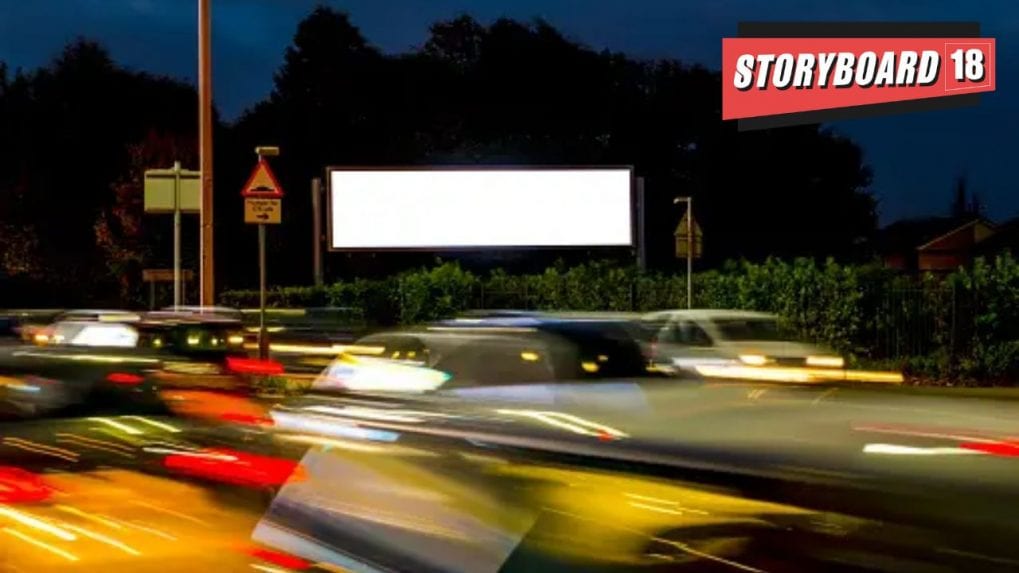
Mumbai’s OOH (out-of-home) advertising industry has been thrown into a churn following the release of the Brihanmumbai Municipal Corporation’s (BMC) Outdoor Advertising Policy 2025, which replaces zone-based regulations with uniform hoarding sizes and expands approvals for digital advertising.
While the civic body has pitched the policy as a modernisation exercise, media owners, industry experts and agencies say the new framework introduces significant compliance burdens, ambiguous digital guidelines, and operational risks that could reshape the economics of the sector.
One of the most consequential changes is the removal of Mumbai’s long-standing zonal classification, which earlier governed hoarding sizes differently across Zones 1, 2 and 3. The new guidelines allow any permitted hoarding size anywhere within city limits.
Media operators say the change will intensify competition, especially in premium areas. A veteran media owner said, “The uniform-size rule may sound progressive, but it will trigger an arms race. Large players will expand aggressively, while smaller ones may not survive the capital required to upgrade inventory.”
Industry analysts expect an oversupply of larger formats, which could lead to pricing volatility and pressure on older, smaller static sites.
Digital Push Meets Unclear DOOH Framework
The BMC’s move to expand permissions for digital LED advertising across malls, multiplexes, commercial complexes and petrol pumps had initially been welcomed. But industry scrutiny has quickly shifted to the lack of clarity in DOOH (digital out-of-home) rules, particularly around brightness levels, screen sizes, height restrictions and placement guidelines.
An agency executive involved in digital planning noted, “The brightness rules are unclear, some of the screen-size criteria overlap, and the height norms are contradictory. The policy is trying to regulate DOOH without fully understanding how DOOH operates.”
A senior OOH consultant described the guidelines as “restrictive,” adding, “Innovation requires flexibility. These rules read like they were drafted to control rather than enable digital transformation.”
The policy introduces stringent structural and safety-related requirements, including detailed SOPs for hoarding stability, mandatory geotechnical assessments, steel testing and periodic certifications.
While the industry accepts the need for safety, operators warn that the cost of compliance—especially for older sites—will be high. Several legacy hoardings may need complete redesign or structural reinforcement.
A media owner operating across central Mumbai said, “The SOP is exhaustive, but the costs are prohibitive. Many static sites will no longer be financially viable once all the testing and redesign norms are applied.”
New NOC Requirements Intensify Operational Uncertainty
Illuminated and digital hoardings will now require a mandatory NOC from the Joint Commissioner of Police (Traffic). Media owners say that relying on external authorities without defined timelines increases the risk of business disruption.
“Digital advertising works on tight scheduling and high-value short-duration campaigns. If NOCs become delayed or unpredictable, advertisers will back out,” said an OOH agency leader.
Similarly, hoardings near high-tension lines can now operate only after securing NOCs from electricity transmission agencies. Operators believe that the lack of standardised processes among multiple authorities—BMC, Railways, MMRDA, MSRDC and metro rail bodies—adds to the ambiguity.
A large-format operator summed up the concern: “The policy does not clearly resolve jurisdictional overlaps. A site may meet BMC rules but get stuck because Railways or another authority interprets the guidelines differently.”
Static media owners argue that the policy disproportionately affects non-digital inventory. With significantly higher compliance burdens, shorter post-expiry validity windows and restrictions around heritage zones and structural redesigns, investment in traditional formats may decline.
An established South Mumbai operator remarked, “The policy pushes digital but makes static so complex that investors will hesitate. It is regressive for the static segment.”
Industry Flags Unrealistic Expectations on Media Owners
The OOH fraternity says the new guidelines impose expectations that are difficult to implement in Mumbai’s dense urban landscape, citing examples such as:
impractical illumination restrictions in high-traffic corridors
structural redesign requirements for old terraces
periodic documentation and certification cycles
cost-heavy safety requirements
“There is too much theory and not enough real-world consultation in the drafting,” said an industry expert involved in policy advisory. “OOH policy-making must involve the entire ecosystem—media owners, agencies, tech partners, advertisers—not just internal departments.”
International Comparisons Highlight Policy Gaps
The sector has drawn comparisons with global DOOH leaders, particularly South Korea. Cities like Seoul have transformed their tourism appeal and economic vibrancy through proactive DOOH integration into night economy, entertainment zones and high-density public spaces.
“South Korea didn’t build DOOH by restricting it,” noted a senior digital strategist. “Mumbai must study global frameworks, not build digital rules on static-era thinking.”
Experts argue that adopting globally aligned standards could increase Mumbai’s competitiveness, improve wayfinding infrastructure, and elevate the city’s commercial streetscape.
Despite the detailed guidelines, the policy does not conclusively address a long-standing pain point: differing interpretations among authorities such as Railways, BMC, PWD, MMRDA, MSRDC and MBPT.
As one media owner put it, “Ambiguity is still where it always was—between who owns what wall, who controls what distance, and whose NOC overrides whose.”
OOH operators, agencies and experts collectively believe that the policy must be revisited before full-scale implementation.
Key demands include:
clarity on DOOH brightness, height, size and spacing norms
harmonised multi-agency jurisdiction
realistic structural compliance timelines
time-bound NOC processes
separate frameworks for static and digital formats
consultation with media owners and industry bodies
“Much like the real estate sector undergoing regulatory recalibration, Mumbai’s OOH industry needs a modern, predictable, innovation-friendly policy environment,” said a senior urban policy expert.
Mumbai remains India’s most commercially valuable OOH market. The potential for digital transformation is significant, but industry voices warn that ambiguity, high compliance costs and restrictive norms may stall progress.
The consensus across the sector is that the BMC’s policy is a necessary starting point—but one that requires revisions grounded in global best practices, local urban realities and robust collaboration with stakeholders.