
IndiGo’s turbulence sends fares soaring: Is Air India the real winner?
With only two dominant players, India’s aviation market remains worryingly vulnerable. The real stakes are not about whether Air India gains. They are about how long the Indian passenger must continue paying the price.

ADVERTISEMENT
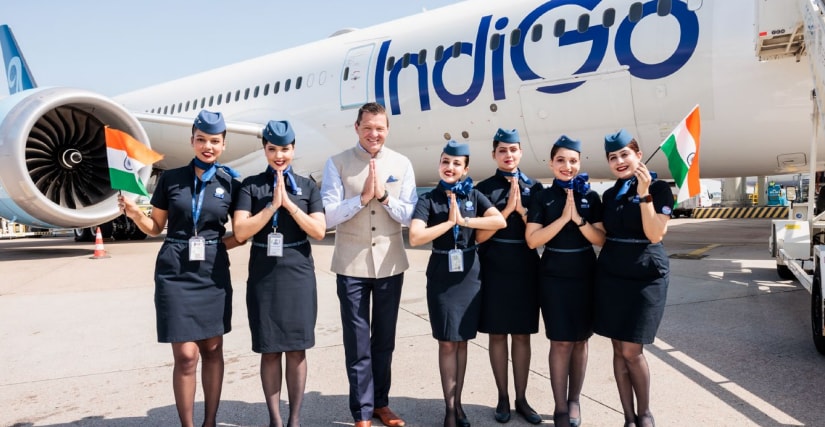
As India’s largest airline grapples with major operational disruptions, fares have surged across routes and passenger frustration is at an all time high. While Air India and other carriers see temporary benefits in load factor and ticket pricing, the broader question remains: is this a windfall for competitors or a wake up call for India’s aviation ecosystem?
A fragile duopoly and a responsibility to act wisely
Lloyd Mathias, an angel investor and business strategist, warns that while Air India may be benefiting for the moment, there are deeper issues at play.
“When a brand starts capitalizing on a competitor’s lapse, like what is happening with IndiGo right now, Air India becomes a natural beneficiary. But there are also smaller players like Air India Express who may see some gains. Still, customers do not take this kindly. It is not seen as a good move.
Everyone knows IndiGo is having issues with their services. Taking advantage of that feels unfair and is generally not appreciated from a brand standpoint.
"The Indian airlines and aerospace market is very fragile. IndiGo has more than 60 percent market share and Air India is around 35 percent. When only two players control almost the entire domestic market, if either one stumbles, the whole market gets disrupted. A country as large as India needs at least three major players. Without that, Indian air travelers remain very vulnerable to price spikes because of the relative duopoly. That is the bigger issue.
"It also makes sense for other airlines not to engage in predatory pricing at this moment and to behave more responsibly. Air India especially should walk the high ground and act like a responsible corporate citizen instead of capitalizing on a collapse. They have a lot of goodwill to rebuild, especially after the Ahmedabad crash. I would not expect them to indulge in aggressive pricing because they come from the Tata Group,” Mathias added.
The real loss is for the flyers
Sandeep Goyal, Managing Director, Rediffusion, puts the spotlight on consumer impact. “Only loss is that of the fliers. It is not just the astronomical cost of tickets but the opportunity cost - missed weddings, lost vacations, and more.
Indigo or Air India will make up the revenue loss as prices shoot up but loss of reputation has been far more. Indigo's cancellations are making it look really bad - Indigo Standard Time is now a joke.”
The unexpected grounding of multiple IndiGo flights has pushed thousands of travellers towards trains departing from New Delhi, with Tatkal or last-minute bookings seeing a notable surge as passengers scrambled for alternatives. The spike in demand is being felt across major corridors, with trains running from Delhi to Kolkata, Jaipur, Ahmedabad, Prayagraj, Varanasi, Lucknow, Mumbai, Jammu, Srinagar, Bengaluru, Hyderabad and Chennai all reporting unusually heavy passenger loads, NDTV stated.
With the airline continuing to battle widespread cancellations, pressure on the Indian Railways underscores the scale and severity of the crisis. As public frustration surged across airports and social platforms, the Ministry of Civil Aviation stepped in on Friday, announcing a high-level inquiry into the breakdown and mandating immediate passenger relief measures, including automatic refunds, hotel stays for stranded travellers, and priority care for senior citizens and persons with disabilities. The DGCA also temporarily relaxed the new FDTL norms to stabilise staffing shortages, an implicit acknowledgement of the regulatory friction that contributed to the collapse.
According to Ashish Bhasin, founder of The Bhasin Consulting Group, and former CEO of Asia Pacific Dentsu, airlines need to tread carefully. “To excessively take prices up is being too opportunistic. I am not referring to only one airline, not just Air India or SpiceJet or anybody else. There has to be a sense of balance because you risk losing customer loyalty.
If customers feel that you are exploiting them at a time when they need you the most, the damage is far greater than any short term revenue benefit. For IndiGo, the bigger problem now is the loss of face and reputation. It was the leading airline in the country. It was known for being on time and for operational efficiency. That trust has taken a hit.
So for competitors to take advantage of a bad situation is not going to generate goodwill either.” He adds that disruptions are spreading beyond the middle class. “As for passengers, yes, the impact is not only on the middle class but across segments. Weddings are getting disrupted. Travel plans are collapsing. Passengers just want the inconvenience to end. Crises do happen. What matters is how quickly an airline corrects course and treats its passengers respectfully. That will determine how soon they bounce back.”
A systemic imbalance, not a strategy
Chandramouli, CEO, TRA Research, calls it a structural gap. “Sudden operational disruptions, like the one IndiGo is currently navigating, tend to expose how delicately balanced India’s aviation ecosystem is. When the country’s largest carrier faces capacity constraints, even short haul routes to tier 2 and tier 3 cities can see fares spike dramatically. A last minute fare of 50000 rupees to a place like Bareilly is not about demand suddenly soaring. It is about the temporary absence of supply in a market that relies heavily on a single dominant player.
In the short term, any carrier with available aircraft and crew, including Air India, may see a lift in bookings. But it is important to see this less as Air India’s gain and more as a reminder of how much competitive pressure and capacity depth India still needs. What passengers are experiencing is not a price strategy. It is a systemic imbalance.
If this moment leads to greater investment in operational resilience across the sector, then the long term beneficiary will not be one airline, but the Indian flyer.”
Prabhakar Tiwari, Founder & CEO, Project Drone - WealthTech echoes similar concerns. “50000 rupees fares to Bareilly are not about Air India getting ahead. They are really a reminder of how thin our regional networks still are.
If one airline hits a bump, prices should not suddenly feel like you are booking an international trip.”
Flyers are stuck between two evils
Nisha Sampath, Brand Consultant, says the pain is being borne by customers: “The incident reveals the vulnerability of the aviation system and its impact on flyers. I think it is customers pain more than Indigo's. They are caught between two evils. The Aviation authority needs to intervene speedily to correct the price rise.”
Samit Sinha, manager partner, Alchemist Brand Consulting, warns against assuming a permanent shift. “Yes of course. But then a temporary aberration can only provide a temporary gain. If this becomes chronic then Air India can gain in the long run at Indigo’s expense.”
IndiGo’s crisis has created a short term window of higher yields and fuller cabins for competitors. But experts agree that this is not sustainable advantage. The moment of turbulence exposes a deeper truth. With only two dominant players, India’s aviation market remains worryingly vulnerable. The real stakes are not about whether Air India gains. They are about how long the Indian passenger must continue paying the price.