
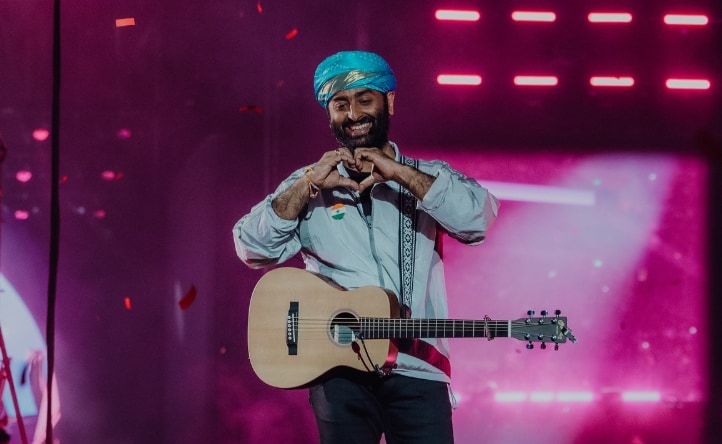
Arijit Singh exits playback singing at his peak: What's earned, what's lost?
At 38, India’s most dominant film voice says he will stop taking new playback work, even as his music continues beyond cinema.

ADVERTISEMENT
For more than a decade, Arijit Singh’s voice has been a constant presence in Hindi cinema, shaping the sound of mainstream film music across genres and generations. On January 27, the 38-year-old announced that he will no longer take up new assignments as a playback singer, marking an unexpected pause in one of the most dominant careers in Indian music.
“I am calling it off. It was a wonderful journey,” Singh wrote in a message shared on social media. He clarified that while he is stepping away from playback singing, he will continue to make music independently and complete projects already in progress.
The announcement came at a time when Singh remains one of the most in-demand and widely heard voices in Indian cinema. His decision therefore stands apart from the usual pattern of gradual withdrawal that marks many playback careers.
Singh’s rise was the result of a long and uneven journey rather than sudden success. After appearing on the reality show Fame Gurukul in 2005, he spent several years working as a music programmer and assistant before making his playback debut with Phir Mohabbat in Murder 2 (2011). Wider recognition followed in 2013 with Tum Hi Ho from Aashiqui 2, a song that reshaped audience expectations around romantic film music and established Singh as a leading playback voice.
In the years that followed, he became closely associated with the emotional core of Hindi cinema, recording songs across themes of love, loss and longing. His voice featured prominently across major film projects, often becoming a central marketing and storytelling element.
Also read: Who is Rama Duwaji? How NYC’s first lady became a Gen Z pop culture icon
Despite his commercial success, Singh maintained a low public profile and rarely engaged in celebrity-driven promotion. His interviews tended to focus on musical process rather than personal branding. In 2020, he launched Oriyon Music, an independent label that allowed him greater creative control and marked a gradual shift toward non-film work.
That shift now appears more deliberate. In his statement, Singh emphasised that he is not retiring from music altogether. Instead, he is stepping away from the structured demands of playback singing, which often involve tight production schedules and repeated stylistic expectations.
The response from listeners has been immediate and emotional, reflecting how deeply his songs have been woven into popular culture over the past decade. For the film industry, however, the move raises broader questions about reliance on a small group of voices and the future shape of mainstream film music.
Also read: From “Beige Flags” to “Canon Events”: The Gen Z slang you’ll hear everywhere in 2026
Singh’s decision also stands out because it comes at a point when his popularity remains high. He continues to be among the most streamed Indian artists globally, with a catalogue that performs strongly on digital platforms.
What lies ahead remains open-ended. Singh has said he intends to focus on learning, independent creation and smaller-scale projects. For Hindi cinema, his absence from new playback assignments marks the end of a highly influential chapter, even as his existing body of work continues to circulate widely.