

Why the internet can’t stop talking about a ‘Nihilist Penguin’ from a 2007 documentary
A brief scene from a Werner Herzog documentary has resurfaced online, turning a lost penguin into a viral metaphor for existential angst, nonconformity, and modern burnout.

ADVERTISEMENT
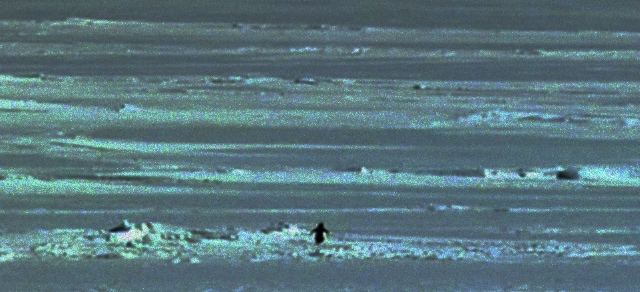
A lone penguin walking away from its colony in Antarctica has unexpectedly become the internet’s latest existential icon. Originally filmed in Werner Herzog’s 2007 documentary Encounters at the End of the World, the scene shows a penguin breaking away from its group and heading inland, toward the frozen Antarctic interior, instead of toward the ocean where it would normally feed. Nearly two decades later, the moment has resurfaced across social media platforms, where it has been reinterpreted, meme-ified, and christened the “Nihilist Penguin.”
In the documentary, scientists explain that such behaviour is typically a sign of disorientation and almost certainly fatal. But online, that biological explanation has been replaced with something more symbolic. Internet users have reframed the penguin’s journey as an act of defiance, an individual rejecting instinct, survival logic, and the safety of the group to pursue an unknowable path. Paired with moody music and introspective captions, the penguin has become a stand-in for human existential crises.
The trend has gained traction particularly on Instagram and TikTok, where creators overlay the footage with reflections on burnout, alienation, and the pressure to conform. In a hyper-productive world obsessed with optimisation and success metrics, the penguin’s quiet, solitary march away from the “correct” path resonates deeply. It has come to symbolise those who step away from conventional careers, life timelines, and societal expectations without knowing exactly what lies ahead.
What makes the phenomenon especially compelling is the contrast between the subject and the sentiment. Penguins are typically associated with community, cuteness, and order. Casting one as a symbol of nihilism and absurdity creates a jarring emotional tension, one the internet has increasingly leaned into as a way of processing collective anxiety. Like many viral moments today, bleak ideas are softened and shared through familiar, even comforting imagery.
Some posts take the metaphor further, arguing that the same “mistake” that doomed the penguin is also what drove human progress, curiosity that defied logic and risked survival in pursuit of discovery. In this framing, the penguin is no longer lost but brave, asking “what’s over there?” regardless of the cost. It’s a romantic interpretation, even if it contradicts biological reality.
Also read: 52% of Indian Gen Z parents trust AI for parenting advice: Report
Of course, the penguin itself is not making a philosophical statement. Scientists continue to view such behaviour as an error, not enlightenment. But the internet’s fascination says less about animal behaviour and more about human psychology. The “Nihilist Penguin” has become a mirror for a generation grappling with uncertainty, searching for meaning, and questioning whether staying with the herd is always the safest, or most fulfilling, choice.
Also read: This Republic Day, a Karnataka tech team wants to take the Indian flag to the edge of space
In turning a brief documentary moment into a cultural metaphor, the internet has once again demonstrated its ability to extract meaning from the absurd. Sometimes, all it takes is a penguin walking in the wrong direction to capture exactly how a lot of people feel right now.