
From boardrooms to bootstraps: The MNC pipeline behind India’s startup surge
With over two lakh startups and nearly 125 unicorns, India’s rise as the world’s third-largest startup ecosystem is increasingly being driven by founders shaped by MNCs, who are applying corporate discipline and scale to build agile, high-impact ventures across sectors.

ADVERTISEMENT
As India celebrates a decade of the Startup India initiative on National Startup Day, the country’s entrepreneurial story is being told not just in garages and co-working spaces, but also in the boardrooms of multinational corporations. With India now the world’s third-largest startup ecosystem—boasting over two lakh startups and nearly 125 unicorns—the spotlight is shifting to an often-overlooked catalyst behind this growth: leaders shaped by MNCs who later took the plunge into entrepreneurship.
From consumer brands and fintech to deep tech and e-commerce, a growing number of founders are drawing on the discipline, scale, and systems learned in global corporations to build agile, high-impact startups, blurring the lines between corporate careers and entrepreneurial ambition.
January 16 marks National Startup Day, commemorating ten years since the launch of the Startup India initiative. On the occasion, Prime Minister Narendra Modi underscored how India has emerged as the world’s third-largest startup ecosystem in just a decade.
From fewer than 500 startups in 2014, the country today is home to over two lakh registered startups, while the number of unicorns has grown from four to nearly 125. Indian startups are increasingly tapping public markets, generating employment, and attracting global capital. The Prime Minister also noted that nearly 44,000 startups were registered in 2025 alone—an all-time high for any single year.
Echoing this momentum, Union Minister for Commerce and Industry Piyush Goyal highlighted that Indian startups are now active across more than 50 sectors, spanning deep tech, artificial intelligence, machine learning, quantum computing, agri-tech, space tech, drone technology, aerospace, and rocket technology.
When MNCs become startup nurseries
Amid this surge, an intriguing pattern has emerged: a significant number of India’s successful startups are being led by founders whose professional foundations were laid in multinational corporations.
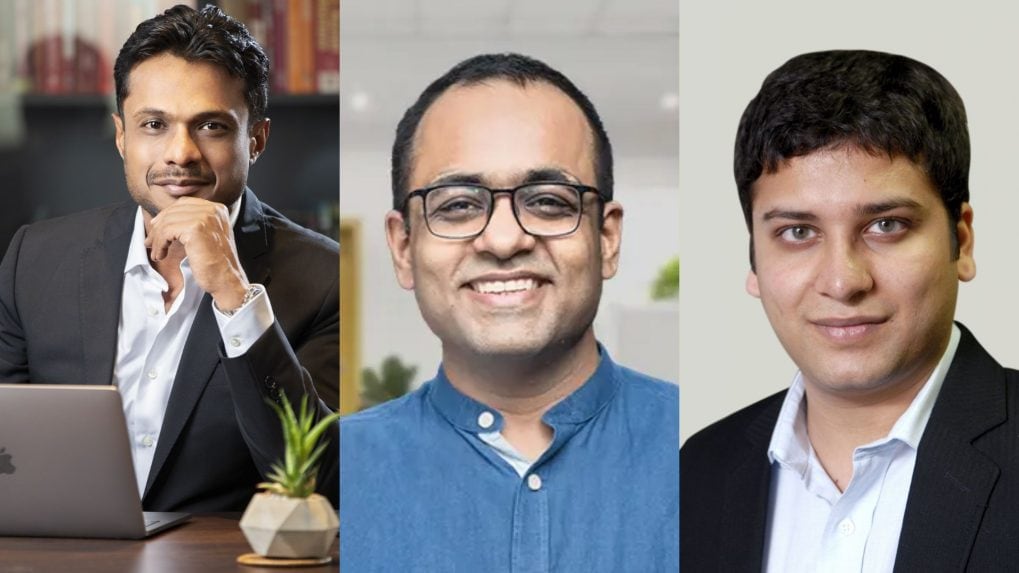
Take Shashank Mehta, co-founder and CEO of clean-label snack brand The Whole Truth Foods, launched in 2019. Before becoming an entrepreneur, Mehta served as a marketing manager at Unilever. Similarly, Saurabh Garg, who co-founded a proptech marketplace in 2013 NoBroker, began his career in sales and marketing at Hindustan Unilever.
Another example is Priyanka Salot, co-founder of The Sleep Company, a D2C comfort-tech brand. Before launching the startup, Salot built a long career at Procter & Gamble, where she rose from assistant country marketing manager to country category leader for fabric care in the India subcontinent.
India’s most iconic startup story—Flipkart—also traces its origins to a multinational. Sachin Bansal and Binny Bansal were software engineers at American tech company Amazon before quitting to build what would become India’s largest homegrown e-commerce company.
What MNCs teach—and what they don’t
Sunil Lulla, former vice president and CEO at Diageo and BARC India, believes the strength of MNCs lies in their rigor. According to him, successful multinationals are built on processes, controls, and consistency—whether in product development, sales, or accounting.
While MNCs do innovate, Lulla points out that much of this happens at a global level. Local teams are typically focused on adapting global innovations rather than creating them from scratch. Over time, leadership pipelines in MNCs have also evolved—from being dominated by Western managers to increasingly being led by Asian and Indian leaders, reflecting organisational maturity.
At their core, Lulla says, MNCs are designed to sell what they already sell—better, year after year. When startups begin to disrupt them, it usually signals one of three issues: the MNC may not be listening closely enough to consumers, may have failed to innovate for a specific market, or may be operating under a fundamentally different business model.
In B2B businesses, the threat from startups tends to be more structural. Companies like Zoho, for instance, can fundamentally alter how enterprises operate. In contrast, consumer startups such as Mamaearth operate on different scales and dynamics.
Lulla adds that large Indian corporations such as Amul, Reliance, Bajaj Finance, Mahindra, and Tata Motors have successfully absorbed multinational best practices while adapting them to local realities—allowing them to dominate their categories without the overheads of global MNC structures.
Intrapreneurship: Innovation within the system
Global technology giants have long experimented with fostering innovation from within. Google’s widely cited “20% time” policy, which allowed employees to dedicate a fifth of their workweek to passion projects, led to the creation of products such as Google News and AdSense. Amazon, too, institutionalised internal innovation through digital idea-sharing platforms that encouraged employees to propose new concepts.
One such idea, submitted by an Amazon software engineer in the early 2000s, envisioned an “all-you-can-eat” shipping model. Leadership later refined the proposal into a two-day delivery promise, eventually launching Amazon Prime—now one of the company’s most valuable and defining offerings.
These examples underscore the power of intrapreneurship within large organisations. A senior MNC CXO, who requested anonymity, notes that in several cases, small teams were allowed to function like independent startups within much larger corporate structures. With flat hierarchies, high ownership, and disproportionate accountability, such teams operate at startup speed while benefiting from corporate resources. These environments, he says, sharpen decision-making, encourage risk-taking, and significantly improve execution capability.
The role of digital tools and consumer insight
According to Sunil Lulla, digital tools have made organisations far more nimble by shortening feedback loops and enabling faster outcomes—whether success or failure. However, he cautions that while tools may evolve, the fundamentals of business remain unchanged. Deep consumer understanding, accurate pricing, and consistent service delivery continue to be the most critical differentiators.
Lulla points to Hindustan Unilever’s loss of market share to Nirma decades ago as a cautionary example. At the time, HUL was not sufficiently focused on India and was pushing products designed for other markets. Once the company realigned its strategy to reflect India’s transition—from basic soaps to hygiene, wellness, and cleanliness—it was able to reclaim relevance.
Similarly, global brands such as Adidas and Nike succeed not by competing at the lowest price points, but by clearly defining their positioning and serving consumers willing to pay a premium for quality. Scale, clarity, and consistency, Lulla notes, are where MNCs excel—provided they remain alert and responsive to changing consumer needs rather than “falling asleep at the wheel.”
Leadership versus entrepreneurship
Sunil Alagh, managing director at SKA Advisors and former MD and CEO of Britannia Industries, offers a more cautionary perspective. He argues that traditional MNCs do not groom leaders with the intent of turning them into entrepreneurs. Their objective is to build strong internal leadership to strengthen the organisation—not to prepare employees for exit.
Alagh also notes that artificial intelligence is far more impactful in production and operations than in areas like marketing, where human judgment remains central. In the short term, AI adoption often leads to workforce reduction, particularly in the private sector under pressure to deliver quarterly results—a concern in a country like India where employment remains critical.
He adds that MNCs typically focus on knowledge transfer, skill development, and employability within the organisation. Entrepreneurship, he believes, is more commonly nurtured by institutions such as the Indian Institutes of Management.
For aspiring founders, Alagh identifies two major hurdles: the strength of the idea itself and financial endurance. The first few years of a startup are often profitless, demanding 14–15 hour workdays and taking a toll on personal and family life. Many underestimate how difficult this phase can be, especially without financial backing.
Alagh himself did not plan an entrepreneurial exit early in his career. He left corporate life after reaching the top, around the age of 50, when starting a consultancy made strategic sense. In contrast, he points out that young entrepreneurs in their 20s or early 30s often lack the financial cushion to absorb failure and may be forced back into salaried roles.
Why founders with MNC backgrounds scale better
A senior MNC CXO, who requested anonymity, said that during his work with multiple founders—including at Udaan, a B2B e-commerce platform—he observed a disproportionate number coming from companies like HUL and P&G.
The primary advantage, he explains, is an understanding of scale. While startups frequently talk about scaling, many struggle to manage complexity beyond Series C or D funding. Leaders trained in MNCs are accustomed to running large, distributed systems with disciplined execution.
He adds that MNC alumni are also more comfortable navigating regulatory and compliance-heavy environments. In sectors like fintech, where engagement with regulators such as SEBI and the RBI is unavoidable, founders with corporate pedigrees often find it easier to build credibility and manage governance requirements.
The CXO also highlights the power of intrapreneurial roles within large organisations. In several instances, small teams were allowed to operate like startups—flat hierarchies, high ownership, and disproportionate accountability—despite being part of much larger institutions. Such experiences sharpen decision-making, risk-taking, and execution speed.
Even in offline-heavy businesses, digital awareness has become essential. Understanding e-commerce dynamics helps leaders benchmark pricing, promotions, and consumer behaviour across channels. Ultimately, he notes, deep user-centricity—knowing how customers discover, evaluate, and buy products—is what makes digital competence unavoidable.
The shock of leaving the corporate cocoon
Jaideep Mehta, managing director at Rzolut, believes MNCs offer invaluable exposure to markets, organisational complexity, and scale. Their structured talent development and management systems instil discipline, people management skills, and execution rigor—qualities that serve entrepreneurs well.
At the same time, working in an MNC can help individuals realise whether they are truly suited for corporate life. For some, even the best-run organisations clarify that they are wired to build, not belong.
However, Mehta warns that the transition from an MNC to a startup can be jarring. Founders lose the brand equity that opens doors, the infrastructure built over decades, and the safety nets that corporate life provides. Everything—from offices to teams to processes—must be rebuilt from scratch, often with limited capital and high uncertainty.
Making this leap requires a significant mindset shift. As the anonymous CXO notes, long MNC careers offer stability and predictability—especially important in India, where financial obligations and the need for steady income loom large.
Yet, as India’s startup ecosystem matures, the journey from boardrooms to bootstraps is becoming increasingly common. For many founders, the corporate world is no longer an alternative to entrepreneurship—but a proving ground for it.