
Budget 2026: The rise of data centres; India pins its AI superpower ambitions on a 21-year tax holiday
Experts caution that domestic cloud providers could face intensified competition from hyperscalers with far greater scale and capital efficiency. Margins in core infrastructure services may come under pressure, particularly if Indian firms remain confined to colocation or reseller roles without deeper capability transfer.


ADVERTISEMENT
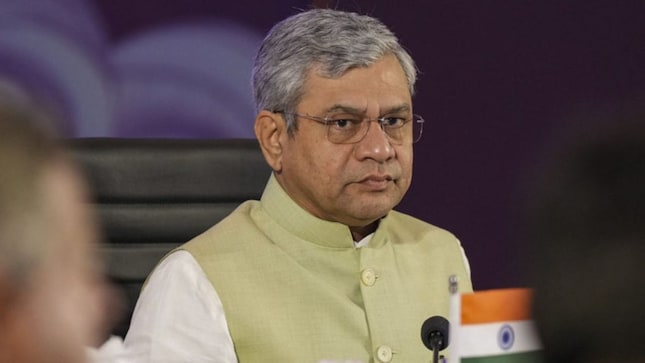
India’s data centre sector could be on the cusp of a once-in-a-generation expansion. Investments may climb to nearly $200 billion in the coming years, up from roughly $70 billion currently under execution, following a series of incentives announced in the Union Budget, Union minister for electronics and IT Ashwini Vaishnaw said on February 1.
At a post-Budget briefing, Vaishnaw said the government is already seeing strong interest from global hyperscalers, AI server manufacturers, and domestic infrastructure players looking to scale operations in India. A central driver is the extension of tax holidays for data centres, including AI-focused facilities, until 2047. The move gives long-term certainty to investors in one of the most capital-intensive layers of the digital economy.
The policy intent is explicit. India wants compute to be built at home. By ensuring domestic access to large-scale computing infrastructure, the government believes India can emerge among the world’s top three AI nations, reduce reliance on overseas cloud capacity, and better leverage its demographic and talent advantage. In that sense, data centres are no longer being positioned as passive backend infrastructure, but as strategic assets underpinning India’s AI ambitions, industrial competitiveness, and services-led export growth.
Data Centres Move From Infra Play to Policy Priority
Industry voices broadly agree that Budget 2026 marks a turning point in how data centres are viewed by policymakers. Gowthaman Ragothaman, media, advertising and marketing veteran and founder of Saptharushi, says the timing of tax relief for foreign companies offering cloud services from India could not be more critical. With Digital Personal Data Protection regulations and consent management frameworks expected to kick in from November 2026, enterprises will be forced to invest in first-party data management and composable data stacks. He estimates that even at a minimum level, companies may need to spend at least ₹2 crore on data management, and tax relief at the infrastructure layer could help soften cost pressures for end customers.
From a tax and regulatory perspective, Vivan Sharan, Founder and Partner at Koan Advisory, points out that the data centre tax holiday also addresses a long-standing ambiguity around whether data storage constitutes a permanent establishment, triggering tax exposure. According to him, clearer treatment will give global cloud providers confidence to scale AI-ready infrastructure in India without fear of retrospective tax claims, though much will depend on how detailed rules are drafted.
Attracting Global Capital Without Hollowing Out Domestic Players
The scale of ambition is significant. M Chockalingam, Director Technology for AI and Frontier Tech at Nasscom, says incentivising global cloud companies to serve international customers from India could unlock investments not just in data centres, but also in network infrastructure, renewable power integration, and high-skilled technology jobs. It also embeds India deeper into global digital value chains ahead of 2047.
But the policy is not without risk. Chockalingam cautions that domestic cloud providers could face intensified competition from hyperscalers with far greater scale and capital efficiency. Margins in core infrastructure services may come under pressure, particularly if Indian firms remain confined to colocation or reseller roles without deeper capability transfer.
That said, he sees meaningful opportunity if policy guardrails are right. Local resale requirements, in-country operations, and compliance obligations could expand demand for managed services, cybersecurity, cloud integration, and sector-specific platforms in BFSI, healthcare, government, and MSMEs. Sovereign cloud and regulatory-first offerings could become areas of differentiation for Indian players.
Execution Will Decide Whether India Becomes a True Compute Hub
For Rohit Kumar, Founding Partner at The Quantum Hub, the Budget sends a clear message that data centres are now being treated as a strategic business sector. Tax incentives, customs duty exemptions, and the broader focus on compute underline their role as enablers of AI and national competitiveness. However, he flags that execution risks remain, particularly around power availability, land access, and state-level clearances, which will determine how scalable this opportunity becomes.
Dr. Srinivas Padmanabhuni, CTO of AIEnsured, sees the tax holiday till 2047 as a critical enabler that reinforces the government’s continued emphasis on AI. He notes that reforms across IT, agriculture-led AI use cases, AVGC skills, and semiconductor manufacturing together form a reinforcing loop that supports long-term AI deployment rather than just experimentation.
Sourya Banerjee, Associate Director at Jajabor Brand Consultancy, argues that the strongest AI capital signal in Budget 2026 lies squarely in data centres and cloud policy. With long-dated tax certainty, safe-harbour margins, and faster approvals, the economics of building AI-scale infrastructure in India have materially improved. He points to announced investments by hyperscalers such as Microsoft, Amazon, and Google, alongside expansions by players like AdaniConneX, CtrlS, Equinix, and Blackstone across Hyderabad, Chennai, Mumbai, and Visakhapatnam.
Crucially, Banerjee notes, this is not an isolated infra push. Budget 2026 is effectively betting that AI-led and IT-led services, not just models or hardware, will drive India’s next phase of export growth. Where compute gets built will shape how, and how competitively, those services scale.