
Qcomm branding reset: Blinkit, Instamart, Zepto and the retreat from 10-minute delivery
Much of the quick commerce industry had already begun to retreat from open speed guarantees in practice. Blinkit and Swiggy Instamart describe their services as offering “quick delivery” on app stores, without committing to a fixed time

ADVERTISEMENT
India's $7 billion quick commerce industry has been asked to step back from its most recognizable marketing pitch: The 10-minute delivery. The Union Ministry of Labour and Employment on Tuesday directed quick commerce platforms to remove explicit 10-minute delivery-time guarantees from advertisements and social media promotions, urging them instead to use broader terms such as “quick delivery”. In a recent meeting between the ministry and companies, a decision was made to improve road safety, reduce work pressure, and ensure better working conditions for gig and platform workers.
The move marks the government’s second major shift in labour policy. In November 2025, the Centre notified four labour codes that require digital aggregators to contribute between 1 to 2% of their annual turnover to a Social Security Fund for gig and platform workers, within prescribed caps.
“The government’s approach appears to be moving towards stronger worker protection, even if that narrows how digital platforms operate,” said Indranuj Pathak, Manager, Public Policy, Primus Partners.
“By asking companies to step back from hard delivery-time promises, the focus shifts from marketing claims to on-ground outcomes such as rider safety and fair incentives”. He added that scale and innovation in new-age business models must be accompanied by clearer accountability, especially in high-frequency sectors like quick commerce.
‘A promise under pressure’
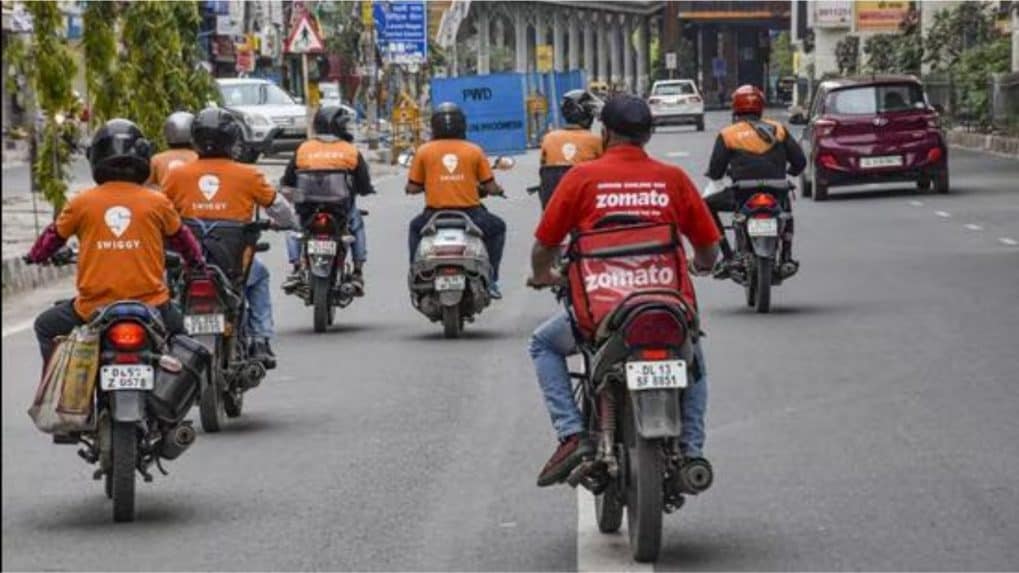
The Centre’s intervention comes weeks after delivery workers in several cities protested around the New Year, demanding higher pay, insurance coverage and an end to what they described as implicit pressure to meet ultra-fast delivery targets. The delivery partners said even without explicit countdown timers, the promise of 10-minute delivery created incentive structures that rewarded speed over safety.
The companies have rejected that narrative. During the protest, Deepinder Goyal, the founder of Eternal Ltd, which owns blinkit, said delivery partners are not shown promised delivery times on their apps and are not required to race against the clock. "Our 10-minute delivery promise is enabled by the density of stores around your homes. It's not enabled by asking delivery partners to drive fast," he wrote in a public post.
However, the protest exposed the growing disconnect between corporate assurances and worker perceptions.
Shaik Salauddin, president of the Telangana Gig and Platform Workers’ Union (TGPWU), which participated in the protests, welcomed the government’s decision.
"This is a significant step to protect the lives and dignity of gig and platform workers," he said. "The 10-minute delivery model forced workers towards unsafe road behaviour, extreme stress, and dangerous working conditions”.
‘Amended taglines’
Much of the quick commerce industry had already begun to retreat from open speed guarantees in practice. Blinkit and Swiggy Instamart describe their services as offering “quick delivery” on app stores, without committing to a fixed time. Blinkit has quietly changed its tagline from “10,000+ products delivered in 10 minutes” to “30,000+ products delivered at your doorstep.” Zepto’s branding still revolved around 10-minute delivery on the App Store.
However, Eternal Ltd told stock exchanges that there is no change in the business model that could have any material impact on the company.
In fact, industry experts also said that the government’s directives are unlikely to materially change how quickly commerce functions.
"The '10-minute delivery claim was always more of a marketing hyperbole rather than a contractual commitment,” said Karan Taurani, Executive Vice President at Elara Capital. Actual delivery timelines shown on QC apps depend on factors such as dark-store distance, traffic conditions, weather, and real-time rider availability, and typically range between 10 and 20 minutes.
However, Suhel Seth, businessman, columnist and founder of Counselage India, criticized the intervention as an overreach, arguing that speed is a legitimate competitive advantage. “Government should not decide brand positioning,” he said, warning that diluting delivery-time claims could reduce employment by lowering the need for large delivery fleets.
Others see the change as cosmetic rather than consequential. Kartik Narayan, the chief executive of the jobs marketplace Apna.co, said employment in the sector would endure. “Speed comes from neighbourhood warehouses, not from making riders rush,” he said. “The model is so deeply rooted in our neighbourhoods, the work isn't going anywhere, it’s just getting safer and more sustainable”.
Balasubramanian A, Senior Vice President, TeamLease Services, said that most deliveries already take 15 to 20 minutes and that platforms routinely pause operations when rider availability is thin. “Removing any delivery threshold doesn't fundamentally alter operations; it simply reinforces that delivery times remain market-driven. The riders have the autonomy to optimize their earnings based on their individual capacity and preference”.
‘What next?’
Analysts said that quick commerce platforms cannot afford complacency, as faster delivery remains central to defending market share against traditional e-commerce. As the sector matures, players with stronger supply-chain efficiency, store density, and operational discipline are likely to gain share, Taurani said.
While the removal of the 10-minute tagline may be neutral for weaker operators, it could benefit strong executors focused on consistency over marketing claims.
He said that heightened regulatory and public scrutiny is also expected to accelerate investments in backend efficiency, routing algorithms, and store operations,--favouring scaled, well-capitalized players. From a brand recall perspective, analysts do not expect a major negative impact unless delivery times stretch to 30 minutes or more. Quick commerce is still expected to operate largely within a 10-20-minute window.
The All India Consumer Products Distributors Federation (AICPDF), which had earlier raised concerns about the implications of 10-minute delivery promises, said the government’s direction must now be rigorously implemented and monitored. Any violation—direct or indirect—including algorithmic pressure, incentive structures, misleading advertisements, or hidden delivery benchmarks, should attract stringent penalties, it said.
Pathak noted that Blinkit’s growth has been driven more by network density, assortment expansion, and repeat usage than by the speed claim alone.
With quarterly revenues nearing Rs 10,000 crore and profitability still under pressure, the sector’s focus is expected to shift towards improving unit economics and engagement quality. “In this phase, brand strategy is likely to emphasize reliability, accurate ETAs, and value rather than symbolic speed benchmarks,” he said.
Over time, quick commerce platforms may evolve from being seen as an emergency-use app to dependable daily-utilities—retaining speed where feasible, but no longer treating it as the sole hook.