
Indian teacher in Japan highlights paid overtime and strict work limits in schools
An Indian teacher’s Instagram video on Japan’s disciplined school work culture has resonated widely with Indian social media users.

ADVERTISEMENT
An Indian woman working as a teacher in Japan has sparked widespread discussion online after sharing insights into the country’s structured and employee-friendly work culture, particularly within its school system.
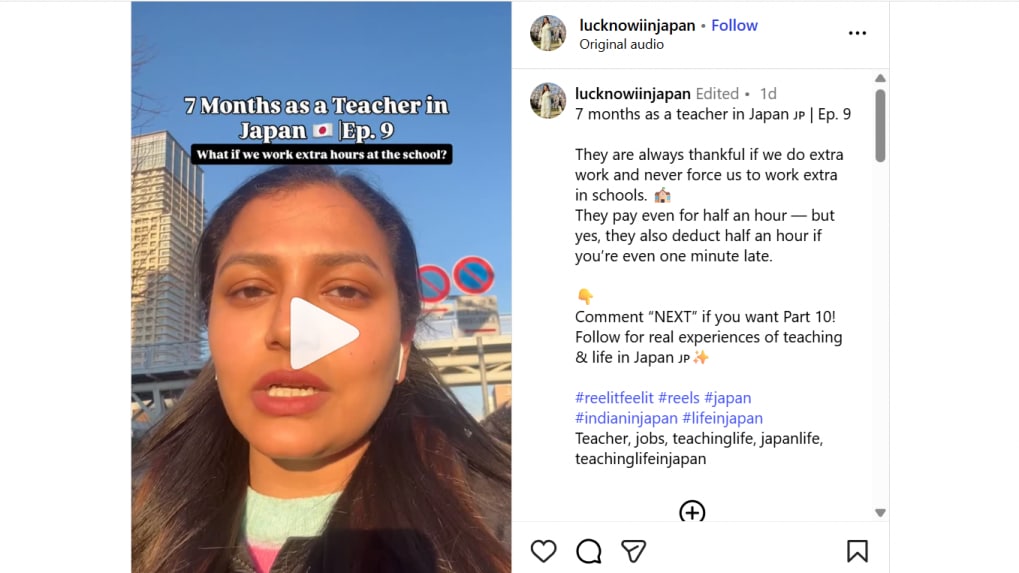
Pragati, an Indian educator based in Japan, shared her experience through a video posted on Instagram, where she described how teachers’ working hours are strictly regulated and fairly compensated. According to her account, even minimal overtime is formally recorded and paid, reflecting the emphasis placed on respecting employees’ time.
She explained that teachers are compensated for any work done beyond scheduled hours, including short extensions of 30 minutes. Overtime, she noted, is treated as a formal obligation rather than an informal expectation.
The video also highlighted rules around work schedules, including limits on consecutive working days. According to Pragati, teachers are not permitted to work for more than five days in a row, underscoring the system’s focus on preventing burnout.
Beyond policies and pay, she pointed to a broader culture of respect within Japanese workplaces. She described managers acknowledging extra effort and avoiding pressure on employees to extend their working hours.
Also read: Why is Nikhil Kamath unhappy with stock market holiday for Maharashtra civic elections?
The video quickly gained traction online, prompting comparisons from Indian viewers who reflected on differences between work cultures. Many users expressed admiration for Japan’s approach to compensation and work-life balance, particularly within the education sector, while contrasting it with their own professional experiences in India.