
“A Funeral for Advertising”: Industry veterans mourn collapse of legacy agencies; warn of creativity being replaced by media efficiency
As Omnicom retires iconic global agency brands and announces 4,000 job cuts post its $13bn IPG acquisition, India’s advertising ecosystem confronts its most disruptive reset in decades: shaking foundation brands, triggering leadership realignments, and exposing a seismic shift from creative craft to media-and-AI dominance.

ADVERTISEMENT
It will be remembered as the day the global advertising industry changed forever. Not because a deal closed, but because an era ended.
DDB, FCB, MullenLowe killed as Omnicom restructures post-IPG merger, cutting 4,000 roles
On December 1, Omnicom formally completed its $13 billion acquisition of Interpublic Group (IPG), instantly becoming the world’s largest advertising holding company by revenue, overtaking Publicis and pushing WPP into third place. Overnight, power in global advertising consolidated into a single epicenter in Manhattan, the symbolic birthplace of the Mad Men era.
But the shockwaves weren’t confined to Wall Street boardrooms or global leadership charts. They exploded across creative corridors, pitch rooms, WhatsApp groups, and LinkedIn feeds from Mumbai to Bengaluru. Not only did Omnicom announce the retirement of some of the most storied agency brands in the history of the industry- DDB, MullenLowe and FCB- it also confirmed more than 4,000 job cuts globally.
For India, home to some of IPG’s oldest and strongest agency franchises built over nearly 80 years, the development lands with a mix of grief, fear and irreversible consequence.
India: where legacy is deepest, and disruption will hurt the most
For decades, India has been one of IPG’s crown jewels, an empire of creative names that shaped the modern advertising narrative. Lintas arrived nearly eight decades ago. Ulka built the Indian FMCG era. Mudra created brand-led entrepreneurship. McCann reshaped award culture and talent grooming. These were not just agencies, they were cultural institutions.
Prasoon Joshi, Aditya Kanthy to spearhead Omnicom’s new India charter
Now, for the first time, the foundations feel fragile.
With Omnicom globally retiring DDB and MullenLowe into TBWA and merging FCB into BBDO, industry leaders say India cannot remain structurally untouched, even if the timeline varies.
“IPG is far, far bigger than Omnicom in India and has a much longer history, almost 80 years,” said Ashish Bhasin, Founder, The Bhasin Consulting Group. “There may be a lag here, but when you’re running 100 countries, you can’t run 100 unique structures. Standardisation will happen.”
This possibility becomes even more real as Omnicom unveils a sweeping new India structure. An internal memo by Sean Donovan, President, Omnicom Advertising Asia, outlines how India will transition to a three-network architecture, TBWA\Lintas, BBDO Group and McCann, each supported by the equity of legacy names Lintas, Ulka and Mudra.
To lead this transformation, Omnicom has appointed a heavyweight leadership trio:
- Prasoon Joshi as Chairman, Omnicom Advertising India,
- Aditya Kanthy as President & MD, and
- S. Subramanyeswar (Subbu) as Chief Strategy Officer for India and Chief Knowledge Officer for Asia.
They will oversee creative excellence, technology adoption, knowledge systems and AI-driven transformation across India’s network.
Effective January 1, 2026, all agency CEOs and business groups, McCann led by Dheeraj Sinha and Rahul Mathew, BBDO led by Josy Paul, TBWA\Lintas helmed by Govind Pandey and Prateek Bhardwaj, and digital arms Kinnect and 22feet Tribal led by Chandni Shah, will report directly to Kanthy.
It is the clearest signal yet: the old house of many rooms will collapse into a single structure.
The cultural fracture: death of creative legacy
The retirement of century-old global brands has left many Indian advertising veterans emotionally shaken.
“This is a red-letter day for advertising, and not in a celebratory way,” said Mithila Saraf, CEO, Famous Innovations. “Legacy names we grew up admiring have folded, and 4,000 people are suddenly without jobs. The industry has never evolved at this speed.”
Omnicom swings the axe: 4,000 job cuts, iconic agency names retired after IPG takeover
What happened today isn’t an isolated event. It’s a sign for all of us, said industry watchers in unison.
"Independent agencies may be more agile - we can shift faster, reinvent quicker, and act without layers of bureaucracy. But today isn’t about any one agency or model. It’s about an industry standing together. About fighting for creativity. About pushing for the best work. And about embracing technology—using it to empower us, expand us, and elevate the work… not replace the soul of what we do," she added.
For others, the shock isn’t the job cuts, it’s the erasure of history.
“The demise of MullenLowe and DDB was expected. It is FCB that is a surprise,” said Sandeep Goyal, Chairman, Rediffusion.
“A lot of job losses will ensue, some visible, most silent. A sad day for advertising globally and in India.”
What we’re witnessing is not just a merger, it’s the collapse of legacy structures that could no longer justify their complexity. When century-old creative brands get folded overnight, it proves one thing: size without agility is a liability, added Nisha Singhania, Co-Founder, Infectious Advertising.
"India is already seeing clients shift towards partners who move faster, think deeper and adapt quicker. This moment strengthens the case for independent agencies — we aren’t built on layers; we’re built on ideas," she added.
What is apparent now is that culturally symbolic brands no longer hold operational value in a world driven by platform consolidation, cost discipline, and data scale.
Independent agencies sense a turning tide: leaner teams, faster execution, and founder-led relationships may now become the industry’s strongest currency.
Layoffs: the human cost of industrial efficiency
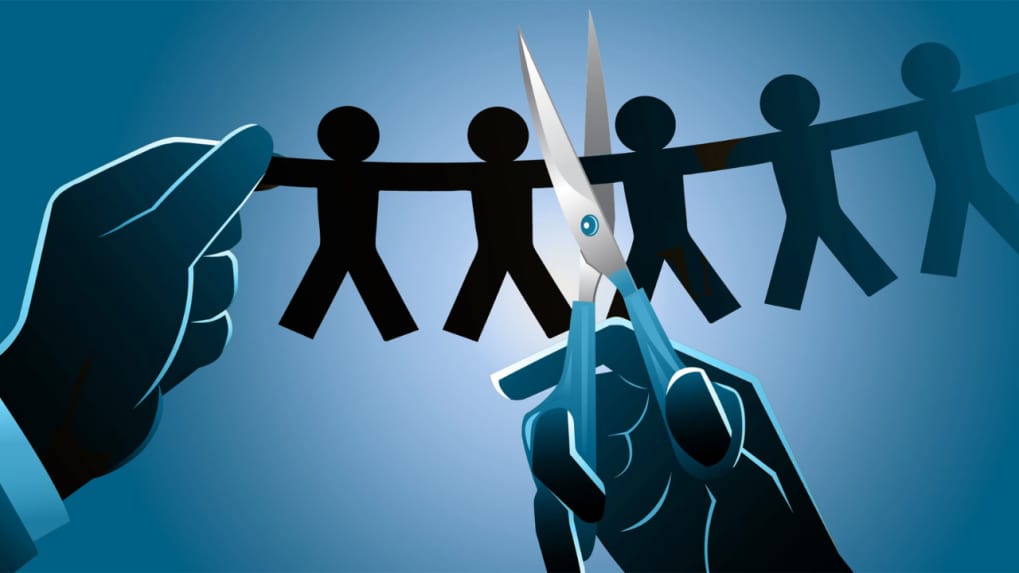
Omnicom CEO John Wren confirmed over 4,000 job cuts, focusing on overlapping administrative and leadership roles. These come on top of:
- 2,400 IPG layoffs in H1 2025
- 4,000 IPG layoffs in 2024
- 3,000 Omnicom layoffs in 2024
The business rationale is clear: labour savings drive synergy. But the emotional impact is devastating.
Veteran strategist Naresh Gupta, Co-Founder, Bang In The Middle, was brutally candid, “2026 will be a new era. Those who wrote the rules for creative and strategy will cease to exist. This is driven only by financial logic, not creative or strategic vision.”
He predicts massive churn. “Independence will vanish, oversight will increase, creativity will shrink. The networks will essentially become media companies. Creative may now account for 30% or less of total revenue.”
The warning from the industry veterans is stark: the business of creativity as we know it is under danger.
From craft to algorithm: business model overhaul
The merger is being justified by promised financial upside, annual cost synergies exceeding the previously forecast $750 million, and aggressive investment in unified technology, data and AI platforms. With creative margins falling and production commoditised by generative AI, the direction is unmistakable.
Omnicom to unveil ‘New Omnicom’ and Next-Gen Omni AI Platform at CES 2026 amid post-merger overhaul
Wren framed it optimistically, “Despite early predictions, we have not seen key talent departures or had to drop clients. This creates huge opportunity.”
Yet markets aren’t convinced: Omnicom shares are down 17% this year, signaling investor anxiety about the long-term profitability of traditional advertising.