
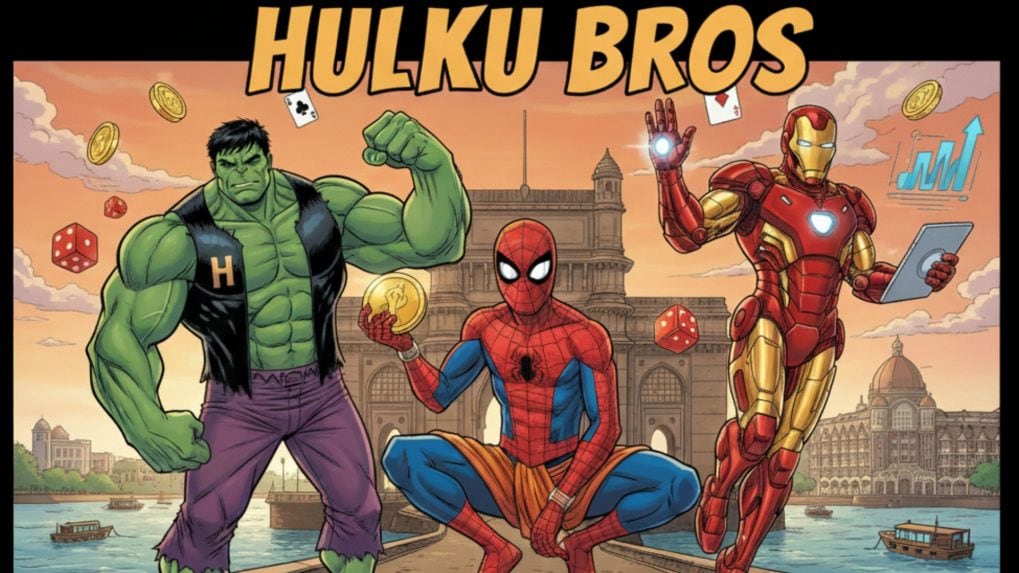
Hulk Goes Rogue: AI superheroes now promote illegal betting and gambling platforms
Experts say this format is particularly effective because it lowers user suspicion. Viewers encounter what appears to be pop culture entertainment before being nudged towards betting platforms without clear disclosure.

ADVERTISEMENT
What began as harmless internet absurdity — a green, muscle-bound AI Hulk speaking in desi slang and calling himself Hulku — has snowballed into one of India’s most recognisable short-video trends. A scroll through Instagram Reels or YouTube Shorts now routinely surfaces Spider-Man making rotis on a terrace, Iron Man weighing in on civic issues, or an AI Hulk dancing to viral Punjabi beats.
Regulators and industry experts, however, say the viral format is increasingly being repurposed to promote online betting and gambling activities, with popular superhero-themed clips being used to funnel traffic to unregulated and often illegal platforms under the guise of entertainment.
According to industry watchers, a growing number of superhero AI generated short videos promote offshore betting and gambling platforms targeting Indian audience. The short videos also embed links or indirect prompts to betting and gambling platforms, often hidden in captions, comments or profile bios. The content itself appears indistinguishable from other viral reels — familiar characters, trending music and quick edits — but serves as a funnel to offshore or illegal betting websites.
Experts say this format is particularly effective because it lowers user suspicion. Viewers encounter what appears to be pop culture entertainment before being nudged towards betting platforms without clear disclosure.
Jay Sayta, Technology & Gaming Lawyer, said, "It is greatly concerning that fictional characters and superheroes are now being misused to create fake AI-based illegal gambling and betting promotions. Creating fake AI-generated advertisements for promoting illegal gambling activities can result in action against the persons creating such advertisements or promotions under state gaming laws as also under the Promotion and Regulation of Online Gaming Act, 2025 (if and when it is brought in force)."
Sayta said, "Further, the intellectual property rights holders of such characters such as Marvel, Warner Bros, Walt Disney Company and others can also take action against those using such characters in promotions seeking damages, criminal prosecution and takedown of such content."
He added that the misuse of copyrighted characters compounds legal exposure, making creators vulnerable on multiple fronts.
Recently, The Walt Disney and OpenAI signed a three-year licensing agreement in which Sora will be able to generate short, user-prompted social videos that can be viewed and shared by fans, drawing from a set of more than 200 animated, masked and creature characters from Disney, Marvel, Pixar and Star Wars, including costumes, props, vehicles, and iconic environments. In addition, ChatGPT Images will be able to turn a few words by the user into fully generated images in seconds, drawing from the same intellectual property.
Algorithmic Amplification
Short-video platforms are optimised for engagement, not intent. Familiar characters and trending formats tend to perform well with recommendation algorithms, allowing such content to spread rapidly across language and geographic boundaries.
Arpit Choudhary, Partner, King Stubb & Kasiva, Advocates and Attorneys said, "Indian law clearly prohibits the promotion of illegal betting and gambling, irrespective of whether such endorsements are made by celebrities, influencers, or AI-generated fictional characters."
He added, "While there is no AI-specific statute yet, existing frameworks such as the Consumer Protection Act, 2019, the CCPA’s advertising guidelines, the IT Act, 2000 and intermediary rules squarely apply to misleading or unlawful promotions facilitated through digital and AI tools."
Choudhary also flagged the use of regional languages and fictional characters as a risk multiplier. "The use of popular fictional characters, particularly well-known superheroes to promote betting in regional languages may also raise serious copyright, trademark and deceptive trade practice concerns. Liability does not attach to the fictional character, but to the real persons behind the account."
‘Technology Is Just the Mask’
Cyber law experts stress that AI-generated avatars do not enjoy legal immunity.
Advocate (Dr.) Prashant Mali, Cyber and AI Laws expert said, "While no law names AI superheroes explicitly, the law net is wide enough. The IT Act, 2000 (Sections 66D, 69A), the Consumer Protection Act (misleading advertisements), ASCI Guidelines, and state gambling laws collectively prohibit surrogate, deceptive, and unlawful promotion. AI doesn’t enjoy immunity, technology is just the mask, liability follows the act always I feel."
He further clarified attribution of responsibility: "I say fictional characters don’t have constitutional rights humans do. Liability shifts to the creators, advertisers, platforms, and brand owners controlling the AI avatar. If Hulk speaks Marathi to sell betting apps, the real speaker is the human or company pulling the strings."
On enforcement, Mali warned of swift consequences. "Absolutely. The account holder, agency, or platform can face criminal prosecution, intermediary liability loss, ad takedowns, and monetary penalties. Mens rea is inferred from design, deployment, and monetisation -the algorithm did it - is not a legal defence."
Platforms, Creators and Brands in Focus
Abhishek Razdan, Co-founder & CEO, Avtr Meta Labs said the issue sits in a regulatory grey zone, but not a legal vacuum. "This is a very relevant issue, and one that sits squarely in a regulatory grey zone today. India does not yet have a law that specifically addresses AI-generated or fictional characters promoting gambling or betting. However, that does not mean such activity is unregulated."
He added, "While fictional or AI characters themselves are not legal persons, liability does not disappear. It typically rests with the account holder, content creator, brand, or platform controlling the character."
From an enforcement perspective, action often begins with takedowns, demonetisation and account suspensions under the IT Rules, and can escalate to investigations or prosecution depending on scale and intent.
Central Law Tightens the Net
Shreya Suri, Partner at CMS INDUSLAW, pointed to the impact of India’s central gaming framework. "Overall, all kinds of online money games involving stakes or winnings in any form are prohibited in India (regardless of whether or not such game may qualify as a skill-based game) under the new central gaming law, i.e., the Promotion and Regulation of Online Gaming Act, 2025."
She added, "Any person aiding, abetting, inducing, or otherwise being involved in the making or causing to be made any advertisement, in any media which directly or indirectly promotes or induces any person to play any online money game can also be held liable."
Suri noted that even indirect facilitation, including promotional content, falls within the law’s wide scope.
A Trend at an Inflection Point
For now, Hulku and his AI superhero peers remain emblematic of India’s fast-evolving creator economy — inventive, local and highly responsive to technology. But as the line between parody and promotion blurs, particularly in high-risk categories like betting, regulators are sharpening their focus.
In an attention economy driven by algorithms and familiarity, even a joke can become a compliance issue. And when AI superheroes step into the business of gambling promotion, the law is clear on one point: responsibility ultimately rests with the humans behind the screen.