
AI deepfakes threaten Bollywood: Why celebrities are demanding new identity protection laws
The stakes for India are high. Bollywood is not only a cultural behemoth, but a billion dollar industry. If audiences cannot trust what they see, and if talent cannot secure their commercial value, the entire infrastructure of talent development and rights management could destabilize.

ADVERTISEMENT
AI is no longer just an innovation challenge for the entertainment sector. It is now a legal emergency. As synthetic faces and voices become indistinguishable from reality, Indian celebrities are approaching courts not after harm occurs, but before. The legal and commercial model that has underpinned stardom is being disrupted at its core: control over one’s persona.
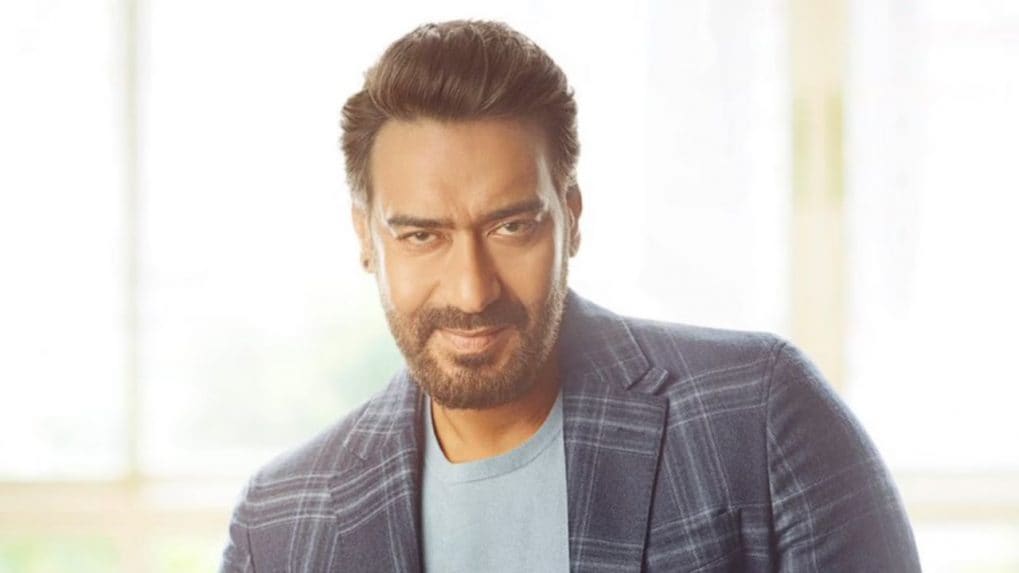
Bollywood actor Ajay Devgn’s recent plea in the Delhi High Court for protection of his personality rights from deepfake misuse is a sign of what industry stakeholders are calling a systemic and existential risk. Until recently, personality rights battles were usually triggered by a specific impersonation or unauthorized endorsement. Today, the threat landscape has flipped entirely. The misuse often begins anonymously, spreads instantly, and causes damage long before the victim is even aware they have been cloned.
A Shift From Single Harm to Systemic Risk
“Our legal system still expects a celebrity to prove that someone used their exact face or voice to deceive the public. But AI does not operate with such neat boundaries,” says Sonam Chandwani at KS legal.
Chandwani points out that India’s personality rights jurisprudence is built mostly on civil law and privacy principles that were never designed for synthetic media. AI tools can generate a face or voice that is not a perfect match but is realistic enough for audiences to believe it is the real person. That ambiguity becomes a safe harbor for misuse because the creators claim the output is only an approximation.
“In practice, the harm is identical to direct impersonation. Yet proving it becomes harder because the creator can always argue that the output is not the same. The law will inevitably shift toward whether AI content creates a likely association in the viewer’s mind,” she adds.
Celebrities are therefore turning to anticipatory injunctions. Devgn’s case, like those of Aishwarya Rai Bachchan, Hrithik Roshan, Jaya Bachchan, Karan Johar, Arijit Singh, and other public figures, is an attempt to freeze the risk before it materializes into irreversible reputational or commercial loss.
A Patchwork Legal Framework Under Stress
Vinay Butani, Partner at Economic Laws Practice, says that while courts have been proactive, there is no single statute that clearly protects image, voice, likeness, or persona in India.
“People have to rely on a mix of trademark laws, copyright laws, and constitutional principles like the right to privacy under Article 21. It is a patchwork and judges have been stitching it together case by case,” he says.
Butani notes that enforcement of personality rights has surged between 2022 and 2025 as courts intervene in matters involving AI misuse. A widely cited case is that of singer Arijit Singh, where the Bombay High Court restrained platforms that enabled voice cloning without permission. Similar protections have been granted in recent Delhi High Court matters involving celebrities from film, music, and digital media.
“So the courts are clearly willing to protect people. But without a dedicated statute, uncertainty persists especially around parody, transformative uses, or cases where the likeness is approximate,” Butani adds.
The Legal Grey Zone of Evocative Likeness
Here is where jurisprudence is evolving most rapidly. “We are in a legally ambiguous territory. Indian jurisprudence recognises personality rights through Article 21 jurisprudence. The precedents assume that there is a real world appropriation of a real identity. AI complicates this because a generated face or voice may not be the celebrity’s exact face but may evoke them strongly,” says Probir Roy Chowdhury, Partner, JSA Advocates and Solicitors.
That ambiguity lets creators argue that the work is “inspired” or “approximate,” not theft. “Identity misappropriation does not have to be literal replication. If an AI generated face, voice, style or persona is substantially evocative of a celebrity such that an average viewer would believe there is endorsement, association or involvement, courts can recognise this as actionable misuse,” Roy Chowdhury adds.
In other words, it is not about accuracy. It is about recognisability.
The Economic Stakes: Authenticity Under Attack
The warnings from the legal community echo a deeper market disruption already unfolding in entertainment. Chandwani says the rise of AI replicas undermines the fundamental economic engine of celebrity: authenticity.
“When a performer’s face or voice can be replicated cheaply, their market value, endorsement deals, and negotiation power are directly hit. Brands may hesitate to pay for real talent, audiences may struggle to trust what they see, and creators risk being diluted by synthetic versions of themselves,” she explains.
Unauthorized deepfakes have appeared in ads, music tracks, influencer content, and even livestreams. Each instance chips away at the right holder’s commercial magnetism and public trust.
The Existential Challenge for Bollywood
Abhishek Chansoria, Principal Associate at Saraf and Partners, believes the impact goes far beyond legal ambiguity. “I think the entertainment industry is facing a genuinely existential problem, and I am not using that lightly,” he says.
For decades, the entertainment sector operated on scarcity. Stars were protected assets. Their face, voice, and performance were exclusively monetized by studios and brands willing to pay top dollar.
Deepfakes break that scarcity.
“An actor’s likeness can now be synthesized, commodified, and distributed without their consent or compensation. A musician’s voice can be cloned for use in unauthorized compositions. Bollywood and legacy entertainment are built on gatekeeping. AI threatens that model,” Chansoria argues.
But he also sees a paradox: the same technology is empowering independent creators to experiment, remix, and build content without traditional industry barriers.
“Small creators benefit from democratization. They can generate synthetic voices, parody celebrities, or critique power structures. So AI cuts both ways: devastating for legacy players, liberating for digital natives,” he says.
If the law swings too far toward prohibitions, Chansoria warns, it could unintentionally cement the dominance of established celebrities and push smaller creators into expensive compliance regimes.
Yet he also acknowledges a dignity concern: even if indie creators see benefits, the person whose likeness is stolen suffers a fundamentally invasive harm. Protecting that harm is a value judgment, not only an economic one.
“It becomes a question of what society chooses to protect. Some moats are justified when they safeguard human dignity and labor,” he adds.
Why a New Law Has Become Inevitable
J. V. Abhay, Partner at Shardul Amarchand Mangaldas and Co, says that although courts are stepping up, a laser focused statute is now required.
“A well structured statute will ensure a clear definition of protectable indicia of identity such as name, image, voice, likeness, signature, distinctive gestures, catchphrases, and digital avatars,” he says.
He adds that India must codify explicit rules for consent and licensing and establish fast track remedies such as dynamic injunctions and trusted flagger takedown systems.
The current legal framework also lacks clarity on platform responsibility, training data consent, and the threshold of identifiability in AI clones. These gaps create friction for both right holders and legitimate creators.
Codification, Abhay says, would provide predictable rules while preserving artistic expression and satire.
A Race Between Technology and Law
The entertainment sector, advertising ecosystem, and creator economy have never been so intertwined with technology. AI has unlocked rapid creativity but also accelerated reputational and economic threats.
The stakes for India are high. Bollywood is not only a cultural behemoth, but a billion dollar industry. If audiences cannot trust what they see, and if talent cannot secure their commercial value, the entire infrastructure of talent development and rights management could destabilize.
Celebrities are now signaling that the old approach of litigating after the harm has hit the market is obsolete. The only viable path is anticipatory protection and statutory clarity.
Because in the AI era, a single deepfake can travel faster than the law ever will.