
Satcom rollout awaits security clearances as govt moves closer to spectrum allocation
According to the minister, security-related obligations remain a critical checkpoint for satcom license holders.

ADVERTISEMENT
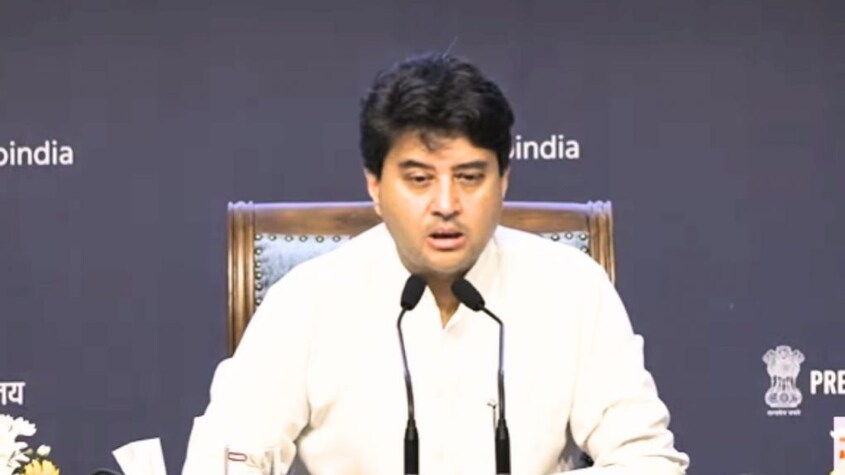
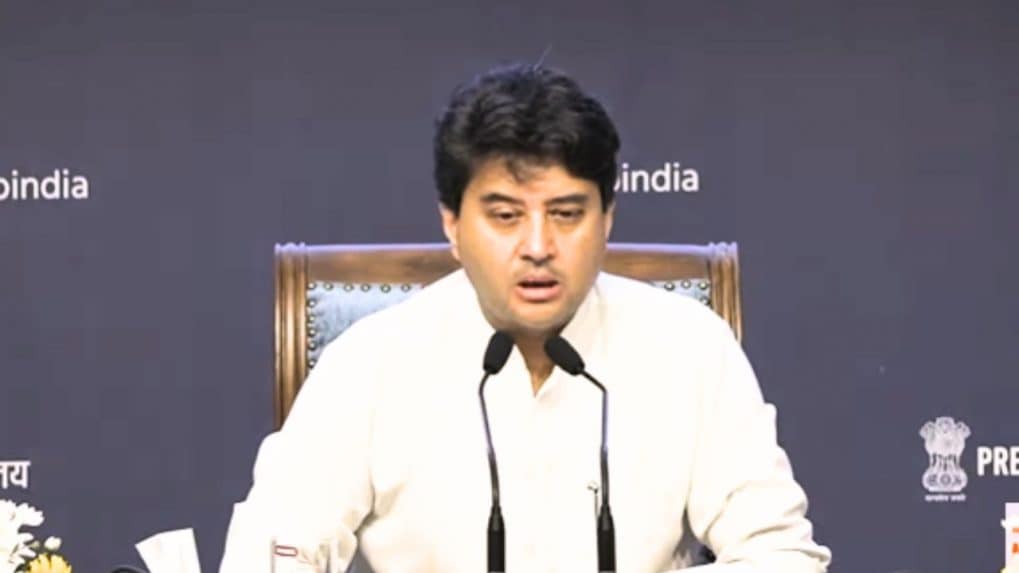
Satellite communication services are set to enter the Indian market, but only after operators meet stringent security conditions laid down by government agencies, Union Telecom Minister Jyotiraditya Scindia has said.
In an interview with PTI, Scindia indicated that the Centre is nearing a decision on allocating spectrum to satellite communication players such as Elon Musk-owned Starlink, Eutelsat OneWeb, and Jio SGS. The final rollout, however, hinges on two parallel processes: compliance with security requirements and the finalisation of spectrum pricing.
Indian telcos slam TRAI’s satellite spectrum pricing as 'unjustifiably low'
According to the minister, security-related obligations remain a critical checkpoint for satcom license holders. These include approvals for international gateways, data localisation within India, and alignment with national security protocols.
“The companies are currently in the process of demonstrating compliance. Once that is completed and pricing is finalised, we will be in a position to move forward,” Scindia said.
The government has already allotted provisional spectrum to satcom players to enable technical trials and assess their ability to meet security expectations. Full commercial allocation will follow only after these conditions are satisfied.
The question of spectrum pricing for satellite services is still under discussion between the Department of Telecommunications (DoT) and the Telecom Regulatory Authority of India (Trai). The regulator and the department have differed on several aspects of the proposed framework.
Earlier this month, TRAI turned down multiple recommendations put forward by the DoT, including a proposal to increase the annual spectrum usage charge from 4 per cent to 5 per cent of adjusted gross revenue, as well as a suggestion to remove a ₹500 per-connection fee for urban users.
The DoT is expected to make a presentation before the Digital Communications Commission (DCC), the highest decision-making body in the telecom sector. The DCC will determine the next steps, which could include seeking Cabinet approval for the final pricing model.
Scindia expressed optimism that the issue would be resolved soon, paving the way for formal spectrum allocation.
Vodafone Idea relief still under consideration
Separately, the minister said the government is still examining requests for relief from Vodafone Idea Ltd (VIL), which continues to struggle under a heavy debt burden.
“It is a work in progress within the Department of Telecommunications,” Scindia said, adding that no fresh relief has been granted to the company so far.
VIL has informed the DoT that its total liabilities to the government stand at nearly ₹2 lakh crore, including ₹1.19 lakh crore in spectrum dues. The telecom operator has warned that without support, the Centre could face significant financial losses due to the non-recovery of dues, erosion of equity value, and the collapse of adjusted gross revenue (AGR) payments.
The Supreme Court has previously allowed the government to address the issue within the scope of its policy-making authority.
TRAI recommends 5-year satellite spectrum allocation, extendable by two
Responding to concerns about repeated bailouts, Scindia said the government’s earlier intervention involved converting dues worth around ₹37,000 crore into equity, giving the Centre a 49 per cent stake in the company.