
Post or Pause? Experts advise brands to stay silent after Deepinder Goyal’s social media backlash
The debate around brand communication has intensified as founders of consumer internet platforms increasingly become the public face of their companies—sometimes inviting disproportionate scrutiny.

ADVERTISEMENT
As consumer internet brands face rising scrutiny, from gig worker unrest to customer backlash, industry veterans are urging platforms to rethink how, where and even whether they respond publicly, particularly on social media.
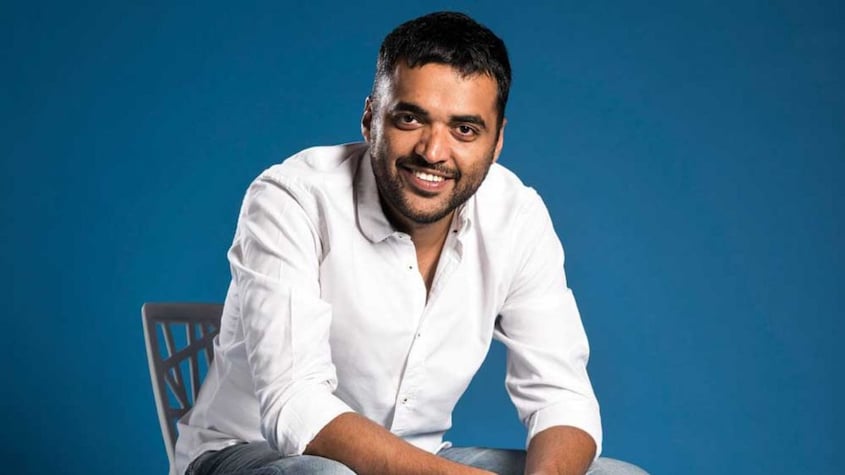
Recently, Eternal Ltd founder Deepinder Goyal took to social media to defend the company’s stance on delivery partners, addressing concerns around their average income, turnover, and the non-mandatory nature of the 10-minute delivery promise amid the strike by the delivery partners against the company. However, his comments sparked widespread outrage on social media. In contrast, the founders of all other quick commerce platforms did come to defend the gig workforce model, and remained silent on the matter.
Advertising veteran Amer Jaleel, founder of Curativity, warned that defensive communication on social media platforms often does more harm than good. According to him, brands should resist the instinct to explain or justify themselves in real time online.
“When you try to defend something, it looks defensive. And when you do that on social media, it looks worse than anything you’ve ever done,” Jaleel said. “At least on this count, brands should not communicate on social media at all.”
Jaleel argued that public rebuttals rarely shift perception and instead amplify controversy. Drawing from traditional brand-building playbooks, he said restraint—and corrective action—matters more than reactive commentary. “If you’ve upset someone, shut up and fix it. Let your actions speak, rather than you speaking,” he said.
The debate around brand communication has intensified as founders of consumer internet platforms increasingly become the public face of their companies—sometimes inviting disproportionate scrutiny.
Partha Sinha, senior advisor at a global consulting firm and founder of ABLTY Advisory LLP, said highly visible founders often become easy targets for public anger, regardless of whether the issue is systemic or individual.
“A vocal consumer is always looking for someone to blame,” Sinha said. “It’s much easier to find a founder’s name than to understand the organisation behind the brand. This happens with politicians too—you find a face and you vent.”
According to Sinha, this dynamic explains why platforms such as Zomato or Ola attract sharper backlash compared to companies like BigBasket, whose leadership operates largely behind the scenes. “People may know the brand, but they won’t know who runs it. With others, the founder is the brand,” he said.
Brand experts stressed that in today’s environment, brand-building goes far beyond advertising campaigns. Corporate narratives are shaped continuously—through leadership visibility, interviews, internal culture and frontline experience.
“Brand construct today is not about what you advertise,” Sinha said. “That’s a very small part. What you say publicly, how leadership shows up, how grievances are handled—these are all building the brand every day.”
Vijay Vaidyanathan, founder of The Growth Pundit, said the real test lies in whether brands live their stated values beyond marketing. “It’s not about founders posting on social media,” he said. “It’s about what’s happening at the doorstep. The frontline experience is the brand.”
Arun Iyer, founder of Spring Marketing Capital, added that public-facing leadership is often a conscious strategic choice. “Some founders intentionally put themselves out there to represent culture and values,” he said. “That choice comes with both upside and downside, and they seem prepared to live with both.”
However, Sinha cautioned against either extreme—total silence or constant commentary. He pointed to MakeMyTrip as an example of balanced leadership visibility. “People know Deep Kalra, but he doesn’t speak on every issue. The business has its own existence, and the founder has his. That balance matters,” he said.
With social media increasingly influencing boardroom decisions, experts agree that brands can no longer afford impulsive reactions. “If something has happened, let it play out fully,” Jaleel said. “Correct yourself. Don’t react to the narrative—change the reality.”