
'I have 100% trust in Priya', says Unilever CEO Fernando Fernandez as India anchors global growth plans
Unilever CEO Fernando Fernandez acknowledged that government intervention--ranging from goods and services tax (GST) reductions to cuts in personal income tax and interest rates--was a response to genuine economic strain.

ADVERTISEMENT
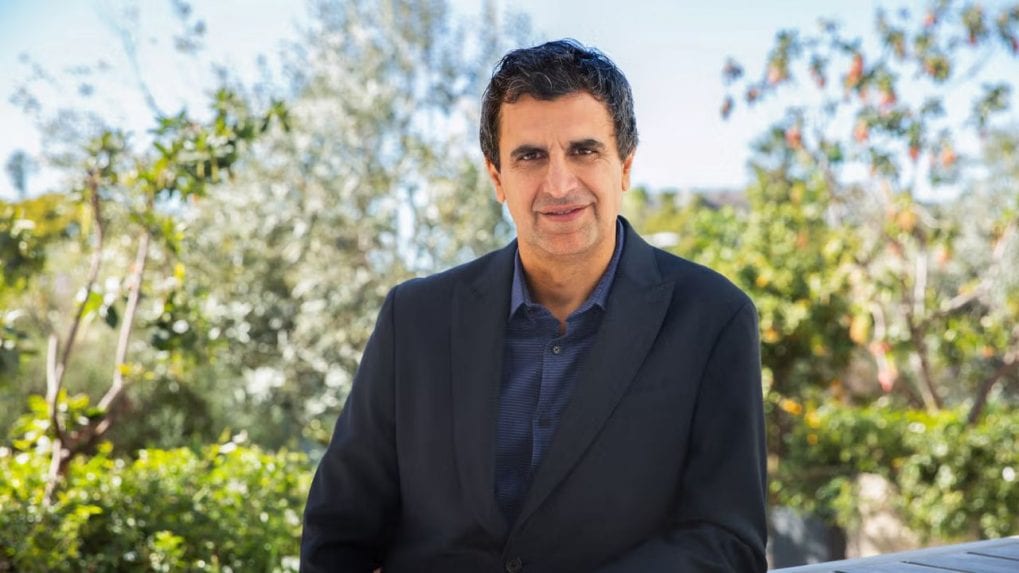
At a moment consumer goods companies are recalibrating growth expectations, Unilever’s chief executive, Fernando Fernandez, offered a confident assessment of the company’s prospects, pointing to the United States and India as the twin engines that could lift volumes across its sprawling portfolio.
Speaking at a fireside chat with Celine Pannuti, head of consumer staples at JPMorgan, Fernandez underscored continuity at the top of the company’s India business, a market that has recently emerged from a prolonged period of consumption stress.
“I have 100 percent trust in Priya Nair,” Fernandez said, referring to the leadership of Unilever’s India operations (HUL), signaling stability in a geography that executives increasingly describe as indispensable rather than optional.
The United States and India together account for more than a third of Unilever’s global revenue, about 21 percent from the US and 14 percent from India—but Fernandez framed their importance less in terms of size than momentum. The US, he said, has delivered more than 4 percent volume growth for five consecutive quarters, defying the stop-start demand that has unsettled much of the consumer staples sector.
India, by contrast, is being positioned as a longer-term growth story. As purchasing power expands, Fernandez argued, Unilever’s mass and premium brands are well placed to benefit from what he described as an impending expansion of household wealth.
“Our brands are perfectly suited to really take advantage of what will be an explosion of wealth expansion,” he said. “So I’m super excited with India.”
Fernandez offered a rare glimpse into how these two markets anchor Unilever’s broader volume ambitions. If the company can sustain close to 4 percent volume growth in the US and India, he said, it translates into roughly 1.6 percent growth at the group level—forming the backbone of Unilever’s plan to exceed 2 percent volume growth globally.
That optimism, however, comes after a difficult stretch for Indian consumers. Fernandez acknowledged that government intervention--ranging from goods and services tax (GST) reductions to cuts in personal income tax and interest rates--was a response to genuine economic strain.
“When the government does something like this, it’s because things in the economy are not right,” he said, noting that Indian consumption had been weighed down for nearly three years by double-digit food inflation.
Those pressures, he suggested, are now easing. Food inflation has given way to bouts of deflation, and economic growth has rebounded sharply, with India posting GDP growth of about 8.2 percent in the most recent quarter. For Unilever, the policy shift is not merely macroeconomic background noise: the GST reduction directly affects roughly 40 percent of its Indian portfolio.
Taken together, Fernandez’s remarks sketched a strategy that leans less on dramatic restructuring and more on selective conviction—doubling down on markets where scale, policy tailwinds and consumer recovery appear to be aligning.