
YouTube is done playing platform. In 2026, it wants to be the entertainment industry
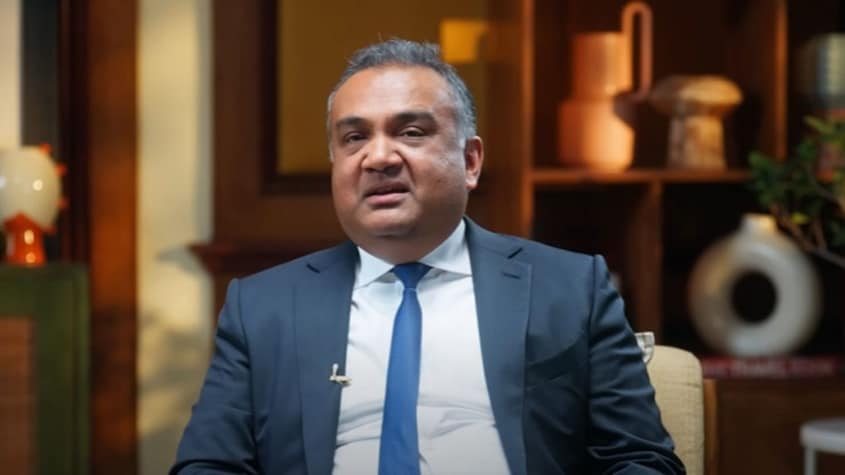
Neal Mohan, YouTube’s chief executive, says the platform is no longer just a venue for user-generated clips but a full-fledged entertainment and commerce engine — with creators at the center.

ADVERTISEMENT
By the time YouTube turned 20, it had already reshaped how people watch video. Now, as it looks toward 2026, the company is arguing that it is poised to redefine entertainment itself.
In a wide-ranging blog post outlining YouTube’s priorities for the coming year, Neal Mohan, the platform’s chief executive, described a future in which creators function simultaneously as stars, studios and distributors; artificial intelligence becomes a mainstream creative tool; and YouTube further entrenches itself as a rival to traditional television — especially in the living room.
“At this inflection point, ambitious bets are required,” Mohan wrote, framing the next phase of YouTube’s growth as one driven by scale, technology and a creator-led business model.
Creators as the New Studios
At the heart of YouTube’s strategy is a simple assertion: creators are no longer peripheral to the entertainment industry — they are the industry.
Mohan pointed to creators offering everything from Super Bowl commentary and Oscars red-carpet coverage to immersive fan experiences around global music releases. Some are now buying studio-sized lots in Hollywood and producing polished, episodic programming that would once have been the domain of television networks.
“The era of dismissing this content as simply ‘UGC’ is long over,” he wrote, arguing that creators who control their own production and distribution are effectively green-lighting their own shows. One example he cited was Julian Shapiro-Barnum’s upcoming “Outside Tonight,” a late-night format designed specifically for digital audiences.
The breadth of formats remains central to YouTube’s appeal. Long-form video, Shorts, livestreams, podcasts and music coexist across devices, from phones to large-screen televisions. Shorts alone now average about 200 billion daily views, and YouTube plans to integrate additional formats — including image posts — directly into the Shorts feed.
That scale has translated into dominance on television screens. According to Nielsen, YouTube has been the No. 1 platform for streaming watch time in the United States for nearly three years, reinforcing Mohan’s assertion that “YouTube is the new TV because creators are the new prime time.”
A Bigger Push Into the Living Room
Building on that momentum, YouTube is doubling down on its television ambitions through YouTube TV. The company plans to introduce fully customizable multiview features and more than 10 specialized subscription plans covering sports, entertainment and news.
The goal, Mohan said, is to give viewers greater control over how and what they watch — a subtle critique of the rigidity often associated with cable bundles and traditional broadcasting.
Kids, Teens and Parental Control
Even as it pushes into premium entertainment, YouTube is emphasizing safety and structure for younger audiences — an area that has long drawn scrutiny from regulators and parents.
The company said it would simplify the process of setting up children’s accounts and allow easier switching between profiles within families. It also announced expanded parental controls, including the ability to limit — or completely turn off — Shorts scrolling for kids and teens, a move YouTube described as an industry first.
“Our goal is to empower parents to protect their kids in the digital world, not from the digital world,”
Mohan wrote.
The Economics of the Creator Class
YouTube’s case for leadership rests not just on culture but on cash.
Over the past four years, the company said, it has paid more than $100 billion to creators, artists and media companies. In 2024 alone, YouTube’s ecosystem contributed an estimated $55 billion to U.S. GDP and supported nearly half a million full-time jobs.
That economic footprint is set to expand as YouTube invests in new monetization tools. Shopping features, brand partnerships and fan-funding products like Super Chat, gifts and Jewels are all being enhanced, with a particular focus on markets outside the United States.
YouTube is also positioning itself as a commerce platform. With more than 500,000 creators already using YouTube Shopping, the company plans to make purchasing frictionless, allowing viewers to buy recommended products without leaving the app.
Brand deals, another cornerstone of creator income, are also being streamlined. New tools will allow creators to modify or replace sponsored segments in older videos, turning archives into renewable revenue streams.
“For every idea a creator dreams up, we provide the business model to match,” Mohan said.
Artificial Intelligence, Carefully Deployed
Perhaps the most consequential — and sensitive — pillar of YouTube’s strategy is artificial intelligence.
Mohan said more than one million channels were using YouTube’s A.I. creation tools daily as of December. New features will allow creators to generate Shorts using their own likeness, experiment with music and even build simple games from text prompts.
But the company is also keenly aware of the risks. YouTube plans to expand labeling requirements for A.I.-generated content, remove harmful synthetic media and give creators greater control over how their likenesses are used. It is also backing legislation like the NO FAKES Act, which aims to curb deceptive deepfakes.
At the same time, YouTube is attempting to tackle what Mohan referred to as “A.I. slop” — low-quality, repetitive content produced at scale. Rather than banning it outright, the platform says it will rely on its existing systems for combating spam and clickbait to limit its spread.
Betting on the Unknown
For viewers, A.I. will increasingly act as a guide, helping explain videos, translate content through autodubbing and make YouTube more accessible globally. In December alone, more than 20 million users engaged with YouTube’s A.I.-powered “Ask” feature, and millions watched autodubbed videos.
Mohan closed with a familiar Silicon Valley refrain: the most important creator of the next decade, he said, is someone who has not yet been discovered — and is likely uploading their first video today.
That belief, he suggested, is what underpins YouTube’s ambitions for 2026: a bet that creativity, backed by technology and scale, will continue to reinvent media — and that YouTube will remain the stage on which it happens.