
EXCLUSIVE: TRAI defends show-cause notices, says 10+2 ad cap still valid despite legal challenge
Lahoti also explained the rationale behind TRAI’s recent enforcement action against television channels that allegedly exceeded the prescribed 12-minute advertising cap per clock hour.


ADVERTISEMENT
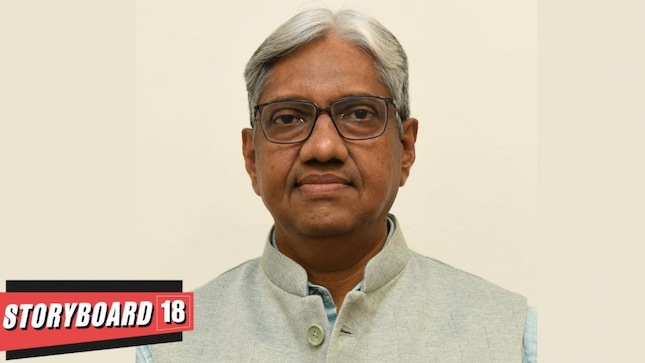
Telecom Regulatory Authority of India (TRAI) chairman Anil Kumar Lahoti on Wednesday said that television broadcasters are required to comply with the existing 10+2 advertising cap, stressing that there is currently no judicial stay on either the Ministry of Information and Broadcasting (MIB) rules or the corresponding TRAI regulations governing advertising limits.
“So, you see, as far as the law of the country goes as on date, the MIB rule puts a 10 plus 2, 10 minutes plus 2 minutes limit on the advertising. And there is a TRAI regulation which has interpreted the rule and how it is required to be applied,” Lahoti told Storyboard18 on Wednesday.
He said that while the rules and regulations have been challenged by certain broadcasters, the courts have not stayed their operation. “Where it is currently sub judice, there is no stay on either the rule notified by MIB or on the regulation notified by TRAI,” Lahoti said, adding that compliance remains mandatory for the industry.
Lahoti also explained the rationale behind TRAI’s recent enforcement action against television channels that allegedly exceeded the prescribed 12-minute advertising cap per clock hour. According to him, the regulator carried out an audit to assess compliance across channels.
“And the industry is supposed to comply with the rule as well as the regulation. The only direction that was given by the Delhi High Court was no coercive action which would be applicable to the petitioners,” he said. “So, there are broadcasters or channels who are not petitioners and they are not protected by this order. So, TRAI had conducted an audit on how it is operating. And wherever we had found defaults, we had initiated the show-cause notices. We have received a number of responses and we are currently examining it.”
The comments come after TRAI issued show-cause notices to several leading television broadcasters for allegedly breaching advertising limits, reviving a dispute that dates back over a decade. In 2013, the Delhi High Court had granted interim protection to some broadcasters, restraining the regulator from taking coercive action against them. The matter is now pending final hearing before the Supreme Court.
In the background, the recent enforcement action has triggered renewed discussions between broadcasting industry stakeholders and the regulator, with broadcasters reiterating concerns that strict implementation of the 10+2 cap—allowing 10 minutes of commercial advertising and two minutes of self-promotion per hour—could further strain revenues amid a broader shift of advertising spends towards digital platforms.
The advertising cap is prescribed under the Standards of Quality of Service (Duration of Advertisements in Television Channels) Regulations, 2012, notified by TRAI, and is also mirrored in the Cable Television Networks Rules, 1994. Broadcasting and cable television services fall under TRAI’s jurisdiction following a government notification under the TRAI Act classifying them as telecommunication services.
The Telecom Regulatory Authority of India (TRAI) has placed the onus on the Ministry of Information and Broadcasting (MIB) to frame a policy solution to the long-standing 10+2 advertising cap issue, with TRAI chairman Anil Kumar Lahoti stating that the regulator is bound to implement the existing law and that any change would require legislative action by the ministry.
Lahoti also underscored that regulation of the broadcasting sector should not come at the cost of growth, emphasising that TRAI’s approach is to ensure compliance while allowing the industry to expand.
Multiple broadcasting industry stakeholders met Telecom Regulatory Authority of India (TRAI) chairman Anil Kumar Lahoti on Tuesday, renewing calls to resolve the long-running 10+2 advertising cap issue that broadcasters say is hurting the sector’s economics.