
Building brokerage or influence?: Inside Nikhil Kamath’s media play, and what it means for Zerodha’s future
Zerodha co-founder Nikhil Kamath’s expanding media and cultural footprint is reshaping how one of India’s most trusted fintech brand builds influence, trust and its next phase of growth.

ADVERTISEMENT
For more than a decade, Zerodha’s story has been told as a triumph of cost disruption. Founded in 2010 by brothers Nikhil and Nithin Kamath, the Bengaluru-based firm helped rewrite the rules of retail broking in India by flattening fees, digitising access and persuading millions of first-time investors that markets were no longer the preserve of the wealthy or well-connected.
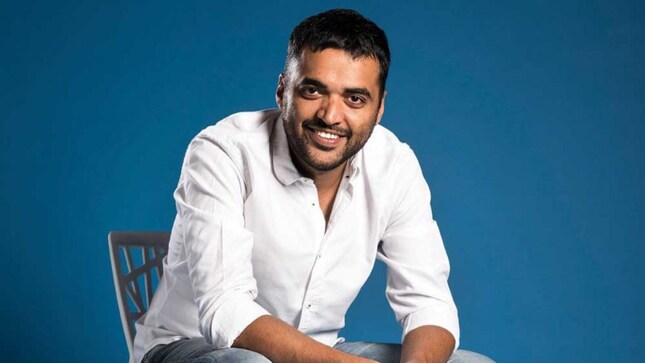
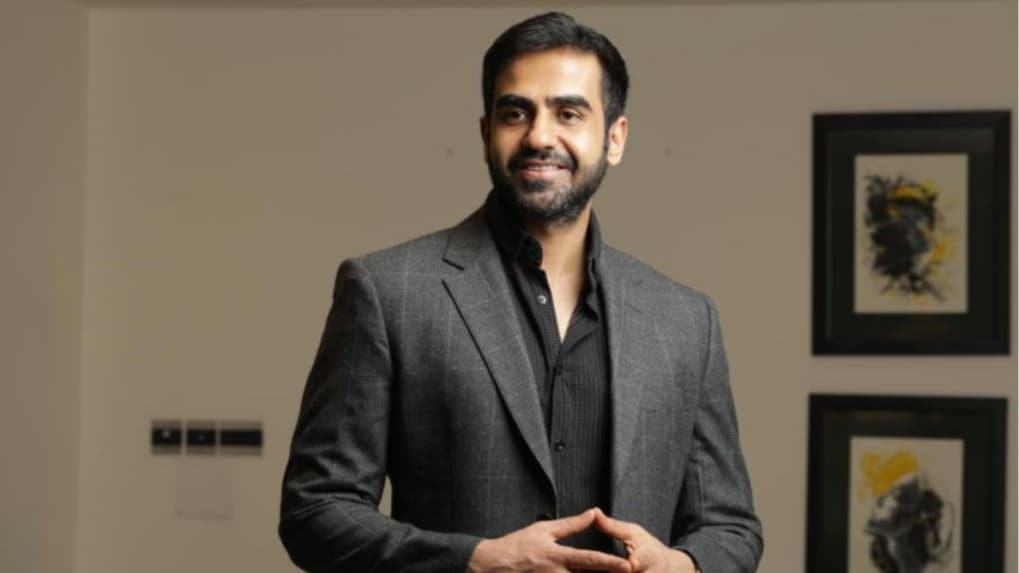
Today, Zerodha is something else as well: the financial backbone of an expanding cultural and media footprint shaped increasingly by its younger co-founder, Nikhil Kamath.
Through podcasts, public conversations, venture investing and education-led platforms, Kamath is assembling what industry observers describe as a founder-led content engine — one that confers visibility, influence and trust, but also raises questions about brand risk, monetisation and focus at a moment when Zerodha’s core business is facing regulatory and competitive pressure.
Partha Sinha, Principal Advisor, ABLTY Advisory said,"At first glance, Nikhil Kamath building a media ecosystem alongside Zerodha can look like a side project. It isn’t. It’s a strategic play about shaping context, not chasing customers. Zerodha has always been quiet — low costs, no hype, no celebrity noise. Kamath’s media platforms extend that personality into ideas. They signal depth, comfort with complexity, and long-term thinking. Users start associating Zerodha not just with trading, but with understanding money."
A brokerage built on margins, not marketing
Zerodha’s ascent was anchored in a simple but radical proposition. At a time when traditional brokerages charged percentage-based commissions, the company introduced a flat-fee model—zero brokerage on equity delivery trades and a fixed charge on derivatives. The move sharply lowered transaction costs and aligned with the rise of smartphones, digital onboarding and app-based trading.
The economics worked. By FY24, Zerodha reported revenues of over ₹8,000 crore, with industry-leading profit margins. Its earnings were driven largely by futures and options trading, a segment that exploded in popularity among retail investors during India’s post-pandemic market boom.
That dependence, however, has become a vulnerability. In FY25, Zerodha’s net profit declined to about ₹4,200 crore from roughly ₹5,500 crore the year before, even as revenues stood at approximately ₹8,500 crore, down from nearly ₹10,000 crore in FY24.
The slowdown reflects more than market cycles. Since late 2024, the Securities and Exchange Board of India (SEBI) has introduced a series of measures to curb speculative excess in derivatives trading — raising transaction taxes, limiting weekly expiries and tightening margin rules. Analysts estimate that sustained regulatory pressure could reduce revenues by 30–40 percent for brokers with a derivatives-heavy mix.
Zerodha declined to comment on queries sent by Storyboard18.
Competition catches up
At the same time, competition has intensified. Venture-backed platforms such as Groww and Upstox, listed players like Angel One, and newer entrants including PhonePe-backed Share.Market have expanded rapidly, spending heavily on customer acquisition and simplifying onboarding.
Groww, which began as a mutual fund platform, has overtaken Zerodha in active investor accounts in recent quarters, according to exchange data.
“This is a mass-market business with thin switching costs,” said Lloyd Mathias, angel investor and former marketer. “Customers often move platforms for marginal pricing differences or better features.”
Mathias described Groww as “probably the most significant competitive threat right now,” noting that Zerodha’s share of active traders has slipped modestly amid aggressive moves by rivals.
The pivot beyond transactions
Zerodha’s response has been gradual but deliberate. Alongside its flagship trading platform Kite, it has expanded Coin for mutual fund investments, scaled its fintech investment arm Rainmatter, and continued to invest in Varsity, its education platform.
The strategy is to reduce dependence on volatile trading volumes and move up the financial value chain.
Shashi Sinha, strategic advisor at Omnicom Media India, said Zerodha is “well positioned at the end of the value chain” as investors mature and seek more sophisticated products. He pointed to long-term opportunities in data-driven personalisation — provided the firm builds compliant internal systems to manage financial data responsibly.
Yet alongside this product diversification, another shift has been underway — less corporate, more personal.
The Nikhil Kamath moment
Nikhil Kamath’s public profile has expanded far beyond finance and business circles. His long-form podcast, WTF and WTF People features conversations with founders, investors, cultural figures and policymakers, including Prime Minister Narendra Modi. Distributed across platforms like Spotify and Apple Podcasts, it has become one of India’s most recognisable business podcasts.
Kamath has also emerged as a visible investor, backing companies such as Licious, Growth School, Third Wave Coffee, Pee Safe, Mainstreet and Goldi Solar, while disclosing a $21 million investment in global technology firm Nothing and a reported ₹400 crore stake in Radico Khaitan.
The result is a rare phenomenon in business: a fintech founder who operates simultaneously as operator, investor and media personality — without overtly selling a product.
“Zerodha is a rare case where founder visibility complements, rather than overshadows, the brand,” said Yasin Hamidani, director at Media Care Brand Solutions. “This isn’t influencer marketing — it’s credibility marketing. However, the brand must ensure the product narrative stays central, so founder popularity remains an amplifier, not the primary growth engine.”
A content engine without ads
Zerodha’s brand has long been defined by what it avoids as much as what it does. The company does not advertise. Instead, it has relied on education, trust and word-of-mouth—an approach that set it apart in a sector crowded with celebrity endorsements and cashback offers.
That philosophy now extends into Kamath’s media ventures. The podcast, public talks and long-form conversations function as a content engine — one that builds cultural relevance rather than direct lead generation.
“While competitors bought attention, Zerodha built trust through education,” said Ahmed Aftab Naqvi, global CEO and co-founder of Gozoop. Kamath’s cultural capital, he added, “is something no ad budget can buy,” though founder-led brands always carry reputational risk.
The commercial logic is indirect but powerful. High-trust audiences lower customer acquisition costs, extend brand longevity and support adjacent revenue streams—from education to fintech partnerships and ecosystem investments. The risk is concentration: when credibility flows through a single individual, missteps can reverberate quickly.
Brand bigger than the founder—so far
Industry veterans argue that Zerodha has largely managed this balance.
“Zerodha as a brand is bigger than either Nikhil or Nithin individually,” said Mathias. “Their personal brands have been built on Zerodha’s credibility, not the other way around.”
Still, expectations are rising. As the category matures and regulators tighten oversight, users will demand more handholding, greater reliability and sharper accountability.
“Users will expect more handholding and regulatory resilience without compromising simplicity,” said Ambika Sharma, founder of Pulp Strategy.
A trust-led model under test
Zerodha remains one of the few fintech companies that is profitable, founder-driven and deeply trusted at scale. But the conditions that powered its rise — explosive retail participation, light-touch regulation and minimal competition — are no longer guaranteed.
Whether Nikhil Kamath’s expanding media and cultural footprint becomes a durable strategic advantage or a distraction will depend on how tightly it remains tethered to Zerodha’s core promise: low-cost access, education-led investing and institutional trust.
For now, the company is navigating two parallel bets — one on markets, the other on meaning. In an industry built on numbers, that may prove to be its most unconventional trade yet.