'If we find a win-win situation': Unacademy's Gaurav Munjal eyes merger
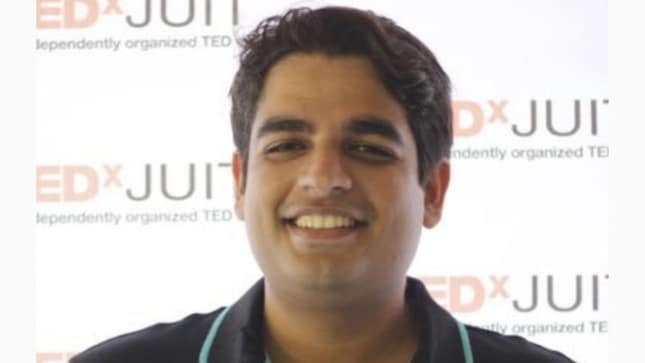
Co-founder Gaurav Munjal made the remarks in a detailed social media post marking Unacademy’s 10th anniversary, where he recounted the platform’s growth, pandemic-era boom, strategic missteps, and sharp drop in valuation.


ADVERTISEMENT
Edtech unicorn Unacademy is exploring consolidation opportunities as it looks to stabilize and strengthen its business after a volatile decade-long journey. Co-founder and CEO Gaurav Munjal confirmed that the company is in active M&A discussions, signalling openness to merging with a larger or stronger entity if the deal creates “a win-win situation.”
Munjal made the remarks in a detailed social media post marking Unacademy’s 10th anniversary, where he recounted the platform’s growth, pandemic-era boom, strategic missteps, and sharp drop in valuation.
Unacademy began in 2010 as a YouTube channel that Munjal started while in college, formally launching as a company in December 2015. For the next four years, the platform focused on adding educators, but its inflection point came in 2019 when it introduced paid subscriptions for live classes. The model scaled rapidly—from zero revenue in January 2019 to $1.8 million by September that year—helping the company reach a $20 million bookings ARR within nine months.
Unacademy turns 10 today
— Gaurav Munjal (@gauravmunjal) December 10, 2025
I thought it's a good occasion to jot down some thoughts on this day about the wild ride that we have gone through.
Ten years ago, we started with a simple mission: to empower great educators and make their content accessible to everyone.
This is…
The Covid-19 pandemic turbocharged Unacademy’s growth, bringing nearly one million paid subscribers and three funding rounds in quick succession. Its valuation soared from $100 million in early 2019 to $1.5 billion by September 2020, with the company spending under $50 million to reach unicorn status. Subsequent rounds pushed total fundraising to over $700 million within two years.
However, Munjal acknowledged that aggressive spending to acquire market share proved to be a strategic error. “We started burning a lot of money… without realizing that education is different from a normal tech business,” he wrote.
The turning point came in 2022, when students returned to offline centres and demand for online learning softened sharply. “We didn’t realize the market had shifted,” Munjal said, noting that Unacademy lost market share as its core subscription product faltered.
The company has since undergone a significant reset—slashing costs, reducing prices, prioritizing YouTube-driven content discovery, and focusing on profitability. Munjal said Unacademy cut its annual cash burn from ₹1,400 crore in 2022 to under ₹175 crore in 2025.
Reflecting on the company’s revised outlook, Munjal said Unacademy may now be valued at “less than $500 million,” down from its $3.5 billion peak three years ago, but emphasized a renewed focus on sustainable growth. “Today, I care more about building great products, having great unit economics, and growing profitably,” he wrote.