
Frozen foods pick up pace as ITC, Godrej scale up, Licious approaches $100 million revenue
Industry executives said that quick commerce has made frozen food accessible, reducing friction around storage, availability and impulse purchases, particularly in dense metro markets.

ADVERTISEMENT
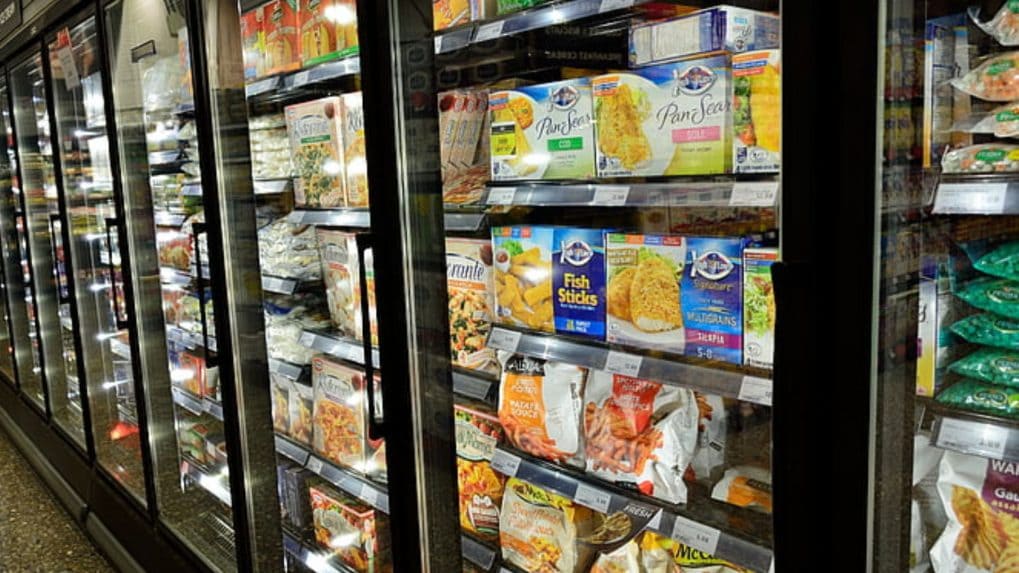
Frozen foods are emerging as a small but increasingly significant growth pocket within India's $354.5 billion food processing industry, as improving cold-chain infrastructure, changing household structures and rapid commerce adoption push the category closer to commercial viability.
Financial data intelligence platform Tracxn showed that Licious, the Bengaluru-based online retailer of meat and seafood, significantly improved its financial performance in 2025. The company narrowed its losses year-on-year to $25.8 million in 2025, while revenue rose to $99.9 million, up from $90.4 million a year earlier. This highlights a broader shift underway in frozen and chilled foods, long considered difficult to scale profitably in India due to logistics costs and inconsistent demand.
Licious last year acquired Bengaluru-based retailer My Chicken and More, signalling a strategic pivot towards an omnichannel model aimed at improving order density and reducing last-mile costs, particularly in southern markets.
Domestic brands such as Hungritos, MD Fresh Veg, RYB Frozen Foods, Godrej Yummiez, among others are also gradually stabilising their frozen vegetable and non-vegetarian offerings, reflecting a gradual normalization of demand in urban markets.
The trend extends beyond startups. McCain Foods (India), an Indian arm of the Canada-based frozen food multinational long associated with French fries and nuggets in Indian households, has reported steady revenue growth in the country, with sales rising from $109.5 million in 2022 to $150.4 million in 2024.
According to Neha Singh, co-founder of Tracxn, technological improvements have been central to changing perceptions around frozen foods in the country.
"Advancements such as vacuum-sealed packaging, longer shelf life, and adherence to hygiene and safety standards like HACCP have helped frozen foods gain wider acceptance in Indian kitchens," she said.
The segment’s growth, she added, is being propelled by rapid urbanization, rising disposable incomes, and the expanding base of dual-income households looking for quick meal solutions.
Industry executives also point to the rise of 10- minutes delivery platforms as a powerful accelerant. Quick commerce has made frozen food accessible, reducing friction around storage, availability and impulse purchases, particularly in dense metro markets.
Large FMCG firms are also responding by increasing capital allocation to the segment. ITC Ltd has been expanding its frozen food portfolio, betting that the category's growth will outpace several traditional packaged food segments.
Ashu Phakey, Vice President and Business Head, Frozen Snacks & Fresh Foods at ITC said the company has built what it describes as a future-ready portfolio across brands such as ITC Master Chef, Aashirvaad Frozen naans and parathas and Prasuma.
"Our frozen portfolio is preservative-free. We follow Individually Quick Freezing (IQF), which allows us to deliver food that retains its authenticity, nutrients and flavour," Phakey said.
Technology, too, is at the core of operations for incumbents. A spokesperson for Godrej Foods said the company relies on Individual Quick Freezing (IQF) technology, in which products are flash-frozen at temperatures between –30°C and –40°C.
"This preserves freshness, texture, and nutrition without any preservatives," the spokesperson said.
From an investment perspective, frozen food startups remain geographically concentrated. Singh noted that Chennai and Delhi have emerged as key funding hubs, attracting close to $19 million each in venture capital, while consumption continues to be largely concentrated in major metros such as Bengaluru, Chennai, Mumbai, and Delhi.
Consumer sentiment appears to be moving in industry's favour. According to the India Snacking Report (STTEM 2.0), conducted with YouGov, 67% of health professionals believe frozen snacks are faster and more convenient than cooking meals at home.
Meanwhile, the global ready-to-eat (RTE) food market is projected to reach $572.54 billion by 2033, growing at a compound annual growth rate (CAGR) of 13.25% between 2025 and 2033, according to Research and Markets.
Yet structural constraints remain. Santosh Sreedhar, Partner, Avalon Consulting, said the frozen food segment in India could grow at 1.5 to 2 times the pace of the broader packaged food industry over the next decade. but warned that the expansion into Tier 2 and Tier 3 cities would depend on sustained investment in cold-chain logistics and last-mile delivery.
For now, frozen foods remain a predominantly urban, middle-income phenomenon. But as costs decline and distribution improves, the category is increasingly seen by investors and consumer goods groups as a long-term bet on India's changing patterns of work, consumption and household life.