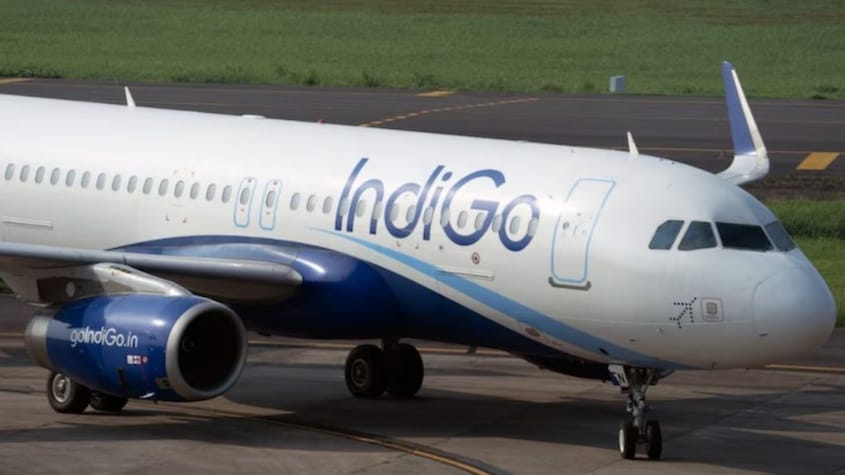

Nearly 200 IndiGo flights cancelled as crew shortages and new duty norms disrupt operations
IndiGo said its teams were working around the clock to restore normal operations and minimise inconvenience to customers as the airline attempts to stabilise its network.

ADVERTISEMENT
IndiGo is grappling with one of its most serious operational disruptions in recent years, as widespread delays and cancellations have affected passengers across major Indian airports. The situation comes at a time when the airline, which operates more than 2,200 flights a day, has seen its punctuality collapse due to a combination of staffing shortages, revised duty norms, and operational challenges.
Government data from Tuesday, as reported by NDTV, showed IndiGo’s on-time performance falling to 35 per cent, indicating that more than 1,400 flights were delayed in a single day. The disruption intensified on Wednesday, with airports in Delhi, Mumbai, Bengaluru and Hyderabad collectively reporting close to 200 cancellations by afternoon, leading to extensive inconvenience for domestic travellers. Mumbai airport stated that flights may face delays or cancellations due to airline-related issues and advised passengers to check their flight status before arriving at the terminal.
#PassengerAdvisory pic.twitter.com/5IqSPS3aWT
— Mumbai Airport (@CSMIA_Official) December 3, 2025
IndiGo reportedly saw 1,232 cancellations through the month of November. A major factor contributing to the ongoing crisis is a shortage of crew—particularly pilots—following the implementation of revised Flight Duty Time Limitation (FDTL) norms last month. The updated rules mandate longer rest hours and improved rostering practices, and the airline has been struggling to recalibrate its extensive network accordingly.
NDTV sources indicated that several flights were grounded due to the unavailability of cabin crew, while others experienced delays of up to eight hours. Given IndiGo’s dominant 60 per cent market share in domestic aviation, the knock-on effects have spread across the wider ecosystem.
As per media reports, IndiGo stated that its operations had been significantly impacted over the past two days and attributed the disruption to a combination of unforeseen challenges, including minor technology issues, winter-related schedule changes, adverse weather, increased system congestion, and the shift to new crew rostering rules. The airline said it had initiated calibrated schedule adjustments for the next 48 hours to restore stability and progressively recover punctuality.
Under the FDTL norms, crew flying time is capped at eight hours a day, 35 hours a week, 125 hours a month and 1,000 hours a year. Mandatory rest periods require downtime equal to twice the flight duration, with a minimum of 10 hours of rest within a 24-hour period. The Directorate General of Civil Aviation introduced these measures to ensure adequate rest and reduce fatigue-related safety risks.
The airline added that affected passengers were being offered alternate travel arrangements or refunds, and urged travellers to check real-time flight information before heading to airports. Long queues and frustration were also reported at Hyderabad’s Rajiv Gandhi International Airport, where 33 IndiGo flights—both arrivals and departures—were cancelled on Tuesday. Arrivals from several cities, including Visakhapatnam, Goa, Ahmedabad, Delhi, Bengaluru and Chennai, were cancelled, alongside outbound services to Delhi, Bengaluru, Bhubaneswar, Hubli and Bhopal.
IndiGo said its teams were working around the clock to restore normal operations and minimise inconvenience to customers as the airline attempts to stabilise its network.