
OpenAI at 10: A history of the ChatGPT-maker, how it remade an industry - and the questions it left behind
Over ten years OpenAI evolved from a mission-driven nonprofit to a commercially dominant - and contested - AI powerhouse, producing ChatGPT and GPT-4, taking large Microsoft investments, weathering legal fights and boardroom drama, and clashing with one of its founders, Elon Musk.

ADVERTISEMENT
When OpenAI opened its doors in December 2015, it presented itself as an experiment in what the founders called “beneficial” artificial intelligence — a research group dedicated to developing powerful AI for the public good rather than private profit. The founding announcement, and early coverage, framed the effort as an antidote to a future in which the most consequential AI systems were controlled by a handful of corporations.
From that modest, idealistic start the organization’s trajectory was rapid and, over the following decade, frequently abrupt: breakthroughs and products that reshaped an industry; large injections of capital from one of the world’s biggest technology companies; a battleground of lawsuits over training data and copyright; and a very public clash between the company and one of its original backers, Elon Musk. This is the story of OpenAI’s first ten years — what it built, how it financed the build, and why it became such a polarizing force.
Founding, early research and an ethos of “open” science
OpenAI launched as a nonprofit in December 2015 with a high-profile group of founders and backers that included Sam Altman, Greg Brockman, Ilya Sutskever and Elon Musk. The initial public message was straightforward: pursue powerful AI while sharing research and avoiding capture by narrow commercial interests. In practice, the lab’s early years were focused on reinforcement learning platforms, toolkits and foundational models that pushed the state of the art and drew the attention of academic and corporate AI researchers alike.
Those early technical advances — OpenAI Gym, research papers on generative language models and early image models such as the original DALL·E — laid the technical groundwork for later commercial products even as the company’s culture and incentives began shifting toward delivering deployable systems.
From capped-profit model to big tech partner: the Microsoft relationship
As computational demands ballooned, OpenAI’s leaders confronted a practical truth: building frontier models demanded enormous capital and cloud infrastructure. The organization morphed into a hybrid structure and, beginning in 2019, entered into an exclusive cloud and investment relationship with Microsoft. Microsoft’s first headline investment — a $1 billion partnership announced in July 2019 — formalized Azure as OpenAI’s primary cloud partner and helped fund the escalation in computing scale. In 2023 reports and filings described substantially larger follow-on investments from Microsoft, reflecting the strategic importance of the partnership to both companies.
Read more: OpenAI fast-tracks GPT-5.2 launch after internal ‘code red’ to counter Google’s Gemini 3
That alliance reshaped OpenAI’s business model: research outputs became the basis for products and APIs sold to enterprises and integrated into Microsoft services, producing both revenue and an alignment with a single dominant cloud provider — a turn that attracted praise for accelerating products and criticism from observers who said it tightened commercial incentives inside a group that had begun life as a nonprofit.
The product revolutions: GPT family, DALL·E and ChatGPT
OpenAI’s public profile shifted dramatically with successive model releases. GPT-2 and GPT-3 (research outputs that showed the scaling power of large language models) were followed by DALL·E for image generation and other multimodal models that expanded public imagination about what generative AIs could do. The watershed moment for mass public attention came with the release of ChatGPT in November 2022: a chat interface powered by large language models that millions of people began using for drafting, coding help, brainstorming and research. That release accelerated the “AI moment” in business and media and set off an industrywide sprint to deploy conversational systems.
Read more: Disney to invest $1 billion in OpenAI as it becomes first major content partner for Sora
In March 2023 OpenAI introduced GPT-4, a multimodal model with markedly improved capabilities, and the company continued to iterate rapidly on model variants and product features through 2023–2025. Those releases sustained OpenAI’s role at the center of an intense commercial and policy debate about how powerful models should be governed and monetized.
Legal fights over training data and copyright
As OpenAI’s models grew more capable, lawsuits and demands from creators followed. Beginning in 2023 multiple authors, publishers and other rightsholders filed class actions or other complaints alleging that OpenAI (and some of its cloud or commercial partners) used copyrighted works without authorization to train large language and image models. These suits — emblematic of a wider industry wave — pressed courts to confront whether training on large swaths of the public web and copyrighted works is permissible under copyright doctrines such as fair use. The Authors Guild in the US and a coalition of authors brought prominent claims that helped turn training-data practices into a central legal and regulatory battleground.
Those legal actions have proceeded in different courts with staggered timetables, and the outcomes remain consequential not only for OpenAI but for the entire generative-AI sector: rulings would influence whether and how companies license datasets, give attribution, or pay for content used to teach models.
Boardroom crisis, employee revolt and governance questions
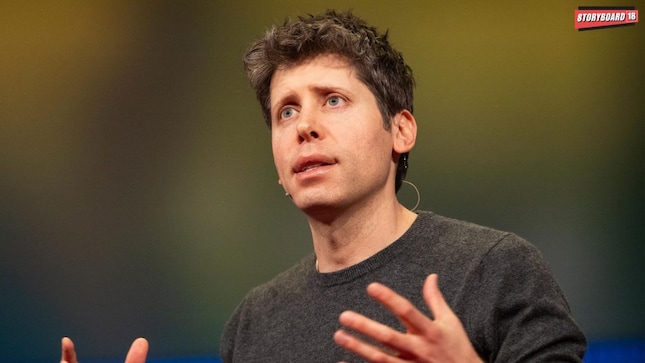
In November 2023 OpenAI’s board dismissed Sam Altman as chief executive, citing a loss of confidence; the decision set off a dramatic five-day episode in which employees, investors and Microsoft pushed for Altman’s return. The episode ended with Altman’s reinstatement and the replacement or reshaping of the board, but it highlighted deeper questions about governance at a company that combined a mission-oriented nonprofit origin, a commercially ambitious subsidiary structure and enormous outside investment. Reports and analysts described the episode as a revealing stress test of the hybrid corporate arrangements OpenAI had adopted and as a signal that traditional nonprofit governance structures were strained under commercial pressure.
That governance crisis prompted intense scrutiny from regulators and investors; it also forced public discussion about how a company developing potentially transformative technology should be controlled and held accountable.
The Musk split and subsequent legal entanglements
Elon Musk — an early backer and one of the founders — left OpenAI’s board in 2018. Over time Musk and the company developed a public and legal adversarial relationship. In 2024 and 2025 that friction moved into the courts and headlines as Musk or investor groups he led revived or lodged legal actions alleging breaches of the original arrangements and objecting to the company’s path toward private commercial arrangements. Those filings, and the accompanying public barbs, underscored how the early founding consensus about an “open,” nonprofit future for AGI had fractured as capital needs, product markets and governance realities pushed OpenAI in other directions.
Regulation, safety and the public debate
Along with litigation, OpenAI has been at the center of policy debates about disclosures, safety testing and possible regulation of frontier models. Company leaders have repeatedly testified before legislators and publicly acknowledged the risks of disinformation, bias and misuse while arguing that commercial deployment and iterative safety work could be complementary. At the same time, critics have called for stronger independent auditing, transparency about training data and limits on certain types of deployments. The tension between rapid product-market deployment and rigorous safety guarantees remains one of the company’s most persistent challenges.
Also read: OpenAI flags rising cyber risks from next-gen AI models
What the next decade might look like
OpenAI’s first ten years leave a mixed, instructive legacy. The company transformed public expectations about what AI can do, accelerated product strategies across the tech sector, and created enormous commercial value — in part because of strategic partnerships and successive model improvements. But the company’s path also exposed the difficulty of reconciling a public-interest mission with the capital and incentives required to train ever-larger models. Legal challenges over data and copyright, governance tensions and periodic product safety controversies suggest that societal and legal institutions will be critical determinants of how the technology evolves.
For business leaders, regulators and the public, OpenAI’s story is both a case study in rapid technological scaling and a reminder that powerful platforms — even those founded on idealistic principles — tend to collide with commercial pressures and legal limits as they grow. How those collisions are resolved will shape not only OpenAI’s next decade but the broader rules for an industry that is remaking media, work and the economics of information.