
AI’s 2026 identity crisis: Satya Nadella rejects ‘slop’ label as job fears collide with fresh data
While some professions are experiencing sharper disruption including corporate graphic designers, marketing bloggers, and junior software engineers, evidence also suggests that workers with deep expertise are benefiting from AI adoption. Highly skilled artists, writers, and programmers consistently produce stronger results when using AI tools than those without comparable expertise.

ADVERTISEMENT
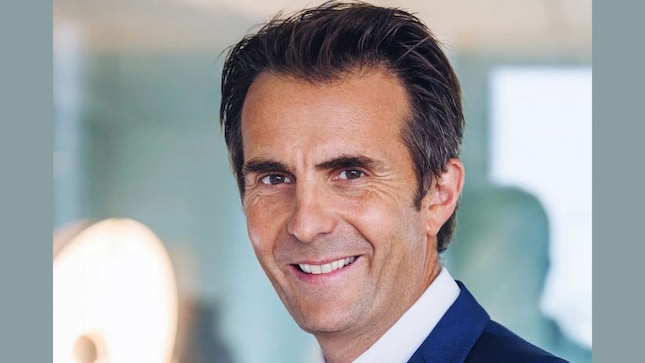
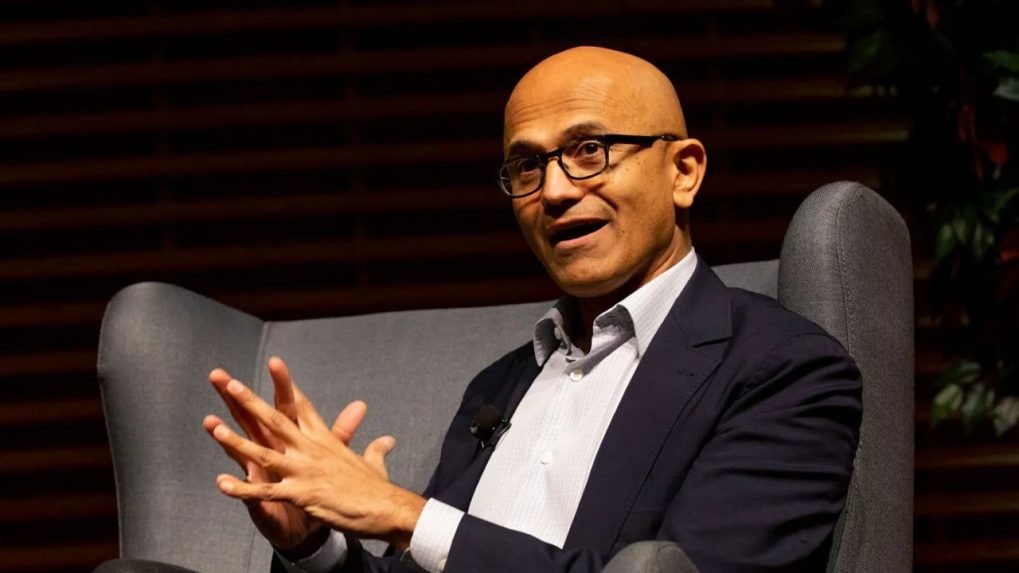
As the technology industry heads into 2026, the debate around artificial intelligence is undergoing a sharp reset with Microsoft CEO Satya Nadella urging the world to rethink what AI actually represents.
Writing on his personal blog just weeks after Merriam-Webster named “slop” its word of the year, Nadella pushed back against the growing tendency to view AI-generated content as low-quality noise. Instead, he framed AI as “bicycles for the mind,” describing it as a cognitive support system that enhances human potential rather than replacing it.
Nadella argued that the industry must move beyond the binary argument of “slop versus sophistication” and develop a new understanding of human interaction in an age of AI-powered tools. In his words, AI should be seen as scaffolding for human creativity and productivity, not a substitute for human intelligence.
That vision, however, sits uncomfortably beside the messaging dominating much of the AI marketplace. AI agent platforms are frequently priced and promoted on the promise of replacing human labor — a narrative that has only intensified amid warnings from prominent AI leaders about massive job losses.
In May, Anthropic CEO Dario Amodei warned that AI could displace half of all entry-level white-collar jobs within five years, potentially pushing unemployment to between 10% and 20%. He reiterated that concern in a recent interview on 60 Minutes, reinforcing fears that AI’s impact on employment could be swift and severe.
Yet current data paints a far more complex picture.
One of the most widely referenced studies in this space, MIT’s ongoing Project Iceberg, estimates that AI is presently capable of performing about 11.7% of paid human labor. Crucially, the researchers clarify that this does not mean AI can replace 12% of jobs outright. Instead, it measures how much of existing work within jobs can be offloaded to AI systems, with wage calculations attached to those specific tasks. Examples include administrative paperwork in healthcare and portions of software development.
While some professions are experiencing sharper disruption including corporate graphic designers, marketing bloggers, and junior software engineers, evidence also suggests that workers with deep expertise are benefiting from AI adoption. Highly skilled artists, writers, and programmers consistently produce stronger results when using AI tools than those without comparable expertise.
Recent economic data appears to support Nadella’s more optimistic framing.
Vanguard’s 2026 economic forecast report found that the roughly 100 occupations most exposed to AI automation are currently outperforming the broader labor market in both job growth and real wage increases. The report concludes that professionals who have learned to use AI effectively are becoming more valuable, not more expendable.
The irony is that Microsoft itself helped fuel public anxiety around AI-driven job loss. In 2025, the company laid off more than 15,000 employees while simultaneously reporting record revenues and profits for its fiscal year ending in June. Nadella later addressed the cuts in a public memo, pointing to the need to “reimagine our mission for a new era,” with AI transformation listed as one of Microsoft’s three central objectives.
However, the Vanguard report suggests that much of last year’s job reduction across the industry was driven less by internal AI efficiency and more by traditional business restructuring — redirecting investment away from slowing units toward fast-growing AI initiatives.
Across the U.S. tech sector, AI was linked to nearly 55,000 layoffs in 2025, according to research firm Challenger, Gray & Christmas, as cited by CNBC. Major players including Amazon, Salesforce, and Microsoft were among the companies that cut jobs while accelerating AI spending.
As 2026 approaches, the industry appears stuck between two competing narratives: one where AI is positioned as a job-destroying force, and another where it emerges as the most powerful productivity partner humans have ever built.
And somewhere in between, as Nadella might argue, lies the future with room even for a little “slop” along the way.