
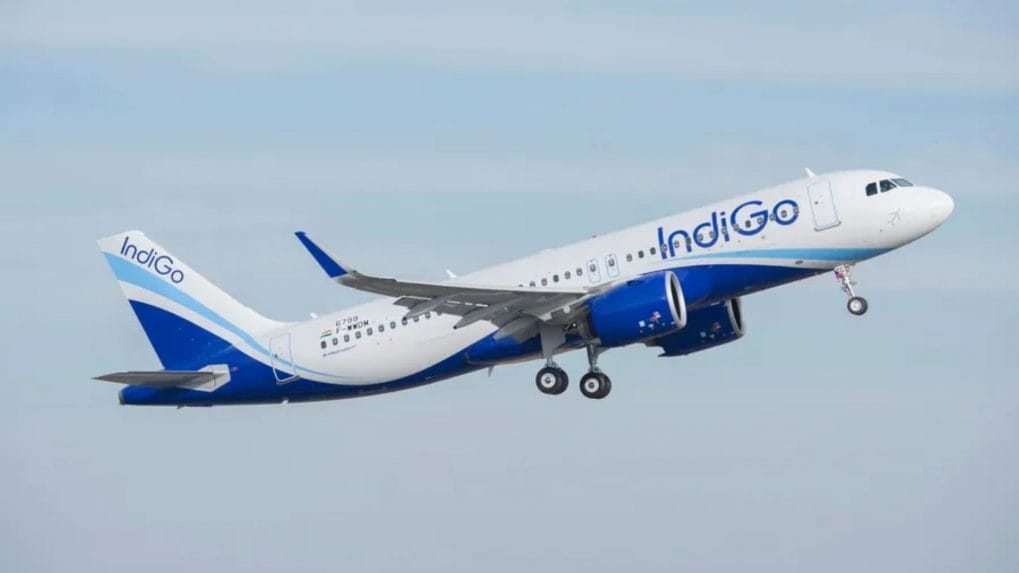
IndiGo slides down global rankings after week of nationwide disruptions
IndiGo’s sharp market-cap fall has been compounded by widespread flight cancellations and intensified regulatory scrutiny after new pilot rest rules exposed structural weaknesses in the airline’s operations.

ADVERTISEMENT
Eight months after briefly dominating the global airline valuation leaderboard, India’s IndiGo has quietly slipped from its top position. The carrier — which controls about 65 percent of India’s domestic aviation market — now ranks fifth globally with a market capitalisation of around $21 billion, down sharply from its August peak.
In April 2025, IndiGo crossed the ₹2-lakh crore mark, briefly becoming the most valuable airline in the world. That rise was powered by a robust 13 percent surge in its share price even as broader markets wobbled.
The valuation resonated with investor confidence — not just in IndiGo’s domestic dominance, but also in its ambition to expand internationally. At the time, management projected that nearly 40 percent of its available seat kilometers (ASK) would come from overseas operations by FY30.
Yet behind the gleaming numbers and expansion plans lay a business model reliant on lean staffing, tight schedules and operational efficiency. IndiGo’s strategy — flying only Airbus A320-family jets, maintaining rapid turnarounds, and maximizing aircraft utilization — had allowed it to grind out profitability where many legacy carriers struggled.
The collapse: how rest rules brought the system down
The unraveling began in early December 2025, when new regulations from the DGCA raised weekly rest requirements for pilots and sharply curtailed night flying. The carrier’s “lean-staffing, buffer-deficit” crew model was suddenly unable to cope with the revised obligations.
Within days, IndiGo was forced to cancel hundreds — and ultimately thousands — of flights across India. On some days the cancellations exceeded 1,000 flights. Airports overflowed with stranded passengers; baggage claims piled up; travel plans for weddings, business meetings, and holidays shattered.
As public outrage surged, regulators intervened. The government imposed fare caps to curb price gouging, the DGCA issued a show-cause notice to IndiGo’s management — demanding a prompt explanation — and sought immediate corrective action.
The financial impact was swift and severe. In just one week, IndiGo lost roughly $4.3 billion in market value. Parent company InterGlobe Aviation saw the largest share-price drop since the appointment of CEO Pieter Elbers in 2022.
Industry-wide alarm over overcentralisation and lack of redundancy
The meltdown at IndiGo has exposed a structural fragility — not just for the airline, but for India’s aviation sector more broadly, given how dominant IndiGo had become. As one of few major listed airlines, and with a fleet and route network many times larger than rivals, the disruption had wide-ranging ripple effects.
Competing carriers such as Air India and SpiceJet scrambled to add flights under pressure. But the scale of displaced travellers — and the suddenness of the crisis — revealed how deeply the industry had tilted toward a single dominant operator.
Analysts warn this may lead to a rethinking of the “too big to fail” model. For years, IndiGo’s lean-cost machine was viewed as a business-school case study in profitability. But for now, those lessons have been overshadowed by what many say was “years of lean manpower planning” and overreliance on narrow-function efficiency.
What’s next? A precarious road to recovery
IndiGo says it expects operations to stabilise soon: on December 8, the airline issued a statement expressing confidence that service would normalize by mid-week.
Still, the crisis is likely to leave lasting scars — not just on public confidence, but on investor sentiment. The airline’s plan to aggressively expand internationally and double down on aircraft orders now faces a tougher climate. Amid regulatory scrutiny and a shaken reputation, IndiGo appears far from its heady market-cap heights of only months ago.