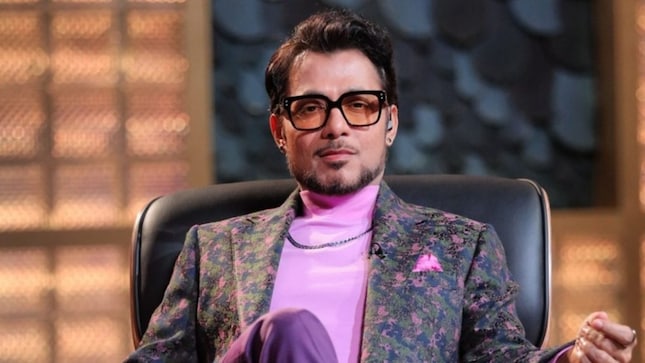

Tanmay Bhat: Cancellation to comeback - how to crack longevity in the creator economy
While many creators adapt constantly to platform algorithms, he maintained a consistent perspective. Audiences followed his point of view rather than a specific format, which helped sustain engagement over time, experts say.


ADVERTISEMENT
Tanmay Bhat’s career does not follow a conventional arc. Over roughly fifteen years, he has moved from writing comedy scripts and performing stand-up to co-founding All India Bakchod, surviving one of India’s earliest large-scale internet cancellations, and re-emerging as an angel investor, daily gaming streamer, advertising copywriter and, more recently, a self-styled curator of internet culture.
Rather than unfolding in clearly defined phases, his professional life has progressed through successive iterations. In an industry where many early digital creators have struggled to adapt to platform shifts, audience fatigue or reputational crises, Bhat has managed to retain relevance across multiple resets of India’s creator economy.
What distinguishes his trajectory, according to several industry observers, is not reinvention through radical pivots but continuity of perspective.
Consistency of worldview, not format
An industry expert, speaking on condition of anonymity, said Bhat’s durability stemmed from maintaining a consistent point of view rather than chasing changing formats. “Tanmay never abandoned his lane. Comedy, especially roasting and cultural commentary, was always the core. He did not chase trends by becoming something else. In fact, he let comedy grow with him.”
The expert added, “In a space where many creators keep pivoting to please algorithms, he stuck to a point of view. People did not follow him for a format, but for how he sees the world. And that consistency is what kept the audience coming back.”
Platform data reinforces this distinction. On Instagram, Bhat has about 2.1 million followers, with average reel views of roughly 851,000 and an estimated reach of 900,000 per post. His engagement rate of 8.24 percent is high for an account of that size, driven by average likes of about 170,500 and more than 500 comments per post. The audience skews toward users aged 18 to 34 and is concentrated in major urban centres, positioning Instagram as a high-frequency visibility channel rather than a platform for depth.
YouTube plays a different role. Bhat has about 5.3 million subscribers and a catalogue of nearly 1,600 videos, with average views of around 2.6 million per video. Engagement remains strong at scale, with roughly 110,000 likes and over 2,000 comments per upload. His YouTube audience is somewhat older, extending into the 25–44 age bracket, with broader reach into Tier 2 and Tier 3 cities. The platform favours longer, context-heavy formats such as reaction videos and cultural commentary, allowing influence to compound over time.
Together, the two platforms reflect a split strategy: Instagram for immediacy and cultural presence, YouTube for loyalty and sustained authority.
Reinvention without redemption theatrics
Venkat Malik, founder and chief executive of J7, described Bhat’s evolution as an exercise in resilience rather than public redemption. “Every reinvention is a story of refusing to stop. When you refuse to stop, you keep creating chances, and that helps rebuild. But you also need to be smart enough to make the right choices during reinvention.”
He noted that the passage of time also reshapes audience memory. “Audiences change, newer audiences come in with little or no memory of the past. That opens a window to seed a new story. But talent still matters,” Malik said, adding that such recoveries depend less on platform algorithms than on “the creator’s ability to stitch a story that resonates.”
From performer to system builder
Rohit Aggarwal, co-founder and chief executive of Alpha Zegus, said Bhat’s shift away from being the focal point of his content was strategic. “Tanmay’s differentiation lies in his willingness to redesign his role, not protect his identity,” he said. “Most creators amplify their personality to stay relevant. Tanmay does the opposite.”
Aggarwal added, “He optimises for systems, not spotlight. By building repeatable formats and spotlighting internet culture rather than himself, he reduces personal risk while increasing output.” According to him, data across creator lifecycles shows that format-led or curator-led creators tend to sustain engagement longer than personality-centric influencers.
Cancellation as a structural pause
Shudeep Majumdar, chief executive and co-founder of Zefmo Media, placed Bhat’s experience within a broader post-2017 creator economy pattern. “Cancellation is more of a brutal pause than permanent exile,” he said. “Platforms are forgiving when engagement stays strong because they care more about watch time and ad safety than moral memory.”
Audiences, Majumdar added, are fragmented. “Some never forget. Others judge creators purely on current output.” Survival, he said, often depends on reducing ego and shifting roles. “What works is moving from being the center of every joke to becoming a curator of internet culture.”
Reputation rebuilt through repetition
Sushant Sadamate, chief operating officer and co-founder of Buzzlab, described reputation repair as gradual rather than episodic. “You don’t out-content a crisis in one week,” he said. “You earn your way back by staying consistent, staying useful, and not acting entitled.”
He added that platforms prioritise retention and watch time, while audiences respond to tone and behavioural shifts. “Being the main character is exhausting and risky. Curator is safer and smarter,” Sadamate said. “Consistency turns ‘risky’ into ‘manageable’, and in the creator economy, manageable risk is basically a business model.”
Creative output with business logic
Azazul Haque, group chief creative officer at Creativeland Asia, attributed Bhat’s endurance to an unusual blend of creative instinct and business acumen. “Tanmay has sharp business acumen, which is rare among creatives,” he said. “He saw entertainment as an ecosystem, not a single platform.”
On controversies, Haque said audience behaviour was pragmatic. “Audiences don’t like excessive apologies. They like authenticity and entertainment,” he said. “Tanmay stayed unapologetically himself, even taking digs at himself.”
An engineered relevance
Aryan Anurag, co-founder of Binge Labs, framed Bhat’s evolution as a response to creative sustainability. “If you grow as a person but keep playing the same character, burnout is inevitable,” he said. “Tanmay shifting his image was necessary.”
That shift, Anurag added, has altered how brands perceive him. “Today he’s seen as tech-forward, experienced, and credible. Brands view him as futuristic and respectable.”
In a creator economy shaped by volatility, Tanmay Bhat’s continued relevance appears less the result of viral fortune than of structural adaptation — an approach that prioritises systems over stardom, and longevity over nostalgia.