
Simply Speaking: From personality to institution
Every company begins with a founder at its centre, where instinct and personality shape decisions. Over time, endurance depends on replacing individual presence with systems, culture, and shared values—marking the quiet shift from personality to institution.

ADVERTISEMENT
When the Founder Steps Out of the Frame
There is an initial phase in the life of every company when the founder is unknown. Then, she/he embodies the brand and often is seen as bigger than the brand.
Founder energy is palpable. Decisions feel personal. Direction feels instinctive. The business may move forward on conviction as much as on process.
This is how most great companies begin. Henry Ford built an idea of modern industry via the assembly line for his car. The DuPont family did not only scale a chemicals business but shaped how manufacturing and state power intertwined. Rockefeller’s name became a shorthand for both ambition and excess. In those early years, the company and the individual were almost the same thing in mind, body and spirit.
But man is only mortal clay. Over time, something else has to take over. The company had to learn how to live without the founder’s presence in every room and every decision. Systems replace instinct. Culture must replace personality. The brand stops being an extension of one person’s worldview and started becoming a shared language across thousands of people who had never met the founder at all.
That shift is often undramatic. It does not come with a ceremony. It shows up quietly in how meetings are run by those at junior levels . Who takes a call on risk ? In how a junior manager speaks to a customer without wondering how the founder would feel about it.
The technology era followed the same arc in a different universe.
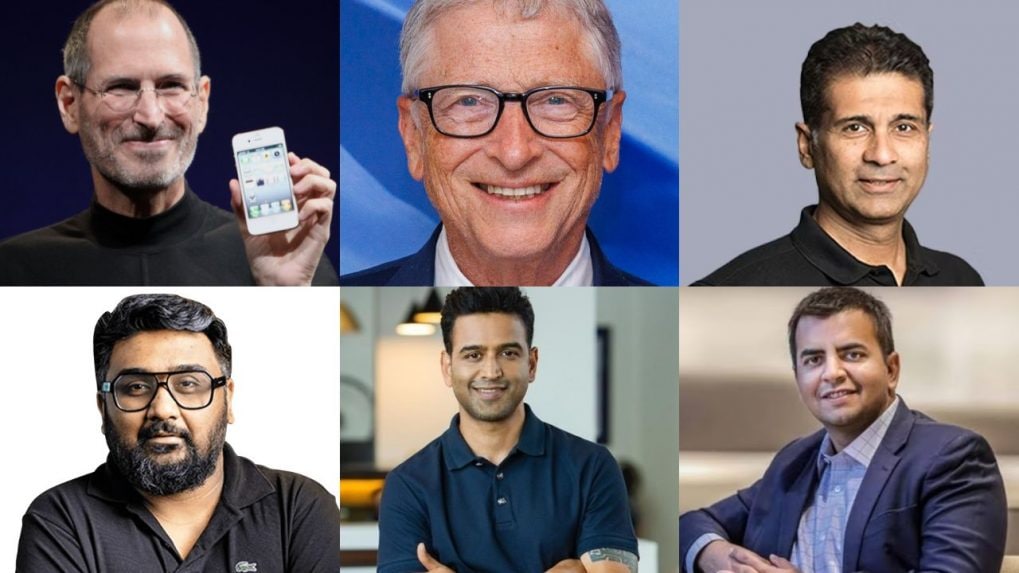
Steve Jobs gave Apple a soul. It was his take that design was belief. It was Jobs who made simplicity a kind of moral position.
Bill Gates shaped Microsoft around software as power and platforms as leverage.
Read More: Simply Speaking: India’s mirror moment and the new economy of feeling good
Google grew out of a faith in engineering and information.
Amazon was built around a relentless idea of the customer as the only real boss.
Today most of these companies are led by people who did not start them. The products still carry the original philosophy. The organisations no longer depend on the original personality. The myth has been absorbed into the structure.
India is now living through its own version of this transition. For a long time, the promoter was the company. Family name and brand name often moved together. Even as professional management came in, the public imagination stayed fixed on the individual at the top.
Read More: Simply Speaking: Brands are born inside
With the newer generation of companies, this has become even more visible. Founders are not just business leaders. They are public figures. They speak directly to customers and critics and regulators and the internet at large. The brand becomes a voice as much as a product.
In some cases, the voice is the business.
Patanjali is the clearest example. Baba Ramdev is not just associated with the company. He is the company’s meaning. The promise of swadeshi, of ayurveda, of standing apart from multinational consumer culture lives in his image and his language. Take him out of the picture and the brand does not just lose a leader. It loses its centre of gravity. Thats the way it is no matter what opinions folks may have.
Paytm sits in a different place but carries a similar imprint. Vijay Shekhar Sharma’s story of building a technology company from a small town became part of how the brand spoke about digital India and financial inclusion. The QR code on the kirana counter felt like a chapter in the same personal journey. Even as the company listed and professionalised, the emotional tone stayed close to the founder’s own arc.
Then there are companies that chose to grow into something quieter and more structural.
At Bajaj Auto, Rajiv Bajaj is a strong presence with clear views and a public profile. He may not be the founder but what the company is now owes everything to him. Yet the brand itself does not lean on him to explain what it stands for. The idea of engineering first and products that speak for themselves is visible in the motorcycles and the manufacturing and the strategy. The worldview lives in what the company makes and how it competes rather than in how often the leader speaks.
You see something similar at Biocon, Infosys and Apollo Hospitals. Each began with founders who set strong ethical and strategic foundations. Over time, those foundations turned into governance models and leadership pipelines and internal cultures. The brand became something people could enter and carry forward without having to channel the personality of the person who started it.
This is where the idea of a founder premium comes in. Founder led brands often move faster. Decisions feel imperative. The story is more human. There is a sense that someone is truly in charge rather than a committee or a framework.
The pattern is visible across India’s newer consumer and technology brands as well. At Licious, Abhay Hanjura’s voice often carries the story of building trust in a category that once lived in the shadows of wet markets and informal supply chains. At PhonePe, Sameer Nigam has become a public face for the larger idea of digital payments as national infrastructure rather than just a product.
CRED is almost inseparable from Kunal Shah’s way of thinking about trust, status, and consumer psychology. Zerodha carries Nithin Kamath’s beliefs around transparency and restraint in a sector built on noise and speculation. Bhavish Aggarwal’s presence looms large over Ola and Ola Electric as ambition, manufacturing, and national scale are folded into the same narrative. Every case is unique of course but the interaction of enterprise and founder personality is a unique thing.
But that founder premium has a shadow side. When the brand is tied closely to one person, any trouble around that person spills into the business. A controversy becomes a corporate issue. Investors ought to wonder whether they are backing a company or a personality. What is the distinction? When Byju’s collapsed so did the persona. The Byju’s story had been built around the charisma and conviction of its founder. When questions arose around governance and credibility they have become questions about the man himself and in that process the company lost the halo that had once protected it.
This is the distinction investors weigh. Backing a company means believing in a system a culture of accountability and a leadership bench that can survive transitions. Backing a personality is a bet on reputation. As long as it holds, the brand enjoys a premium. When it cracks that premium can quickly turn into a discount.
In that sense the founder premium amplifies success in good times but magnifies failure in bad ones and in tougher more regulated markets the real question is whether the company is being built to endure or to revolve around one star.
But, the deeper risk is quieter. It shows up when people inside the organisation start waiting for signals instead of acting. When initiative travels upward instead of outward. When the culture becomes cautious in the absence of the founder’s presence.
This is usually the moment when a company has to decide what it wants to become.
Zomato/Eternal may sit close to this line.
Under Deepinder Goyal, it had a voice. It was pleasantly casual and transparent to experimentation in public view , willing to fail in the open. The brand feels like it is in conversation with its users rather than broadcasting at them. That tone came from a way of thinking at the top.
If Goyal steps back, the numbers will still matter.
Orders and revenue and market share will still be tracked and reported and debated.
That part of the business can be measured and managed.
The harder part is less visible.
It sits in whether the company still sounds like itself in public. Whether people inside still feel comfortable pushing ideas that are unfinished. Whether the organisation still carries a certain looseness around the edges that allows for surprise.
When a person becomes less important than cumulative organisational ways of working, that’s where a brand crosses over into being an institution.
Every founder led company eventually reaches this moment. There is no announcement. There is no handover on a stage. There is only a slow test by the market and by the people inside. The persons concerned may move with some spotlights on them but the readiness is silent.
Every professional bureaucracy is riding the momentum of great founders. Thats as true of the storied GE, Unilever or P&G as it is of Tata, Shell or McDonalds.
Does the brand live in culture and structure? Or does it still live in the presence of one individual?
A true measure of a founder is perhaps how well the company rank and file learns to carry their way of thinking after they no longer need to be in the room.
Shubhranshu Singh is a business leader, cultural strategist, and columnist. He was honoured as one of the 50 most influential global CMOs for 2025 by Forbes and serves on the board of the Effie LIONS Foundation.