
Wow! Momo under intense scrutiny, raises red flags over governance and brand trust
The incident has also reignited debate around whether India’s fast-expanding food and retail startups are outgrowing their governance frameworks.

ADVERTISEMENT
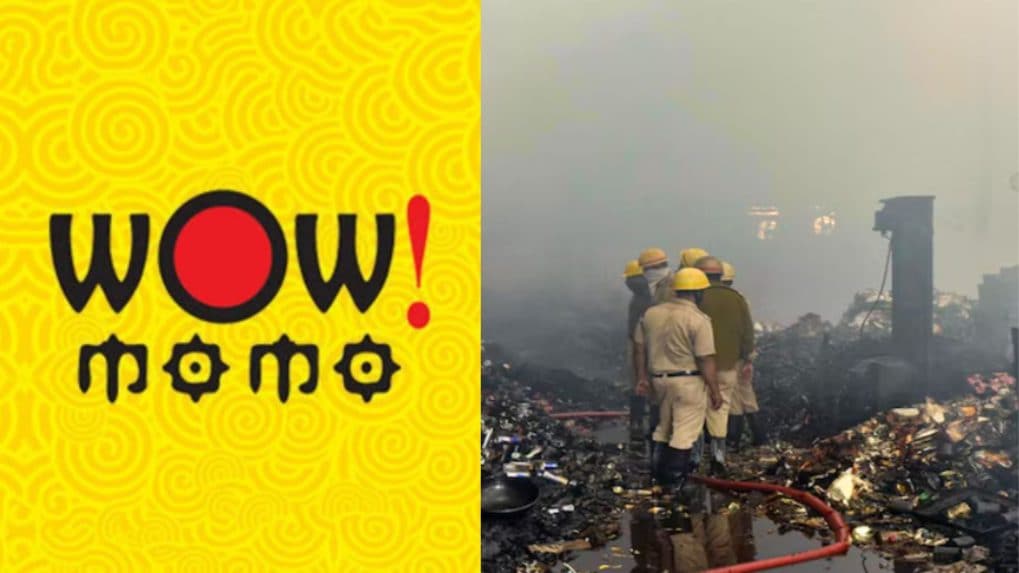
The deadly warehouse fire near Kolkata’s EM Bypass that claimed at least 11 lives has triggered a reputational crisis for quick-service restaurant chain Wow! Momo, placing the fast-growing brand under heightened scrutiny from regulators, investors and consumers, even as investigations continue into the cause of the blaze.
The fire broke out in the early hours of January 26 in the Anandapur area, where workers were reportedly sleeping inside a warehouse complex. With families of at least 17 workers filing missing-person complaints and more casualties feared, the tragedy has raised uncomfortable questions around workplace safety, regulatory compliance and crisis management—questions that now extend beyond the site of the incident to the brand’s wider operations.
While Wow! Momo has maintained that the fire did not originate in its warehouse, the company has nonetheless found itself at the centre of the public narrative. According to fire department officials, neither the warehouse nor the adjacent godown had formal fire clearance. Director-General of Fire and Emergency Services Ranvir Kumar told that the premises lacked a fire licence and safety measures—claims that the company has strongly denied.
Wow! Momo was founded in 2008 by St. Xavier’s College alumni Sagar Daryani and Binod Homagai in Kolkata. The company stated that it operated a 12,000 sq ft rented warehouse at the location, primarily for storing packaging material and beverages, and that the fire originated in an adjoining godown owned by the same landlord.
“The fire has spread out from a nearby godown which the forensic and police have already validated,” the company said, adding that three people linked to its operations—two employees and a security guard—lost their lives after the fire damaged the fire exit and cut off an escape route.
Yet, for a consumer-facing brand built on speed, scale and a youthful image, the distinction between where the fire began and where lives were lost may offer little insulation from reputational fallout.
“In crises involving human life, communication stops being a support function and becomes the core issue,” said Anup Sharma, PR & Strategic Communications Advisor. “When disclosures appear inconsistent, the damage is not about arithmetic. It is about intent. People do not process such moments rationally. They ask a simpler question: Is the brand being honest with me right now? If the answer feels uncertain, trust fractures instantly.”
The incident has also reignited debate around whether India’s fast-expanding food and retail startups are outgrowing their governance frameworks. Wow! Momo, which has scaled aggressively across cities and formats, now faces a moment that could invite closer scrutiny of its supply chain and back-end infrastructure—not just in West Bengal, but potentially across other states where it operates.
“Fast growth celebrates speed, visibility and scale. Compliance thrives on discipline, systems and checks. When growth outpaces governance, vulnerabilities remain hidden until a crisis exposes them publicly,” Sharma added.
Senior media executive and AiNxtGen Principal GV Krishnamurthy cautioned against premature conclusions but acknowledged the systemic questions such incidents raise. “Rapid expansion always puts pressure on systems, but growth itself does not excuse lapses. The real question is whether governance, audits and training scaled at the same pace as outlets,” he said. “That is something only a proper investigation can establish.”
The West Bengal government has announced an ex gratia payment of Rs 10 lakh for each victim’s family, while Wow! Momo has pledged Rs 10 lakh per family, lifetime monthly salary support for dependents, and education assistance for children of the deceased. One person has been arrested in connection with the incident, and DNA tests are expected to be conducted to identify bodies.
For Wow! Momo, however, the financial compensation may not be the end of the matter. As regulators investigate and public attention remains fixed on the tragedy, the brand faces a deeper challenge—restoring trust and demonstrating that its operational controls and safety standards match the pace of its ambitions.
In today’s hyper-visible startup ecosystem, analysts say, such incidents are no longer localised crises. They can quickly evolve into brand-defining moments with national implications.