
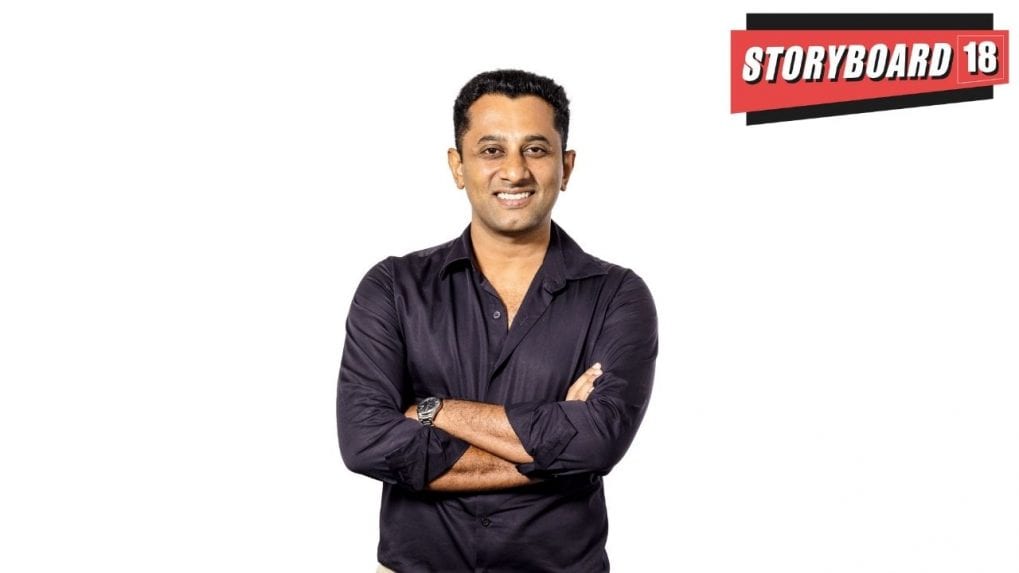
Aditya Kanthy: Clients experience us through agency brands, not the holding company
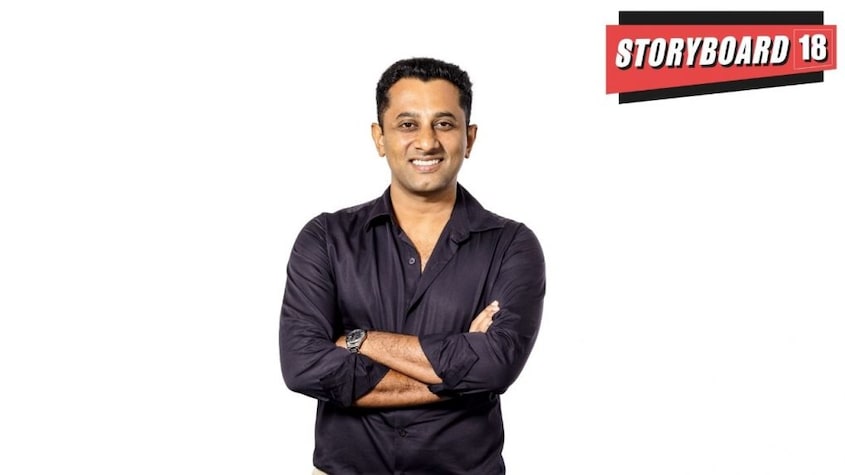
As Omnicom Advertising India undergoes a major integration amid industry disruption, President and Managing Director Aditya Kanthy reflects on leadership, restructuring, and continuity—explaining why talent, trust, and the quality of work will be the true measures of success.

ADVERTISEMENT
As Omnicom Advertising India reshapes itself amid industry-wide disruption, President and Managing Director Aditya Kanthy speaks about integration, layoffs and leadership. In a conversation marked by clarity and restraint, he explains why continuity, talent and the quality of work will ultimately define success.
As Omnicom Advertising India navigates one of its most complex transitions, President and Managing Director Aditya Kanthy resists easy narratives. In this conversation with Sakshi Dhingra, Assistant Editor, Storyboard18, he reflects with clarity on what changed, what was difficult, what was necessary and why the true measure of success will only emerge over time, in the quality of the work, the strength of the teams that remain, and the trust clients continue to place in them.
You’ve spoken about “building the ship while sailing it”. What does this mean for Omnicom Advertising India?
This is a defining moment, not just for Omnicom but for the advertising industry more broadly. Over a long career, you experience different cycles of transformation, but this one stands out because of both its scale and its timing.
The industry is undergoing structural change — driven by technology, fragmentation and evolving client expectations. In that context, Omnicom is in a strong position in India to respond meaningfully. Personally, after many rewarding years within the organisation, this feels like the beginning of an important new chapter. It comes with responsibility, but also a sense of optimism about what we can build.
Read More: EXCLUSIVE: Internal memo by Aditya Kanthy outlines Ulka’s future in strategic email to employees
IPG-Omnicom merger led to retiring of sub-brands. What was the idea behind retaining brands like Mudra and Ulka in India?
Omnicom has always been very clear about its philosophy. Clients experience us through our agency brands, not through the holding company.
In India, great work begins to emerge consistently across TBWA\India, BBDO Group, McCann and our digital agencies such as Kinnect, 22Feet and MRM. These are agencies with deep reputations, built painstakingly over decades. Our belief is that our portfolio of brands is our biggest strength in this market.
Rather than stripping away that equity, we see value in continuing to invest in it while shaping these agencies for the future. It is also a reflection of how seriously Omnicom views India — as a market where strong local brands, backed by global capability, can create long-term advantage.
Read More: EXCLUSIVE: Prasoon Joshi, Aditya Kanthy to spearhead Omnicom’s new India charter
Efficiency is a key expectation from large acquisitions. How did you approach that conversation internally?
Efficiency is an inevitable part of any integration of this scale. We are a large organisation, with several thousand people, and it was important to evaluate which functions directly impact client outcomes.
In non-client-facing roles, there was scope to remove duplication, and we took those decisions. At the same time, we acquired exceptional talent from IPG’s India agencies. When you combine that with Omnicom’s existing strength, the priority was clear — retain as much client-facing capability as possible. We placed a strong bet on talent and effectiveness, not just cost reduction. The restructuring creates room to invest in people who will drive growth, creativity and long-term value for clients
Layoffs can be deeply unsettling. How did you navigate those decisions?
There is no easy way to approach decisions like this. Transparency and clarity were critical.
These decisions were not about individuals; they were about roles and structures. Our guiding principle was to protect the core of what clients value — the teams they have worked with for years, sometimes decades. Continuity matters deeply in this business. We focused on communicating the rationale clearly, so there was shared understanding of why decisions were taken. The objective was always to ensure the organisation is set up properly to compete and win in the future.
Have the layoffs linked to the integration now concluded?
Yes. The layoffs related specifically to the integration and restructuring have been completed. They were largely focused on support functions where roles overlapped across agencies. Beyond this, what remains is normal industry attrition. There will be no further layoffs as part of this integration.
There has been some confusion around office consolidation. What can employees expect next?
The first phase of the journey was focused on people, clients and structure. The next phase is about physical consolidation.
Now that the operating model is clear — with TBWA\India, BBDO India, McCann, and the digital spine comprising Kinnect, 22Feet and MRM — our focus is on housing teams in environments that reflect these structures.While it may not be possible to bring everyone under one roof immediately, we are confident that teams will soon be aligned within their respective agency environments, under their new leadership.
What are you doing differently today compared to earlier?
The context in which brands are consumed is changing constantly. We are placing far greater emphasis on understanding those environments and adapting how brands communicate within them.Change today is continuous, not episodic. If you are not a learning organisation that embraces change seriously, you will struggle. We are very conscious of that, and many aspects of our work are evolving every day.
A year from now, what would success look like for you?
Success would be seeing teams, under their new leadership, feel that they have produced the best work of their careers in these new environments.When great work begins to emerge consistently across TBWA\India, BBDO, McCann and our digital agencies, that will be the clearest signal that this integration has been executed well.