
What the world’s most creative minds know: Timeless lessons from advertising, business, art and beyond
A look at timeless creativity insights from advertising icons, business visionaries, artists and scientists - offering powerful lessons for innovators celebrated by the Storyboard18 Awards for Creativity.

ADVERTISEMENT
In an age when algorithms generate ideas in milliseconds and boardrooms demand innovation on schedule, creativity has never been more mythologised — or more misunderstood. Yet the people who shaped industries, built global brands, transformed culture and reimagined human potential often describe creativity not as magic, but as discipline, curiosity and courage.
At the Storyboard18 Awards for Creativity, where the business of ideas meets the art of impact, it’s worth revisiting what the greatest thinkers across advertising, business, technology, art and science have said about the creative act. Their words offer a reminder: creativity is still profoundly human.
Storyboard18 Awards For Creativity: Submit your entries now
Advertising’s Old Masters Still Have the Sharpest Advice
Few industries have dissected creativity as obsessively — and commercially — as advertising. David Ogilvy, the father of advertising, believed creativity must ultimately serve a purpose. “If it doesn’t sell, it isn’t creative,” he declared, a line that remains a north star for marketers navigating tighter budgets and rising expectations. He also understood the role of play: “The best ideas come as jokes. Make your thinking as funny as possible.”
Bill Bernbach, the revolutionary mind behind Doyle Dane Bernbach, saw creativity as alchemy. “An idea can turn to dust or magic depending on the talent that rubs against it.” To Bernbach, truth was central to persuasion: audiences must first believe, and belief requires clarity—a principle that feels even more relevant in a fragmented digital world.
Leo Burnett, whose influence shaped the emotional grammar of global advertising, offered a quieter insight: “Curiosity about life in all its aspects… is still the secret of great creative people.”
Dan Wieden, who helped create one of the most enduring ideas in brand history — “Just Do It” — summed up the industry’s ethos of risk in two words: “Fail harder.”
These lines, decades old, still define creative bravery.
Business Visionaries Show Creativity Is a Strategic Weapon
In the corporate world, creativity is often framed as innovation—an economic force rather than an artistic one. Steve Jobs, who blurred that line better than anyone, argued that “creativity is just connecting things,” a deceptively simple definition that continues to guide generations of product designers and entrepreneurs. His belief that “innovation distinguishes between a leader and a follower” has become a mantra for companies fighting stagnation.
Jeff Bezos has long emphasised the discomfort inherent in originality. “You have to be willing to be misunderstood if you're going to innovate,” he said, capturing the lonely, high-variance nature of big bets.
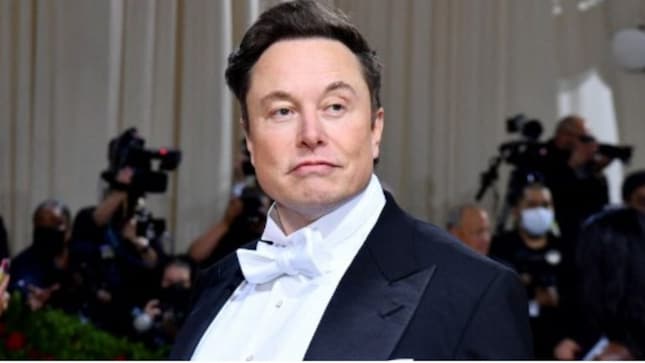
Elon Musk, whose ventures often test the limits of imagination and engineering, offered a pragmatic view: “Some people don’t like change, but you need to embrace change if the alternative is disaster.”
For Reed Hastings of Netflix, creativity thrives when people optimise for impact rather than approval: “Don’t seek to please your boss. Seek to do what’s best for the company.”
Together, these perspectives point toward a discipline — creative strategy — that is now as central to business success as finance or operations.
Artists Remind Us That Creativity Is a Lifelong Struggle
Long before “creativity” became a KPI, artists wrestled with its contradictions. Pablo Picasso distilled the human challenge: “Every child is an artist. The problem is how to remain an artist once we grow up.” His insistence that “inspiration exists, but it has to find you working” turns creativity into labour, not luck.
Vincent van Gogh — who created masterpieces in anonymity — described the creative quest with raw honesty: “I am seeking, I am striving, I am in it with all my heart.”
Maya Angelou, whose work spanned poetry, activism and storytelling, framed creativity as abundant rather than scarce: “You can’t use up creativity. The more you use, the more you have.” It is a philosophy modern organisations are only beginning to appreciate.
Ray Bradbury captured creativity’s inherent risk. “Jump, and you will find out how to unfold your wings as you fall.” Creativity, he suggests, is not safe. Nor is it supposed to be.
Science and Technology Offer a Lens of Imagination and Inquiry
Scientists and inventors approach creativity through exploration. Albert Einstein, who understood both rigour and wonder, famously said: “Creativity is intelligence having fun,” and, “Imagination is more important than knowledge.” These ideas have inspired not only physicists but also technologists who build products from first principles.
Nikola Tesla saw creativity as prophecy: “The present is theirs; the future, for which I really worked, is mine.”
Marie Curie urged courage in the face of complexity: “Nothing in life is to be feared; it is only to be understood.” Her worldview suggests that creativity is unlocked not by avoiding uncertainty but by interrogating it.
Culture-Makers Show That Imagination Shapes Society
From entertainment to design, creative voices have shaped how audiences see the world.
Walt Disney inspired generations with a simple premise: “If you can dream it, you can do it.” George Lucas highlighted the essential role of imagination: “Dreams are extremely important. You can’t do it unless you imagine it.”
Shonda Rhimes, redefining storytelling for a new era, cuts through the romanticism: “Dreams do not come true just because you dream them. It's hard work that makes things happen.”
Philosophers such as Alan Watts reframed creativity as an embrace of change: “The only way to make sense out of change is to plunge into it, move with it, and join the dance.”
Musicians, too, have elevated the conversation. David Bowie once said, “I don't know where I'm going from here, but I promise it won't be boring.” Leonard Cohen offered poetic imperfection: “There is a crack in everything. That’s how the light gets in.”
Their voices add texture to the global creative landscape that awards like Storyboard18 seek to celebrate.
The Universal Threads That Bind Creative Excellence
Across these diverse disciplines, a few themes emerge:
Creativity is work — a discipline forged through curiosity, persistence and failure.
Creativity is courage — a willingness to be misunderstood, to risk, to stretch, to leap.
Creativity is connection — between ideas, between people, between truth and imagination.
Creativity is impact — from selling products to shaping culture to advancing knowledge.
In an era where machines increasingly mimic imagination, the most powerful creative ideas still come from people who dare to see differently and act boldly. As the Storyboard18 Awards for Creativity celebrate the innovators, disruptors and storytellers shaping today’s marketplace of ideas, these timeless words serve as a guide—and a challenge.
Creativity is not a moment. It is a mindset.